
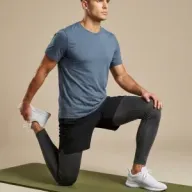
Lower body
Lengthen the front of the thigh.
The quadriceps make up the front of the thigh and straighten the knee with every step, pedal stroke and squat. As one of the body’s big power muscles, they can tighten quickly after leg-heavy training.
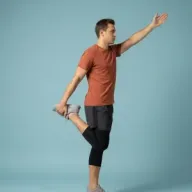
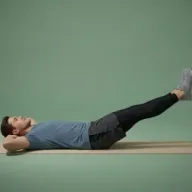
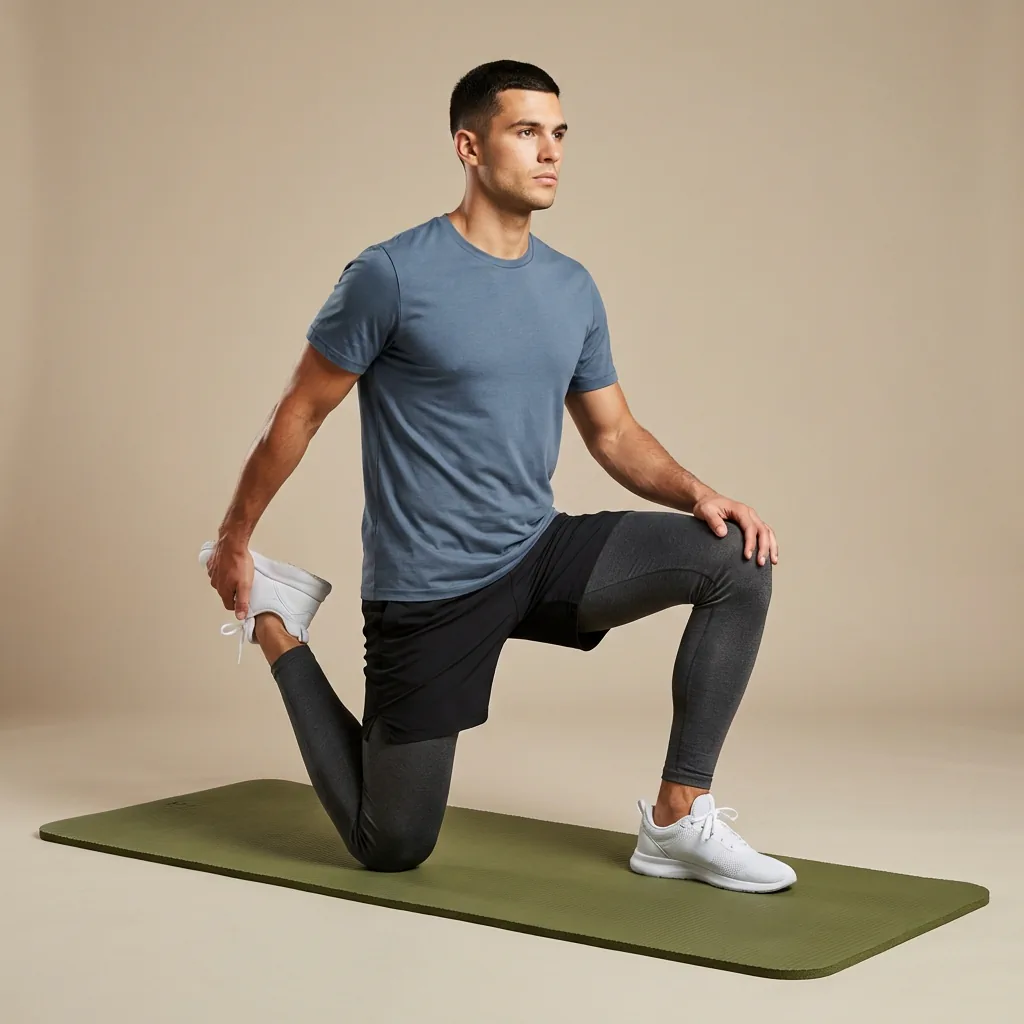
Standing and lying quad stretches give the front of the thigh length again and help the hip and knee move freely.
Start here
A short, guided starting point for Quadriceps (Quads) — begin gently and stay within a comfortable range.
About the Quadriceps (Quads)
The quadriceps are four muscles across the front of the thigh, three from the thigh bone and one crossing the hip, joining into the tendon that holds the kneecap.
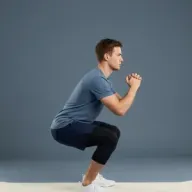
They straighten the knee and one head also lifts the hip, so they power standing, climbing, running and every squat.
Because one quad crosses the hip, quad work supports both the hip flexors and how the kneecap tracks.
Ways to work this area
Mobility
Controlled repetitions move the quadriceps (quads) through a comfortable range without forcing the end position.
Control
Slower drills build awareness and steadiness around the quadriceps (quads) and nearby joints.
When people reach for this
Tight after cycling
Standing and kneeling quad stretches ease the front of the thigh after time in the saddle.
CyclistsAfter leg day
Gentle quad length helps the thighs recover after squats or a long run.
Post Workout RecoveryExercises for Quadriceps (Quads)
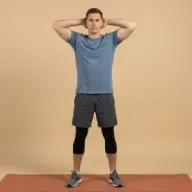
Air Squats
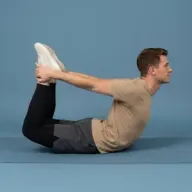
Bow Pose
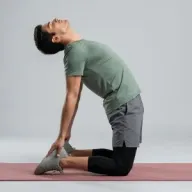
Camel Pose
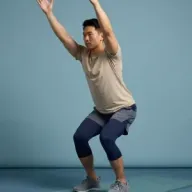
Chair Pose
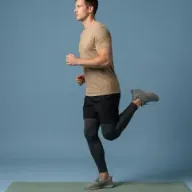
Controlled Butt Kicks
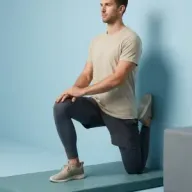
Couch Stretch
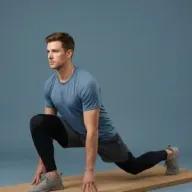
Deep Split Squat
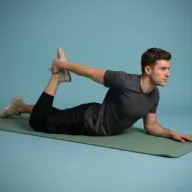
Half Bow
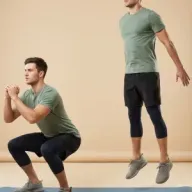
Jump Squats
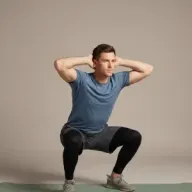
Kang Squat
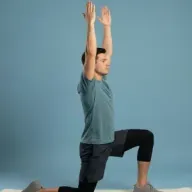
Lunge
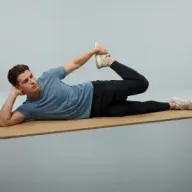
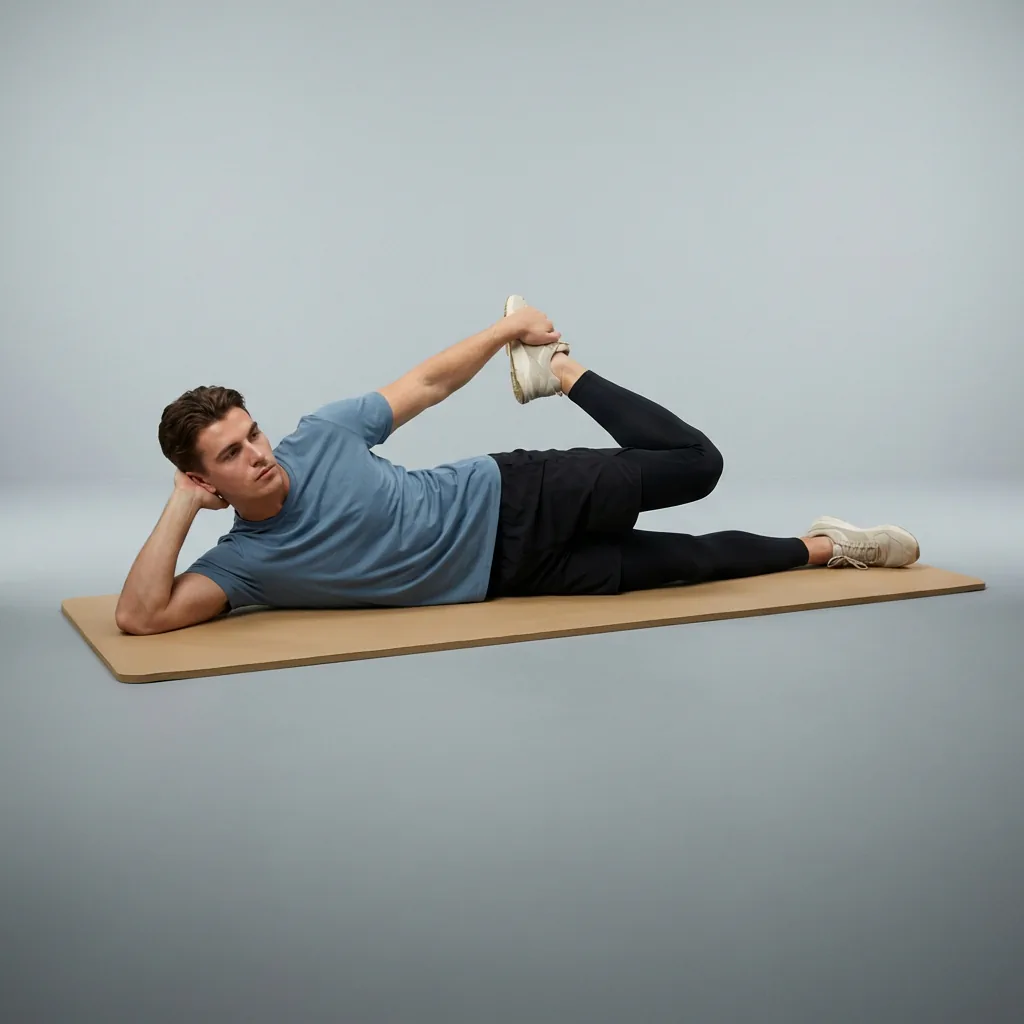
Lying Quad Stretch
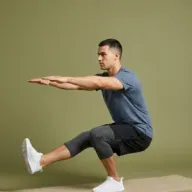
Pistol Squat Hold
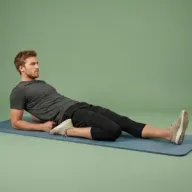
Quad Stretch
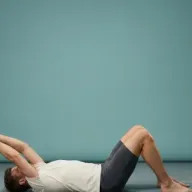
Saddle Pose
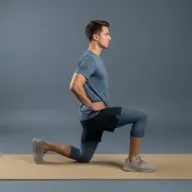
Split Lunge Hold
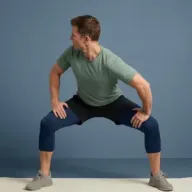
Split Squat Twists
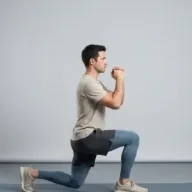
Split Squats
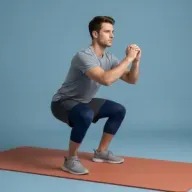
Squat Hold
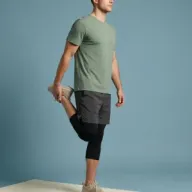
Standing Quad
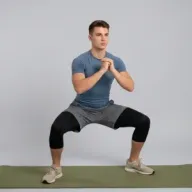
Sumo Squat Hold
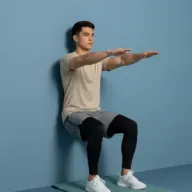
Wall Sit
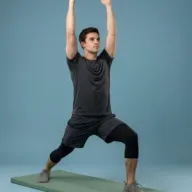
Warrior I
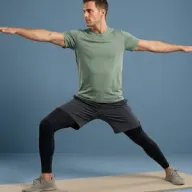
Warrior II
Routines for Quadriceps (Quads)
-
 10 min Intermediate
Post-Workout Stretch: Lower Body
An 8-move leg-day stretch — lizard pose, upward frog, and lying quad stretch focusing on hips, glutes, and hamstrings.
-
-
-
-
-
- +3
-
-
 15 min Advanced
Quad & Calf release
An advanced 15-move leg release — dynamic quad stretch, soleus stretch, and towel calf stretch for thigh and shin tension.
-
-
-
-
-
- +10
-
-
 10 min Intermediate
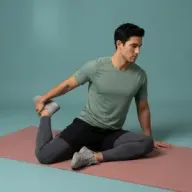
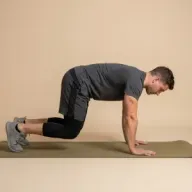
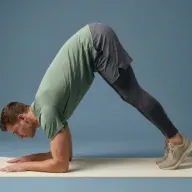
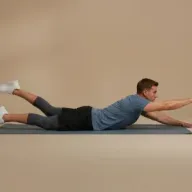
Recovery: Soft Tissue Flow
A 10-move fascia-focused flow — hip circles, seated twist, and doorway pecs easing connective tissue restriction on rest days.
-
-
-
-
-
- +5
-
-
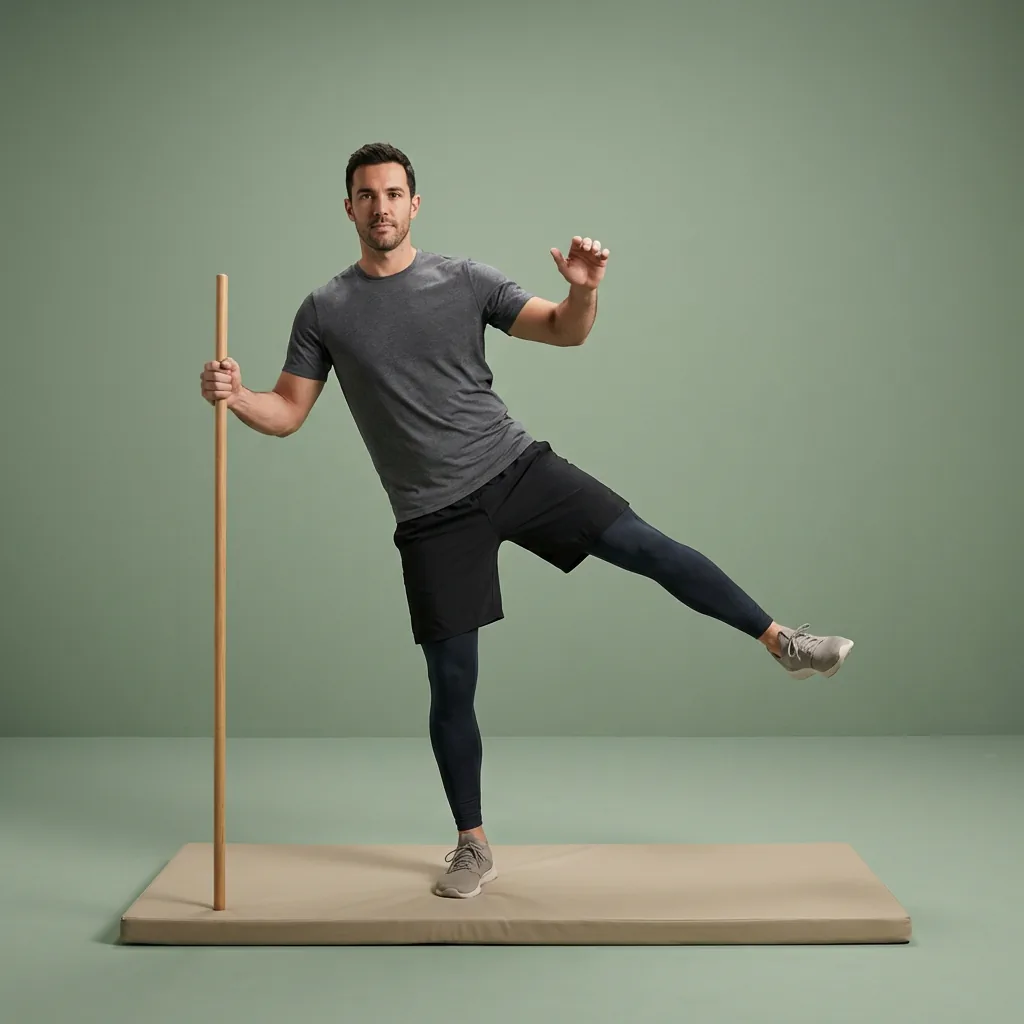 10 min Intermediate
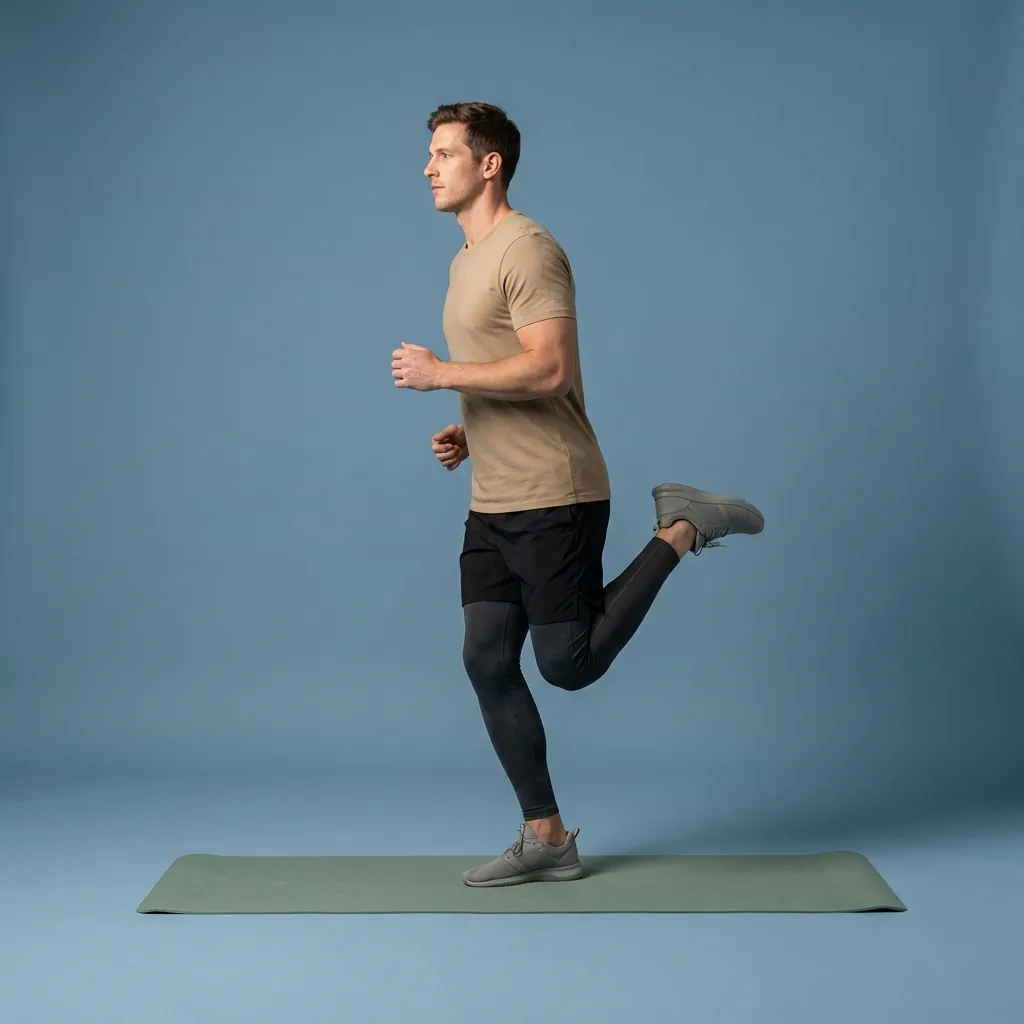
Warm-Up: Court Quickness
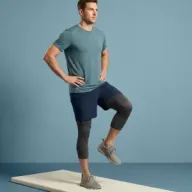
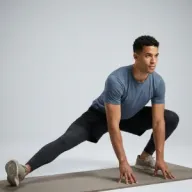
A 10-move court prep — side lunges, lateral leg swings, and butt kicks for multi-directional lower-body readiness.
-
-
-
-
-
- +5
-
-
 9 min Intermediate
Warm-Up: Lower-Body Activation
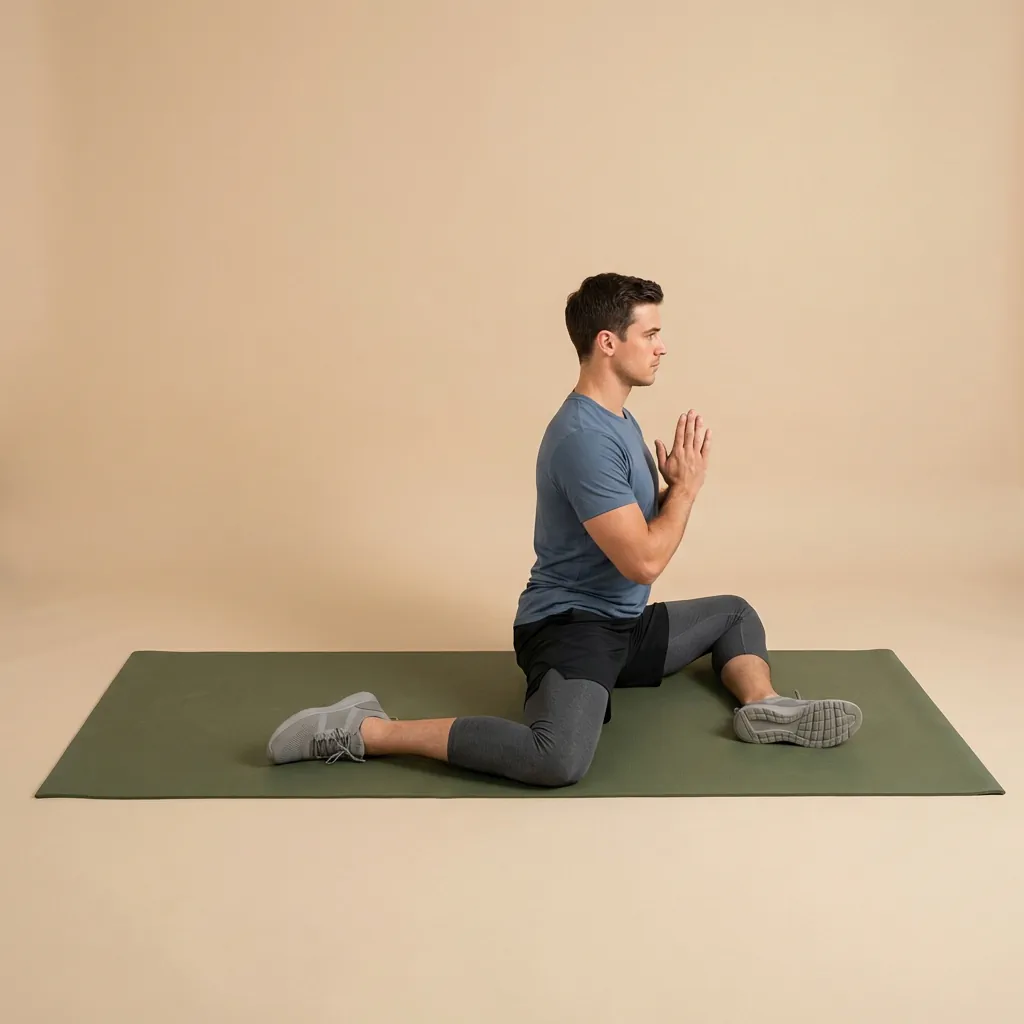
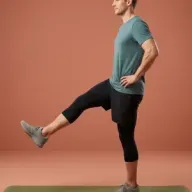
A 9-move lower-body power prep — kang squats, chair pose, and controlled butt kicks for glute and quad recruitment.
-
-
-
-
-
- +4
-
How Flexor personalises this
Flexor balances quad length with hip and hamstring work so the front and back of the thigh stay even, adapting to the training you log.
See daily recommendationsExplore related pages
Move comfortably
- Keep the hips level and the knee comfortable rather than crushing it into the stretch.
- Use a wall or chair for balance during standing quad stretches.
This is general fitness guidance, not medical advice or treatment. Move within a comfortable range, and speak to a qualified professional about pain that persists or worsens.
Read the full wellness disclaimerWritten by Flexor editorial Last reviewed July 2026
Common questions
How do I stretch my quads?
Stand tall, draw one heel toward the seat and keep the knees together with hips level until you feel the front of the thigh lengthen. A kneeling or lying version works well if balance is tricky.
Why are my quads always tight?
Cycling, running and squatting all work the quads hard and in a fairly short range, so they can feel tight afterwards. Regular gentle stretching and balancing them with hamstring work usually helps.
Should I stretch my quads before or after exercise?
Use dynamic quad movement to warm up beforehand, and save longer holds for afterwards when the muscles are warm, so power is not blunted right before training.
Do tight quads affect the knees?
The quads attach through the kneecap, so keeping them mobile and balanced with the hamstrings can support comfortable knee tracking. It is general movement support rather than a fix for knee problems.