
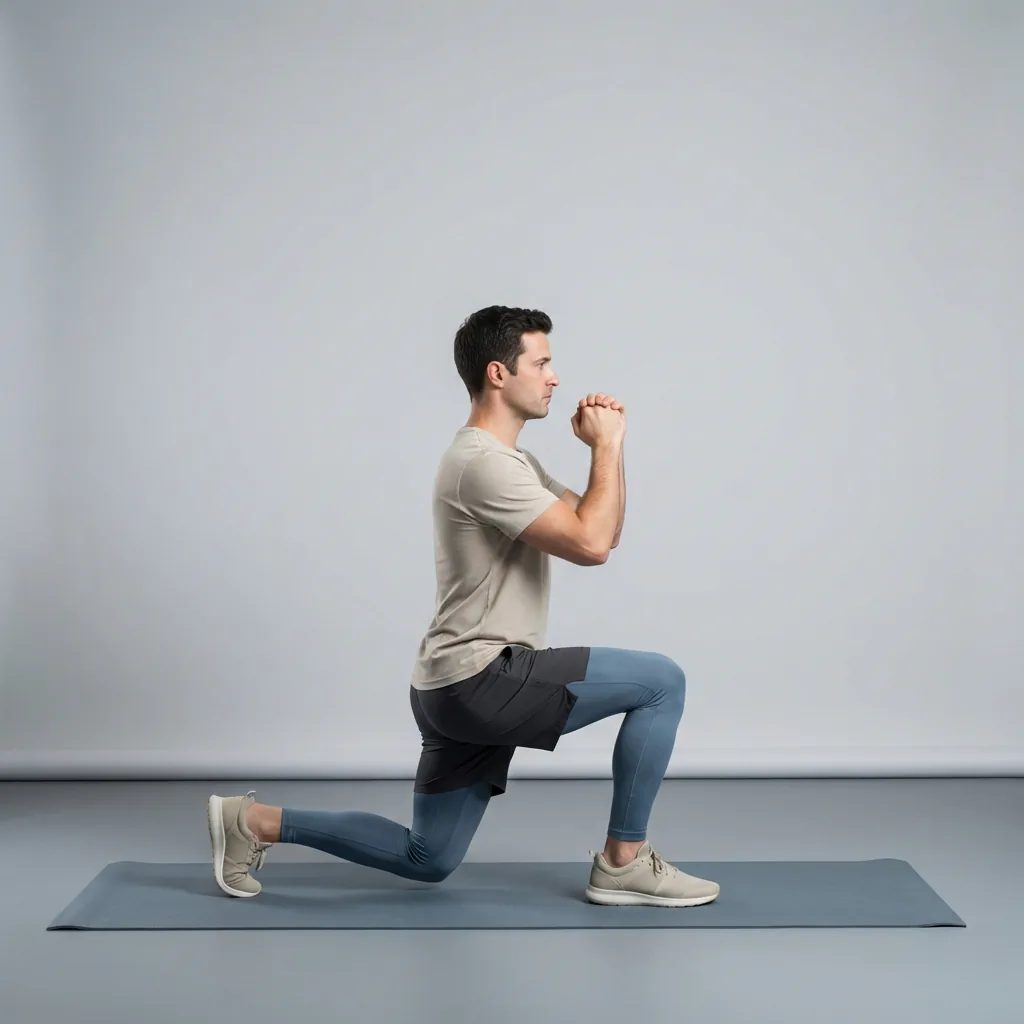
Split Squats
Lower and rise in a stable split stance to strengthen the quadriceps and glutes while each leg manages a different position.
Overview
Split Squats are repetition-based lower-body strength exercises on Flexor. One foot stays forward and the other stays back while both knees bend and the body lowers vertically through a stable split stance.
What Split Squats target
The front-leg quadriceps and glutes provide most of the effort, while the back leg, hips and trunk help maintain balance and position.
Why add Split Squats to your routine
The staggered stance lets each leg manage a different role and exposes side-to-side differences that can be hidden in a regular squat. Depth and support can be adjusted without changing the basic pattern.
- Builds quadriceps and glute strength with no equipment.
- Practises balance and pelvic control in a staggered stance.
- Scales through depth, tempo, support and repetitions.
Who it is for
It suits users who can manage a split stance comfortably and want a controlled lower-body strength exercise.
When to do it
Use it after a warm-up in a strength or movement-control block. Complete smooth repetitions on both lead legs rather than holding the bottom position as a stretch.
Split Squats are repetition-based lower-body strength exercises performed from a staggered stance. Keep both feet planted, lower the back knee toward the floor, and drive through the front foot to return without turning the movement into a static stretch.
Setup cue
Step into a stable split stance with one foot forward and one back. Bend both knees to lower the back knee toward the floor, then press through the front foot to rise.
Practice notes
In Flexor, Split Squats is typically prescribed as about 1 min per round, 1 rep, and 1 set. Adjust the dosage to what feels sustainable, breathe steadily, and ease off if anything feels sharp or unsafe.
Guidance
How to perform, tips, mistakes, safety notes, and benefits for Split Squats.
Follow these cues in order. Move with control and stay in a comfortable range.
- Stand tall and step one foot forward and the other foot back into a stable split stance, keeping enough width between the feet for balance.
- Keep the front foot fully planted and the back heel lifted, with both hips facing forward.
- Bend both knees and lower the back knee toward the floor while the torso stays tall or leans slightly forward as one unit.
- Stop at a comfortable depth with the front knee tracking over the foot and the pelvis remaining level.
- Press through the front foot to rise, complete the repetitions, then switch the lead leg.
Cues that help the movement stay smoother and more controlled.
- Keep train-track width between the feet rather than standing on a tightrope.
- Let both knees bend as the body travels down instead of lunging only forward.
- Drive through the whole front foot and keep the pelvis facing ahead.
Patterns to watch for so the shape stays clearer.
- Starting with the feet shoulder-width side by side instead of establishing a split stance.
- Letting the front knee collapse inward or the front heel lift.
- Pushing only from the back leg or bouncing out of the bottom position.
Keep things comfortable and stop if something feels wrong.
- Stop if you feel sharp pain, numbness, tingling, dizziness, or symptoms that radiate.
- Stay within a comfortable, controlled range; muscular effort or mild stretch tension should not become pain.
- Move smoothly without bouncing, jerking, or forcing the range.
Why people include this movement in their practice.
- Builds single-leg-biased strength in the quadriceps and glutes without requiring external equipment.
- Challenges balance and pelvic control in a split stance used in walking, stairs, running and sport.
- Lets users scale difficulty through depth, tempo, support and repetition count.
Similar movements to explore next
-
Kang Squat
Alternate a hip hinge with a squat—fold forward like a good morning, sit into a squat, then reverse the sequence to stand.
-
Air Squats
Bodyweight squats to rehearse hip and ankle depth, glute drive, and upright trunk control.
-
Controlled Butt Kicks
March in place and draw each heel toward the glute at a slow, controlled tempo.
-
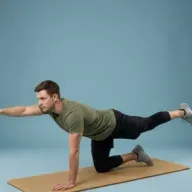
Back Leg Raise
Stand with light wall or chair support and extend one straight leg behind you to activate the glute without arching the lower back.
-
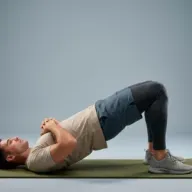
Hip Bridges
Lie on your back and drive the hips up by squeezing the glutes into a straight line from shoulders to knees.
-
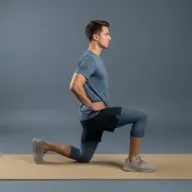
Split Lunge Hold
Pause at the bottom of a split lunge with both knees near ninety degrees to build single-leg stability.
-
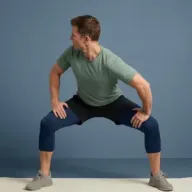
Split Squat Twists
Lower into a split squat, rotate the torso toward the front leg, then return upright before switching sides.
-
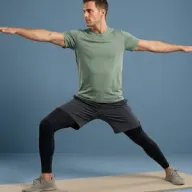
Warrior II
Hold a wide side-facing lunge with arms extended front and back to build hip endurance and open the inner thighs.
Common questions
How long should you hold Split Squats?
Standard Split Squats are performed for controlled repetitions rather than held as a stretch. Lower and rise smoothly, complete the planned repetitions, then switch which leg is forward.
How wide should the stance be for Split Squats?
Use a staggered stance with enough front-to-back distance to lower comfortably and a little side-to-side width for balance. Avoid placing both feet on one narrow line.
Which body areas does Split Squats target?
Split Squats is a movement that mainly targets your quadriceps, glutes, hips, and hamstrings. Move within a comfortable range and skip it if it does not feel suitable for you.
Which muscles does Split Squats work?
Primary muscles associated with Split Squats include rectus femoris, vastus medialis, gluteus maximus, and biceps femoris. Flexor presents this as general wellness guidance, not a clinical assessment.
Is Split Squats suitable for beginners?
Split Squats is listed as intermediate in Flexor. Choose a smaller range of motion, fewer repetitions, or an easier variation whenever you want more control.
How do you do Split Squats?
Split Squats has 5 guided steps. Follow them in order on this page, breathe steadily, and keep the movement smooth and within a comfortable range. Stop if anything feels sharp, unstable, or unsafe for you.
Is this medical advice?
No. Flexor provides general fitness and wellness guidance. It does not diagnose, treat, or prevent medical conditions. Speak with a qualified professional about injuries, persistent pain, or health concerns.