
Lower body
Mobile, steady ankles.
The ankle is a hinge that lets the foot flex up and point down, with subtle side-to-side motion for balance. Good ankle range shows up everywhere — how deep you squat, how you land when you run, and how steady you feel on uneven ground.
Ankle work pairs mobility with stability: opening dorsiflexion so the knee can travel forward, and adding balance and control so the joint stays confident when the surface is not.
Start here
A short, guided starting point for Ankles — begin gently and stay within a comfortable range.
mobility

Heel-to-Toe Rocks
dynamic range
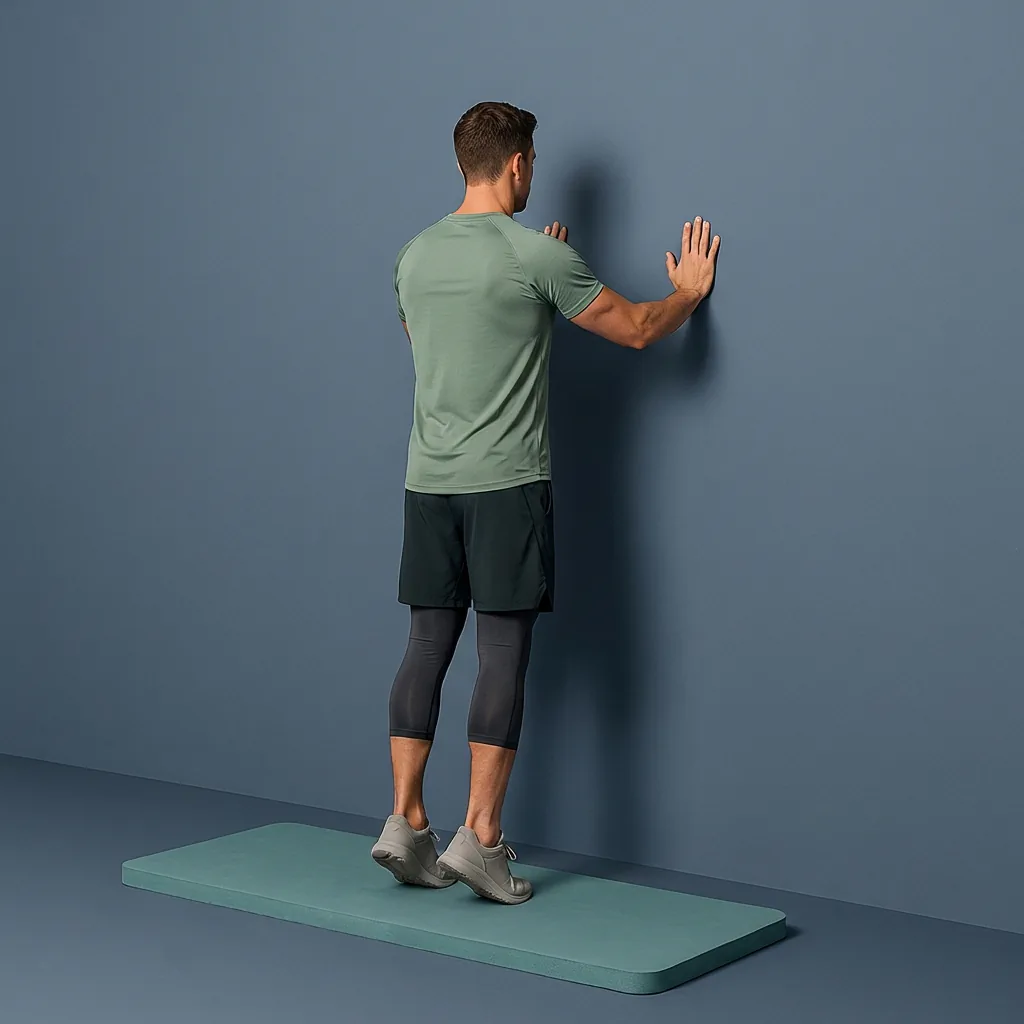
Knee-to-Wall
dorsiflexion
Lateral Foot Rocks
side control

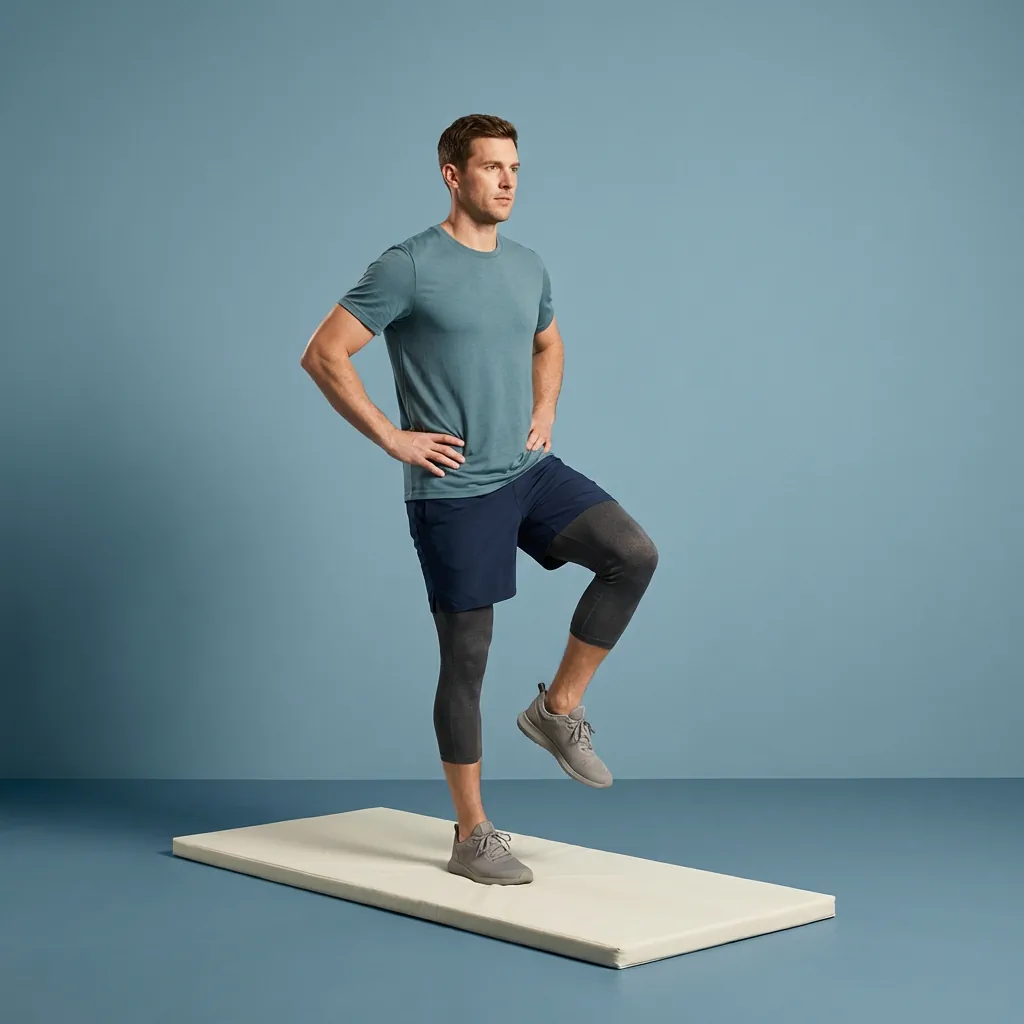
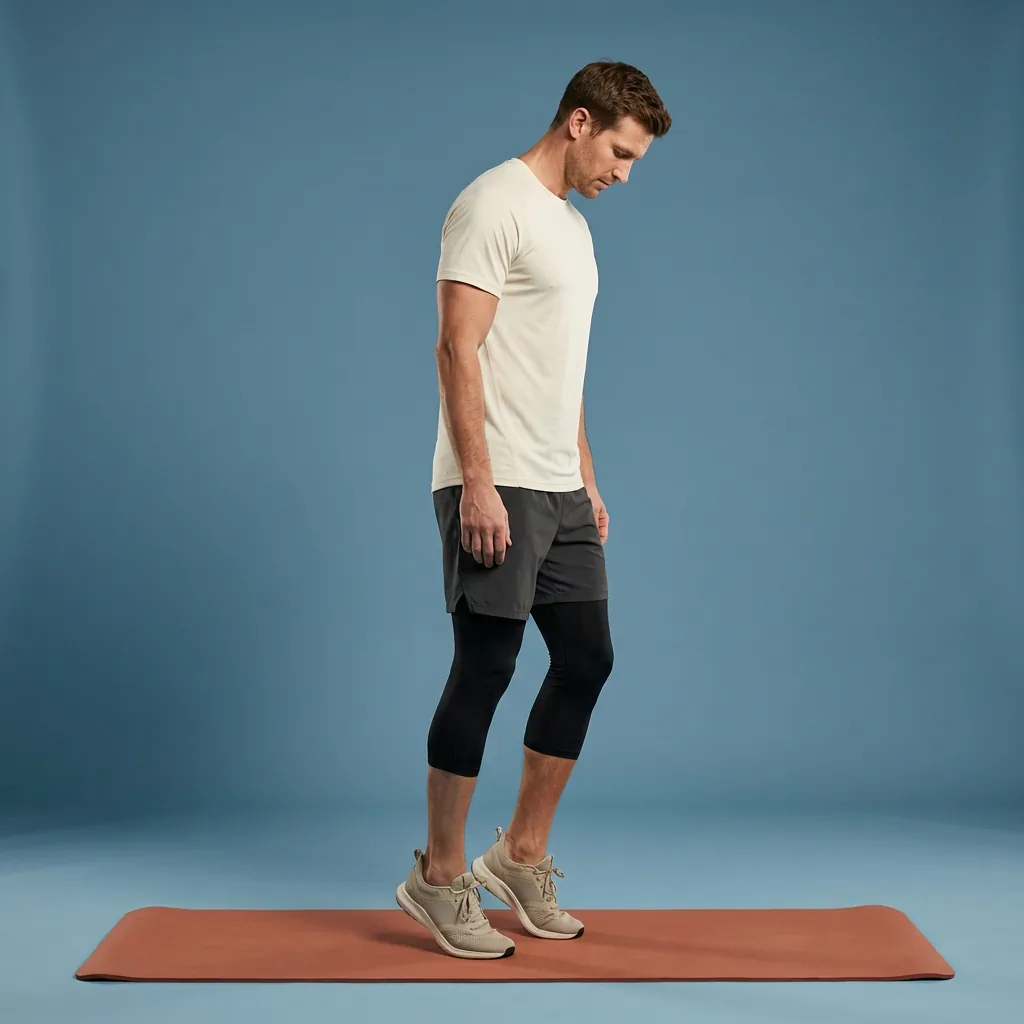
Single Leg Stand
balance

Toe Raises
front of shin
Guided routines to start with
-
 10 min Beginner
Foot & Ankle Ease
An 11-move foot and ankle foundation — toe stretch, toe squat, and intrinsic foot work for stiff, tired feet and ankles.
-
-
-
-
-
- +6
-
-
 13 min Intermediate
Ankle Strength and Mobility
A controlled ankle routine combining mobility, balance, and lower-leg strength for steadier everyday and sport movement.
-
-
-
-
-
- +9
-
-
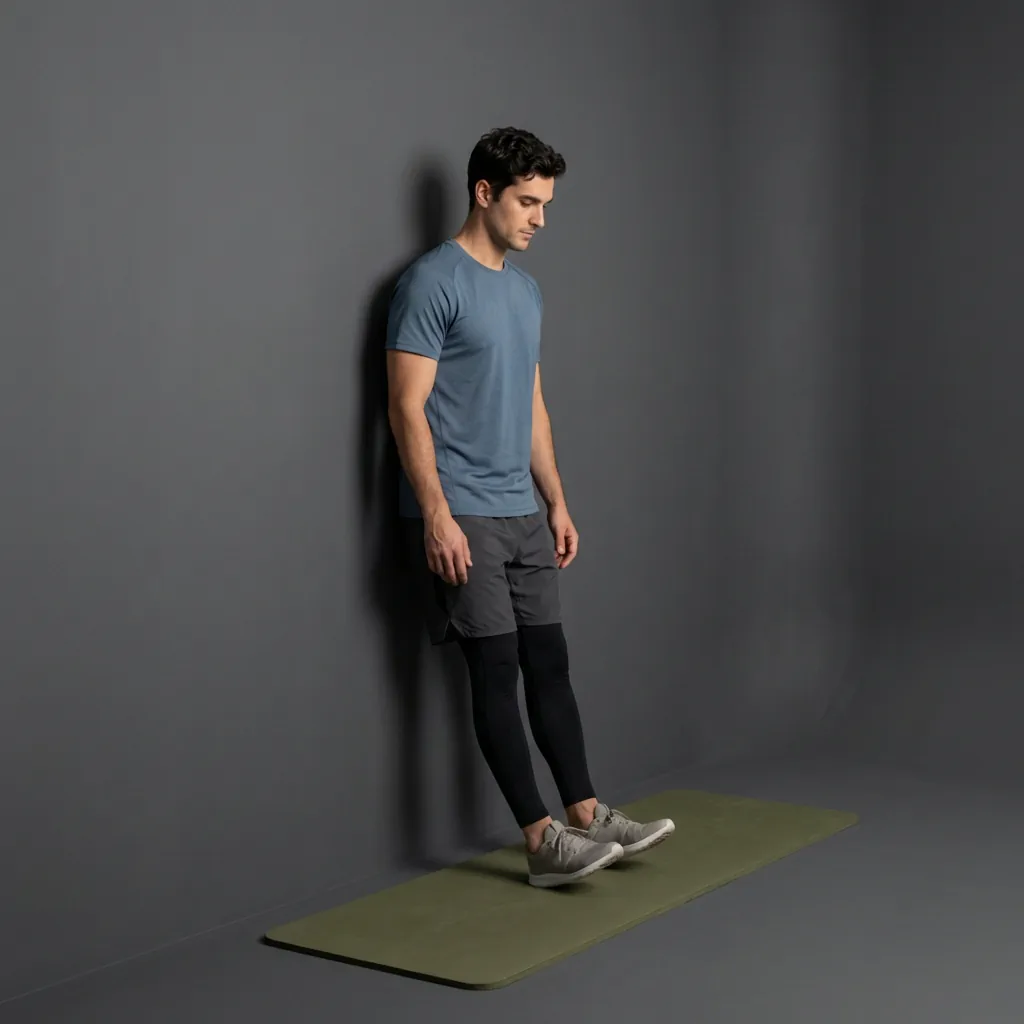 5 min Advanced
Pre-Workout Mobility: Ankles
A 6-move ankle primer — dorsiflexion drills, calf raises, and single-leg stand for stable knees and better squat depth.
-
-
-
-
-
- +1
-
About the Ankles
The ankle joins the shin bones to the talus for the up-and-down hinge, while the joint just below allows the small side-to-side motion for balance.
It manages how the shin travels over the foot, which sets how deep and upright you can squat and how you absorb landing.
The ankle is driven by the calves above and works with the foot below, so ankle sessions naturally touch both.
Ways to work this area
Stretching
Knee-to-wall opens dorsiflexion by letting the shin travel forward over the foot.
Mobility
Circles and rocks take the ankle through its full range in every direction.
Control
Balance drills teach the ankle to steady the body on one leg.
Activation
Toe raises and single-leg stands prime the joint before load or sport.
When people reach for this
Shallow, tipping squats
Limited dorsiflexion makes squats feel blocked; knee-to-wall work helps the shin travel forward.
Improve MobilityBefore running or sport
Circles, rocks and balance drills ready the ankle for changes of direction and landing.
Pre Workout MobilityFeeling wobbly underfoot
Single-leg balance and side control build confidence on uneven ground.
Ankle Achilles ComfortExercises for Ankles
Air Squats
Bent Over Calf
Calf Raises
Deep Split Squat

Hamstring Scoops

Kang Squat
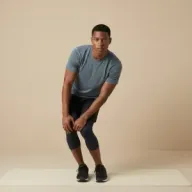
Knee Circles
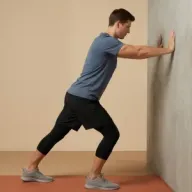
Leaning Calf
Lying Ankle Circles
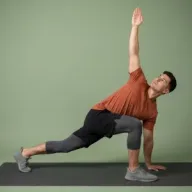
Runner’s Lunge Twist

Saddle Pose
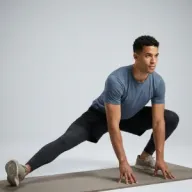
Side Lunge

Side Lunge Hold
Single Leg Calf Stretch
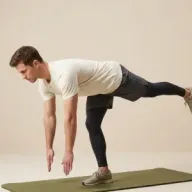
Single Leg Deadlift
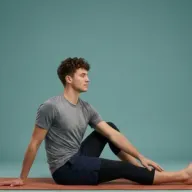
Single Leg Shin Stretch
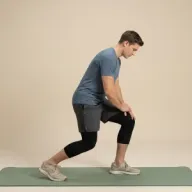
Soleus Stretch

Split Squat Twists
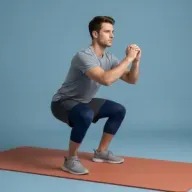
Squat Hold

Squat Stretch
Toe Squat
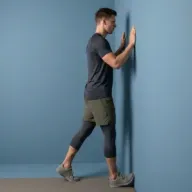
Toe-to-Wall
Towel Calf Stretch
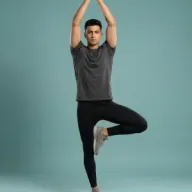
Tree Pose
An ankle mobility and balance set
Warm the joint, open dorsiflexion, then steady it on one leg. · about 4 min
- 1 Ankle Circles — both directions, each foot 40 sec
- 2 Heel-to-Toe Rocks — rock through the whole foot 40 sec
- 3 Knee-to-Wall — drive the knee over the toes, heel down 45 sec
- 4 Lateral Foot Rocks — gentle side to side 40 sec
- 5 Single Leg Stand — steady on one leg, each side 40 sec
- 6 Calf Raises — controlled, to finish 40 sec
Routines for Ankles
-
13 min Intermediate
Ankle Strength and Mobility
A controlled ankle routine combining mobility, balance, and lower-leg strength for steadier everyday and sport movement.
-
-
-
-
-
- +9
-
-
10 min Beginner
Foot & Ankle Ease
An 11-move foot and ankle foundation — toe stretch, toe squat, and intrinsic foot work for stiff, tired feet and ankles.
-
-
-
-
-
- +6
-
-
5 min Advanced
Pre-Workout Mobility: Ankles
A 6-move ankle primer — dorsiflexion drills, calf raises, and single-leg stand for stable knees and better squat depth.
-
-
-
-
-
- +1
-
-
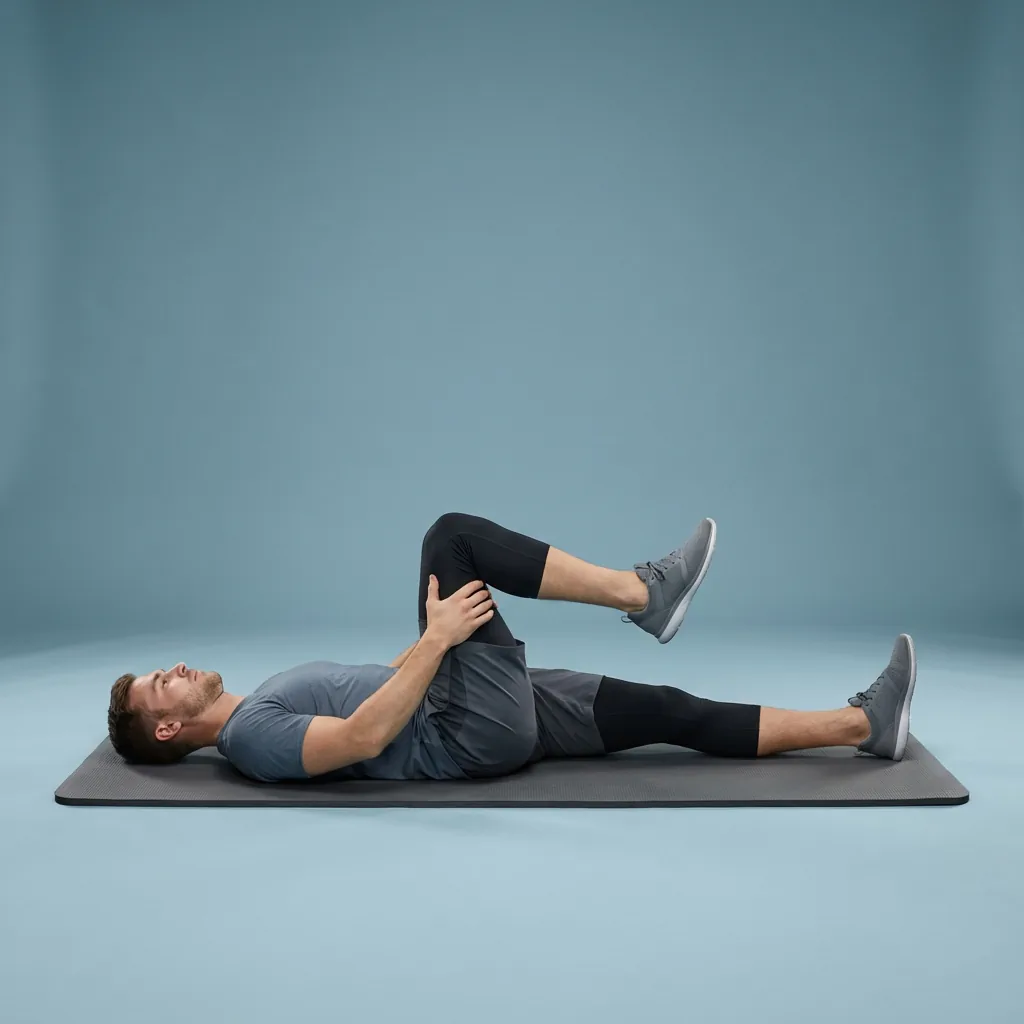 5 min Beginner
Quick Ankles & Feet
A 6-move ankle and foot burst — heel-to-toe rocks, lateral foot rocks, and calf raises for balance and articulation.
-
-
-
-
-
- +1
-
Where to start
- Squats feel blocked at the bottom
- Work knee-to-wall to open dorsiflexion so the shin can travel forward.
- You feel unsteady on one leg
- Add single-leg stands and side control to build ankle confidence.
- Warming up for sport
- Use circles and rocks to prime the joint through its full range.
Technique and comfort
Helpful cues
- In knee-to-wall, keep the heel down as the knee travels toward the wall.
- Move ankle circles slowly through the biggest comfortable range.
- Keep your gaze on a fixed point to steady single-leg balance.
Ways to make it easier
- Hold a wall or chair for balance work until it feels steady.
- Reduce the range of any movement that feels pinchy at the front of the ankle.
Common mistakes
- Letting the heel lift during knee-to-wall, which hides the real range.
- Rushing balance drills instead of building steady control.
Breathing
Breathe steadily; there is no need to hold your breath during balance drills.
Related body areas
- Calves
The calves drive the ankle, so their length sets its range.
- Feet
The foot below the ankle shares its balance and push-off work.
- Knees
Ankle range affects how the knee tracks in squats and landings.
- Shins (Tibialis)
Front-of-shin work balances the calf behind for even ankle motion.
How Flexor personalises this
Flexor mixes mobility and balance to fit your goals — more dorsiflexion for squatting, more stability for sport — from what you log.
See daily recommendationsExplore related pages
Move comfortably
- Keep balance drills near a wall or chair until you feel steady.
- Ease off any movement that pinches at the front of the ankle.
This is general fitness guidance, not medical treatment. Stop if a movement causes pain and seek professional advice after an ankle sprain or for ongoing instability.
Read the full wellness disclaimerWritten by Flexor editorial Last reviewed July 2026
Common questions
How do I improve ankle dorsiflexion?
Knee-to-wall is the go-to drill: keep the heel down and drive the knee forward over the toes until you feel a stretch at the front of the ankle. Working it regularly usually helps squats feel deeper and more upright.
Why are my ankles so stiff?
Stiffness often comes from limited calf length and joints that rarely move through full range, especially with lots of sitting or supportive shoes. Circles, rocks and knee-to-wall work gradually restore the motion.
How can I make my ankles more stable?
Balance work is key: single-leg stands and gentle side control teach the ankle to steady the body. Build up slowly, using a wall for support at first, and progress as your balance improves.
Does ankle mobility help my squat?
Often, yes. If the shin cannot travel forward over the foot, the squat tends to tip or stay shallow. Improving dorsiflexion with knee-to-wall work frequently helps the squat feel deeper and more balanced.
Should I train ankle balance if I've sprained an ankle before?
Many people find gentle balance work useful for building confidence, but after a sprain it is worth getting individual advice first. This is general fitness guidance and not a substitute for assessment by a qualified professional.