
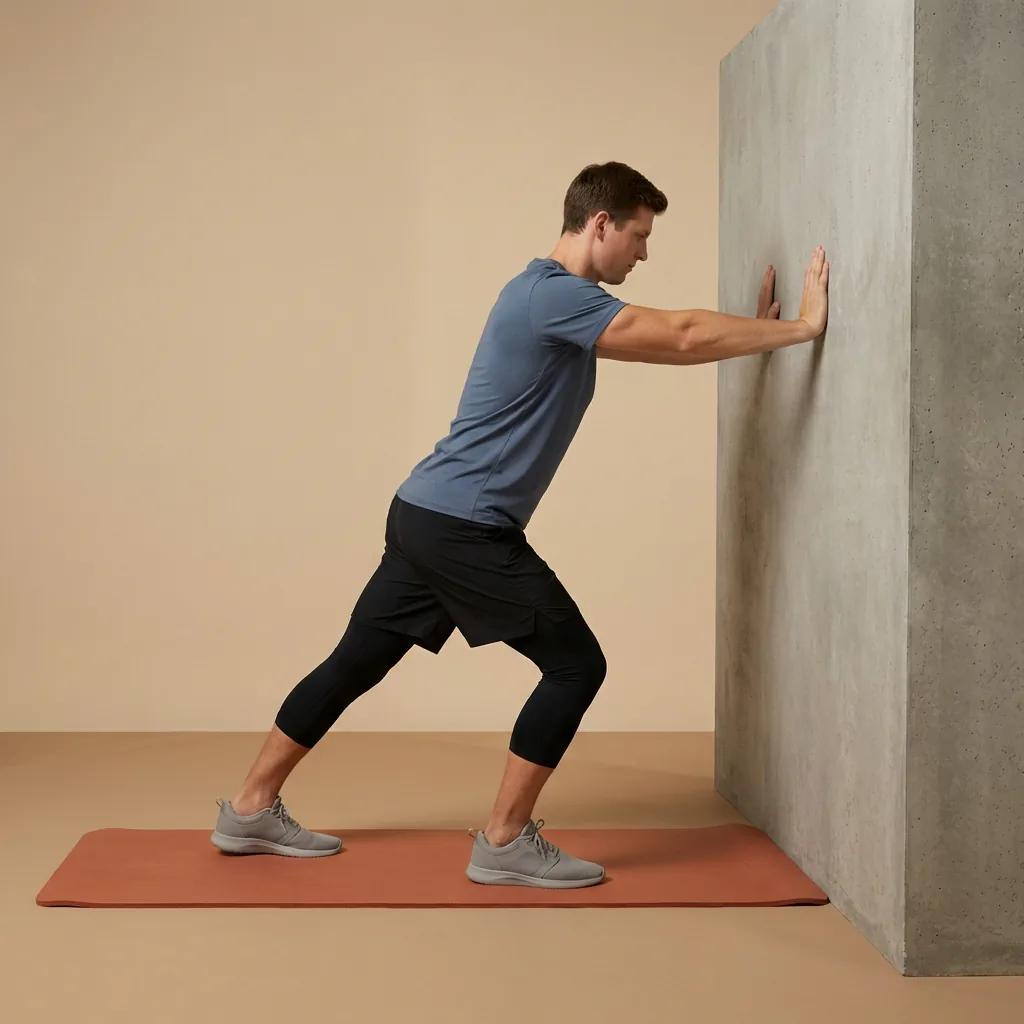
Leaning Calf
Place hands on a wall, step one foot back with heel down, and lean forward to stretch the gastrocnemius of the back leg.
Overview
Leaning Calf is a beginner wall-assisted calf stretch on Flexor that uses a wall lean with the back heel down to lengthen the gastrocnemius of the rear leg.
What Leaning Calf targets
You'll feel the stretch through the calf of the back leg as you lean into the wall. Keep the back heel anchored throughout.
Why add Leaning Calf to your routine
A reliable calf stretch that keeps the heel down—a key detail many standing calf stretches miss.
- The wall support makes it easy to adjust lean angle and stretch intensity.
- Compare both sides to spot left-right calf tightness differences.
- Keep the back leg straight to target the gastrocnemius rather than the soleus.
Who it's for
Anyone with tight calves, especially before running, hiking, or squatting.
When to do it
Use before lower-body activity, after long walks, or as a daily calf maintenance stretch.
The wall-assisted calf stretch keeps the back heel anchored while you lean forward, lengthening the gastrocnemius of the straight back leg. Keep the back toes forward and the spine long as you lean.
Setup cue
Stand facing a wall about an arm's length away and place your hands on it at shoulder height. Step one foot back with toes forward and heel planted—keep it smooth.
Practice notes
In Flexor, Leaning Calf is typically prescribed as about 1 min per round, 1 rep, and 1 set. Adjust the dosage to what feels sustainable, breathe steadily, and ease off if anything feels sharp or unsafe.
Guidance
How to perform, tips, mistakes, safety notes, and benefits for Leaning Calf.
Follow these cues in order. Move with control and stay in a comfortable range.
- Stand facing a wall about an arm's length away and place your hands on it at shoulder height.
- Step one foot back with toes forward and heel planted—keep it smooth.
- Bend your front knee while keeping the back leg straight and lean into the wall to feel the calf stretch.
Cues that help the movement stay smoother and more controlled.
- Maintain your back heel anchored for the best stretch.
- Maintain a long spine and relaxed shoulders as you lean.
Patterns to watch for so the shape stays clearer.
- Rushing the movement or chasing range instead of staying controlled.
- Letting the lower back arch or the shoulders shrug up toward the ears.
- Holding your breath—use steady breathing to keep tension down.
Keep things comfortable and stop if something feels wrong.
- Stop if you feel sharp pain, numbness, tingling, dizziness, or symptoms that radiate.
- Stay within a comfortable range—aim for mild tension, not pain.
- Move with control; avoid bouncing or jerking into end range.
Why people include this movement in their practice.
- Lengthens the gastrocnemius of the back leg with the heel firmly grounded.
- The wall provides support so you can control stretch intensity easily.
- Useful before walking, running, or any activity that loads the calves and ankles.
Similar movements to explore next
-
Ankle Circles
Slow ankle rotations to loosen the joint and warm the calves before walking or training.
-
Bent Over Calf
Hip-hinge calf stretch with the front foot flexed and back heel anchored on the floor.
-
Calf Raises
Standing heel raises through full ankle plantarflexion to strengthen the calves and stabilize the feet.
-
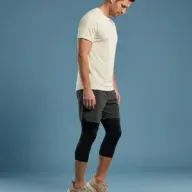
Heel-to-Toe Rocks
Rock smoothly from the balls of both feet back toward the heels to warm the calves, shins, ankles, and foot-control muscles.
-
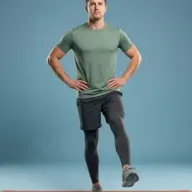
Single Leg Stand
Simple single-leg balance hold to strengthen foot and ankle stabilizers.
-
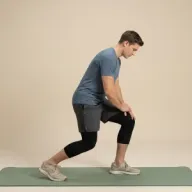
Soleus Stretch
Wall stretch with both knees bent to target the deeper soleus muscle below the calf.
-
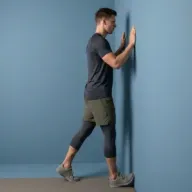
Toe-to-Wall
Place one forefoot on a wall with the heel down and lean in to stretch the calf and Achilles.
-
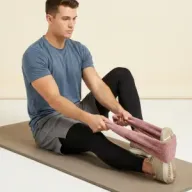
Towel Calf Stretch
Sit with one leg straight and pull a towel around the forefoot to stretch the calf with the knee extended.
Common questions
Which body areas does Leaning Calf target?
Leaning Calf is a daily stretch movement that mainly targets your calves, ankles, and feet. Move within a comfortable range and skip it if it does not feel suitable for you.
Which muscles does Leaning Calf work?
Primary muscles associated with Leaning Calf include gastrocnemius. Flexor presents this as general wellness guidance, not a clinical assessment.
Is Leaning Calf suitable for beginners?
Leaning Calf is listed as beginner in Flexor. Choose a smaller range of motion, fewer repetitions, or an easier variation whenever you want more control.
How long should you hold Leaning Calf?
In Flexor, Leaning Calf runs for about 1 min per round. Adjust the time to what feels sustainable, breathe steadily, and ease off sooner if anything feels sharp.
How do you do Leaning Calf?
Leaning Calf has 3 guided steps. Follow them in order on this page, breathe steadily, and keep the movement smooth and within a comfortable range. Stop if anything feels sharp, unstable, or unsafe for you.
Which Flexor routines include Leaning Calf?
Leaning Calf appears in guided Flexor sessions such as Warm-Up: Hips and Ankles. Open a routine page to follow the full sequence, or practise this movement on its own from this guide.
Is this medical advice?
No. Flexor provides general fitness and wellness guidance. It does not diagnose, treat, or prevent medical conditions. Speak with a qualified professional about injuries, persistent pain, or health concerns.