
5-Minute Dynamic Warm-Up Before Running
A short, progressive warm-up that raises the intensity gradually and leaves you ready to run.

A good pre-run warm-up is dynamic, not static. The aim is to raise your heart rate, warm the muscles and rehearse the movements of running, building gradually so you start your run feeling ready rather than flat. Long, held stretches are best saved for afterwards - holding them right before you run can leave the legs feeling less springy. Here is a five-minute progression.
Who this suits
Recreational runners before easy runs, intervals or races. Scale the effort to the run ahead: gentler before an easy jog, a little livelier before faster work.
The five-minute progression
- Brisk walk or easy march - 60 seconds. Start gently to get moving and raise the temperature.
- Arm swings - 30 seconds. Loosen the shoulders and coordinate the upper body.
- Leg swings - 60 seconds, both legs. Swing each leg forward and back, then side to side, within an easy range to open the hips.
- Walking lunges - 45 seconds. Step into gentle lunges to wake up the hips and thighs.
- Butt kicks - 30 seconds. Light, quick heel flicks to bring in the hamstrings and raise the pace.
- High knees - 30 seconds. A controlled build towards running rhythm.
- Ankle circles and a few easy strides - 45 seconds. Mobilise the ankles, then run a few relaxed strides to bridge into your pace.
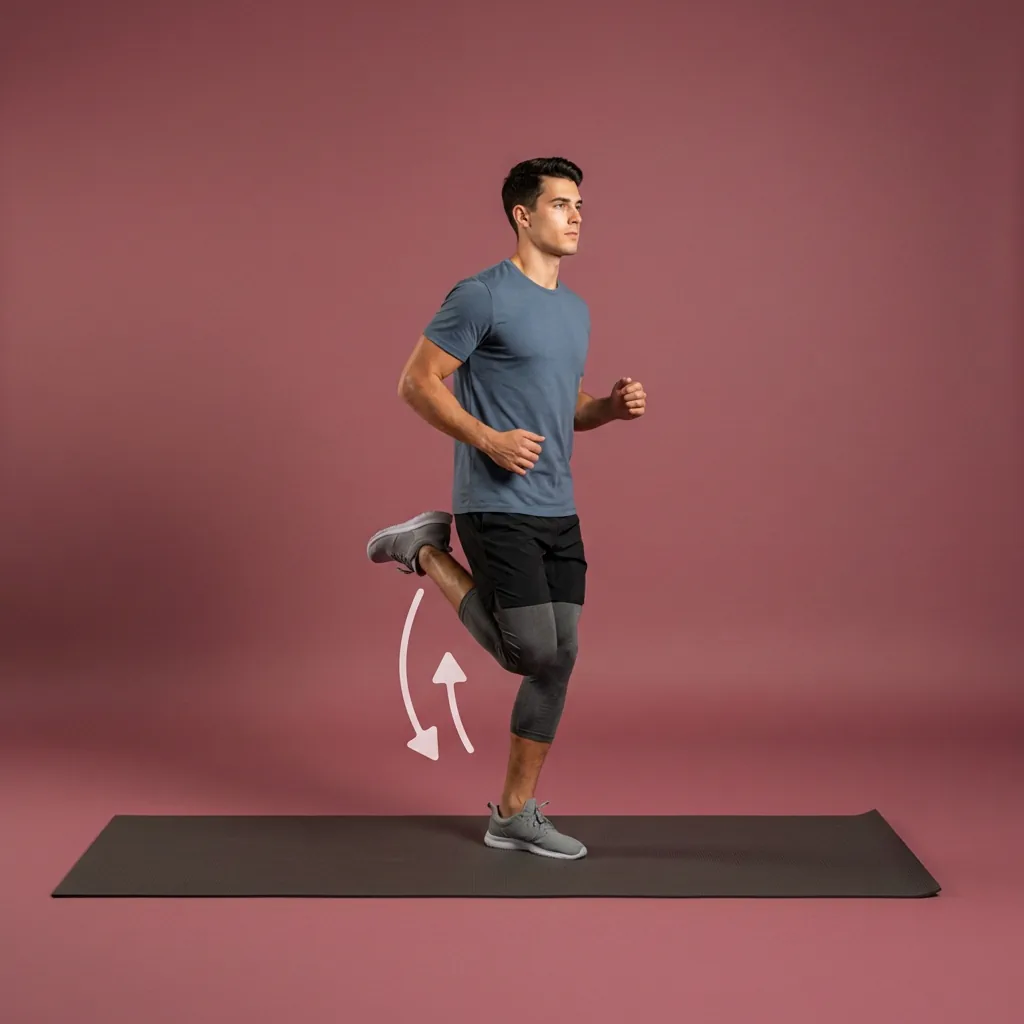
Start gently, then build
The order matters: begin slow and small, then increase range and speed. By the final strides you should feel warm and coordinated, not tired. If you are heading into intervals or a race, add a couple of gentle accelerations at the end.
Adjusting for weather and session type
- Cold days: extend the easy walking and keep layers on a little longer; muscles take more time to warm.
- Warm days: you may need less, but still rehearse the movement.
- Easy runs: a shorter, gentler version is fine.
- Faster sessions: add strides and a few build-ups.
Avoid long static holds right before running
Save held stretches like a standing calf or hamstring stretch for after the run. Immediately before faster running, long holds can briefly dull power and are not needed to warm up.
When to ease off
If something feels sharp during the warm-up, do not run through it - shorten the session or check it out. A warm-up should feel progressively easier, not more painful.
Why dynamic movement suits a pre-run warm-up
Running is a rhythmic, whole-body activity, and the best preparation looks a little like it. Dynamic movements raise your temperature, get the joints moving through range, and rehearse the coordination of running - all while keeping the muscles switched on. Long static holds immediately before a demanding effort can briefly reduce performance. Shorter holds followed by dynamic movement may have little effect; the complete warm-up matters more than treating every held stretch as unsuitable.
Scaling the warm-up to the session
Match the warm-up to the run ahead. Before an easy jog, a gentle version of the sequence is plenty. Before intervals, tempo work or a race, spend a little longer and finish with a few relaxed accelerations - short build-ups where you gradually reach near your target pace and ease off - so the first fast effort does not feel like a shock. The harder the session, the more thorough the warm-up should be.
Weather, terrain and listening to your body
Cold mornings ask for a longer, gentler build and keeping layers on until you are moving well. Warm conditions may need less, though you should still rehearse the movement. Whatever the weather, treat any sharp or worsening sensation during the warm-up as a reason to shorten or reconsider the run rather than to push through - the warm-up should leave you feeling progressively better.
Related routines
For a longer guided progression, Warm-Up: Hips and Ankles is intermediate and Warm-Up: Run-Ready Prep is advanced. Choose familiar drills that match your ability; neither is the same five-minute beginner sequence above. For the flip side, see the post-workout cool-down guide.
Sources
Put the guide into practice
Related Flexor routines
These guided routines are linked to the article topic. Review the difficulty and exercise list before starting.