The Science of Stretching: What 300 Trials Have Actually Studied
7,080 athletes, 43 sports and a research map that reveals what stretching science knows well — and where surprisingly large gaps remain.
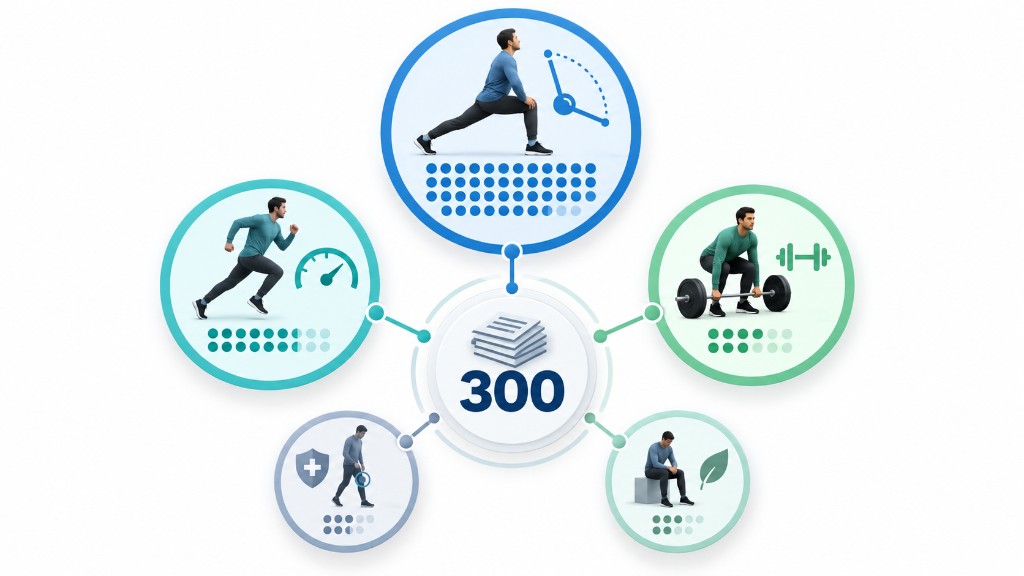
Stretching feels like one of the most researched topics in fitness — and in some ways it is. A 2024 scoping review screened roughly 220,000 records and mapped 300 independent trials involving 7,080 athletes across at least 43 sports.
But the map revealed something important: the research is not evenly distributed. Scientists have studied certain stretching methods, populations and outcomes repeatedly while leaving large gaps elsewhere. Understanding those gaps is essential when someone says “science proves stretching does X”. The science may be extensive for range of motion and immediate performance, but surprisingly thin for long-term injury prevention or elite sport.
This is an evidence map, not a verdict on stretching
The 2024 paper was a scoping review. Its job was to map what researchers had studied, not to pool all outcomes into one “stretching works” or “stretching does not work” number. That distinction is crucial: a field can contain hundreds of trials and still leave important questions unanswered if most experiments repeatedly study the same short-term outcome in similar participants.
300 trials sounds large — until you see what they studied
The trials were published between 1980 and 2022. Most involved small samples: 94% included fewer than 51 athletes, and the median trial had only 18 participants.
That does not invalidate the research. Small controlled studies can answer precise physiological questions. But it makes it harder to study uncommon outcomes such as injuries, which require larger samples and longer follow-up.
Static active stretching dominates the literature
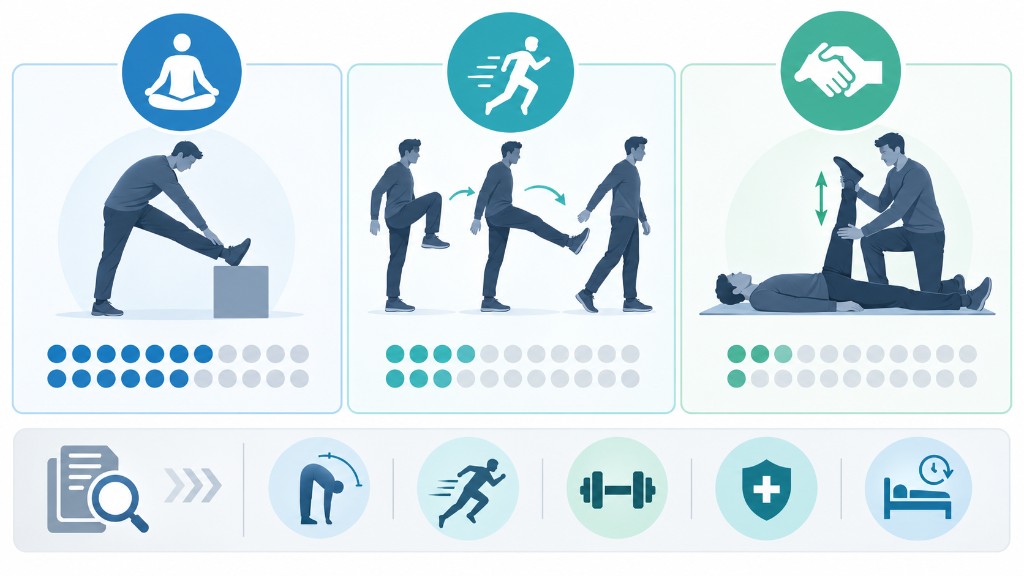
Static active stretching appeared in 62.3% of the mapped trials, dynamic stretching in 38.3%, and proprioceptive neuromuscular facilitation (PNF) in 12%. Ballistic and other methods were much less frequently studied.
This matters whenever people compare techniques. A technique with fewer studies may look “less proven” partly because researchers have simply tested it less often.
Most stretching research is really warm-up research
About 85% of trials implemented stretching in a warm-up. That creates a strong evidence base for questions such as “what happens to sprinting, jumping or strength immediately after stretching?”
It creates a weaker evidence base for different questions:
- What happens if someone stretches before bed for a year?
- How does stretching affect everyday function over decades?
- What is the best post-exercise stretching dose?
- Does independent flexibility training change injury risk across a season?
The same activity can have different effects depending on timing and purpose, so warm-up evidence should not automatically be generalized to every context.
Long-term research is the minority
Fewer than 20% of the 300 trials examined chronic effects. Chronic interventions averaged 7.4 ± 5.1 weeks and none lasted longer than six months.
This explains an apparent contradiction in stretching discussions. We know a great deal about what happens in the minutes after a stretch. We know much less about what years of structured flexibility training do to athletes.
The participants are not evenly representative either
Across the 7,080 athletes, about 65% were male, about 20% female and roughly 15% had sex unreported. Fifty-six percent of trials included only males, compared with 18% including only females. Most participants were under 36.
Elite athletes were also uncommon: only about 5% of the evidence involved tier-4 athletes and no trial included tier-5 world-class athletes. That matters because a finding from a small sample of young, trained men should not automatically be presented as a universal rule for older adults, female athletes or world-class competitors.
Soccer receives far more attention than most sports
The 300 trials covered 43 sports, but the distribution was uneven. Soccer appeared in 98 trials (about 26.2%), followed by track and field (11%), volleyball (8.6%), basketball (7.8%) and artistic gymnastics (5.1%).
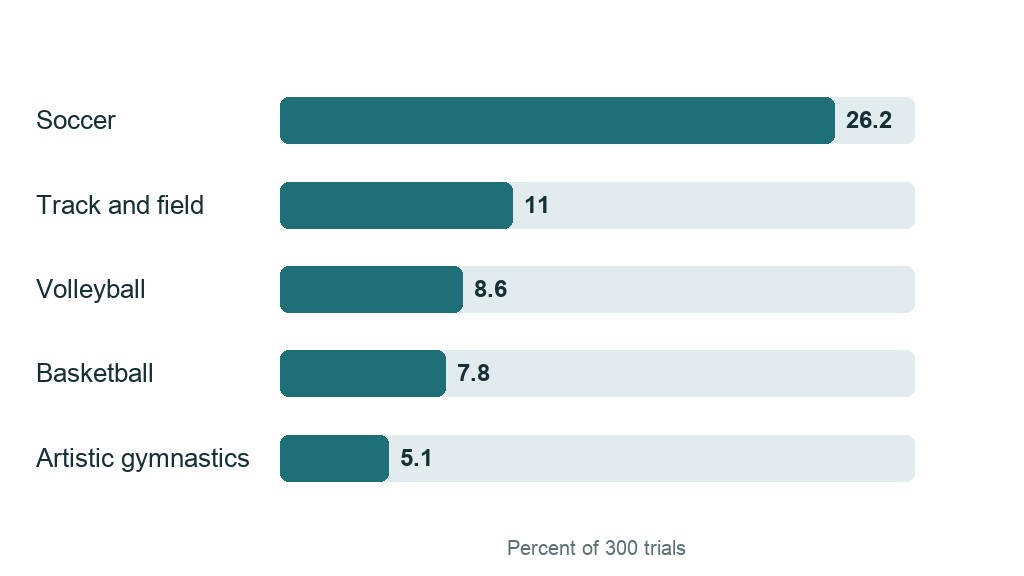
The imbalance is notable because sports requiring unusually large ranges of motion were relatively underrepresented. Research volume therefore reflects what scientists have chosen to study, not necessarily where stretching is most important in practice.
Three quarters of interventions focused on the lower limbs
Roughly 75% of stretching interventions targeted the lower limbs. That means the scientific literature on hamstrings, calves, quadriceps and hip-related range is much denser than the literature on many upper-body movements.
For a general mobility app this is important. We should not imply that a protocol validated for hamstring range has equally strong evidence for wrist, shoulder or neck flexibility.
Performance outcomes dominate
Approximately 90% of trials reported performance-related outcomes, particularly strength/power and range of motion. Sport-specific outcomes were collected in fewer than 15%.
Biomechanical, physiological, neural and psychological outcomes appeared much less consistently. That shapes the questions we can answer confidently.
For example, there are enough studies to meta-analyse the immediate effect of static stretching on measured strength or jump performance. There are far fewer studies that tell us how stretching affects confidence, comfort, movement quality or real competition performance.
The most surprising number: only five trials measured injuries
Only five of the 300 trials investigated injury-related outcomes. That is about 1.7% of the mapped trials and is striking given how often injury prevention is used to justify stretching.
This does not prove that stretching has no relationship with injury. It shows that this particular athlete literature has directly studied injury far less often than range of motion or performance. Injury trials also require larger samples, longer follow-up and good exposure data, which makes them harder to conduct than short laboratory experiments.
Older pooled reviews have not demonstrated a significant reduction in total injuries from stretching alone, but “not well studied in modern athlete trials” and “proved to have no effect in every injury type” are not the same conclusion.
Research transparency also has gaps
The review did not only map exercises and outcomes; it looked at reporting practices. Of the 300 trials, 198 — about 66% — did not provide a published funding statement, and 197 — about 65.6% — did not provide a published competing-interests statement. In total, 159 trials, or 53%, reported neither.
Reporting improved in newer research, but these numbers matter because transparency helps readers judge potential bias. A missing statement does not mean a study was improperly funded; it means the reader has less information with which to assess it.
Small samples are especially important when claims become broad
The average trial included only about 23 athletes and the median just 18. Small studies can detect large immediate changes in laboratory outcomes, but estimates can be unstable and may not generalize well across sex, sport, training status and age.
This is one reason meta-analysis is valuable: combining studies can provide a more stable estimate. But meta-analysis cannot fully fix a field in which the underlying studies repeatedly recruit the same narrow type of participant.
What this evidence map can answer well
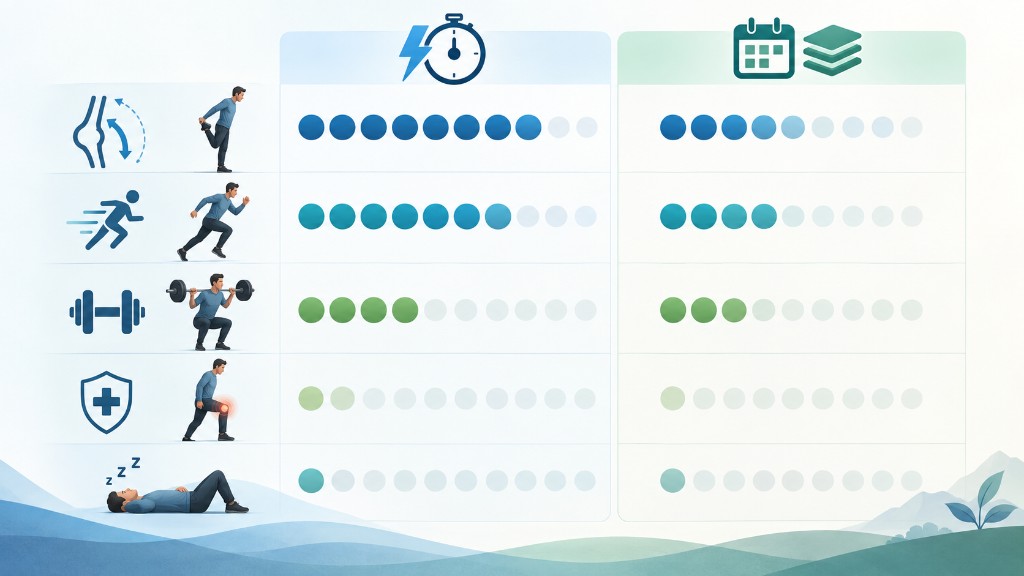
The map shows where research density is highest: short-term warm-up effects, lower-limb stretching, range of motion, strength and power outcomes. Those questions have been tested repeatedly, particularly in younger male athletes.
It is much less suited to answering questions about years of flexibility training, elite female athletes, post-exercise stretching, psychological outcomes, or season-long injury prevention. A scoping review maps what has been studied; it does not calculate one pooled verdict on whether stretching “works”.
What remains much less certain
- long-term stretching programmes beyond six months;
- injury prevention across full sporting seasons;
- optimal programming in elite and world-class athletes;
- female-athlete-specific responses in many sports;
- sport-specific outcomes in disciplines requiring extreme range;
- post-exercise stretching and several less-studied stretching methods;
- many neurological, psychological and real-world participation outcomes.
The value of the 300-trial map is precisely that it makes these gaps visible instead of allowing the sheer number of studies to create false certainty.
Why evidence gaps matter for ordinary users too
Most Flexor users are not elite athletes. But this research map teaches a broader lesson: the absence of a study is not proof of no effect, and a lab finding should not be inflated into a universal health claim.
That is why a routine such as Warm-Up: Full-Body Shakeout should be presented as movement preparation, while Full-Body Flexibility Builder is framed around range-of-motion training. Different goals deserve different evidence.
How to read stretching research more critically
Stretching science is simultaneously large and incomplete. Three hundred athlete trials provide substantial information, but the field is concentrated around small samples, male participants, lower-limb stretching, warm-ups and short-term performance.
The best evidence-based approach is not to dismiss stretching or oversell it. It is to ask a narrower question — flexibility, warm-up performance, comfort, injury, recovery — and then check whether the research base actually studied that outcome.
Sources and further reading
Put the guide into practice
Related Flexor routines
These guided routines are linked to the article topic. Review the difficulty and exercise list before starting.
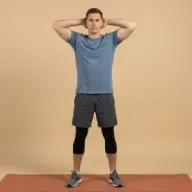
Warm-Up: Full-Body Shakeout
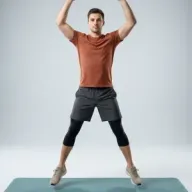
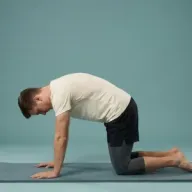
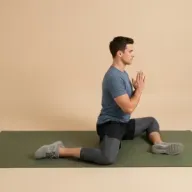
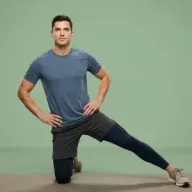
A 9-move rhythmic reboot — hip switches, adductor dips, and jumping jacks to raise core temperature and circulation.
-
-
-
-
-
- +4
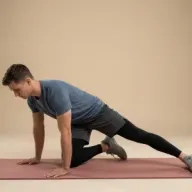
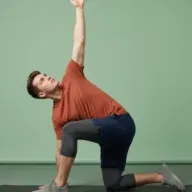
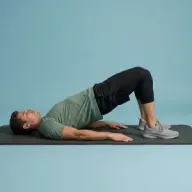
Mobility and Control
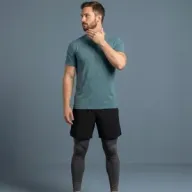
A slow 22-move session for end-range joint control — single-leg stand, dead bug, and 90/90 hip switches build active flexibility.
-
-
-
-
-
- +17
Post-Workout Stretch: Full Body
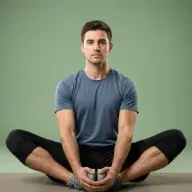
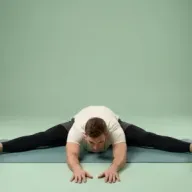
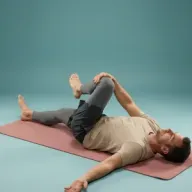
A 12-move post-training stretch — humble warrior, pancake, and legs-up-the-wall with elongated holds from head to toe.
-
-
-
-
-
- +7