
Does Stretching Prevent Injuries or Muscle Soreness? What the Evidence Says
The numbers behind two of stretching’s biggest claims: injury prevention and post-workout soreness, plus what to do before and after training instead.

Stretching is often performed before sport to prevent injury and after sport to prevent soreness. Those are two of the oldest assumptions in exercise culture — and neither is strongly supported when stretching is examined on its own.
That does not mean stretching is useless. It means we should match the claim to the evidence. Stretching reliably increases range of motion. It can fit into a warm-up or cool-down. But injury prevention and delayed-onset muscle soreness are different outcomes, and the data are far less convincing.
Does stretching prevent post-workout soreness?
The best-supported answer is not to a clinically important degree. The current Cochrane review includes 12 randomized or quasi-randomized studies. Eleven were small; one large field trial included 2,377 participants, 1,220 of whom were allocated to stretching.
At one day after exercise, pre-exercise stretching changed soreness by an average of −0.52 points on a 100-point scale (95% CI −11.30 to 10.26), while post-exercise stretching changed it by −1.04 points (95% CI −6.88 to 4.79). A large field study found a statistically significant reduction in peak soreness of −3.80 points on a 100-point scale, but Cochrane judged that effect to be very small in practical terms.
A separate 2021 meta-analysis of supervised randomized trials included 11 RCTs (10 in meta-analysis) and 229 participants, mostly young men. It likewise found no clear benefit of post-exercise stretching for DOMS at 24, 48 or 72 hours; confidence in the cumulative evidence was very low and around 70% of included studies were at high risk of bias.
An older 2002 synthesis of five small studies found the same pattern: pooled changes of −0.9 mm at 24 hours, +0.3 mm at 48 hours and −1.6 mm at 72 hours on a 100-mm scale, with confidence intervals crossing zero. The large field study’s peak-soreness change was about 4 points on a 100-point scale.
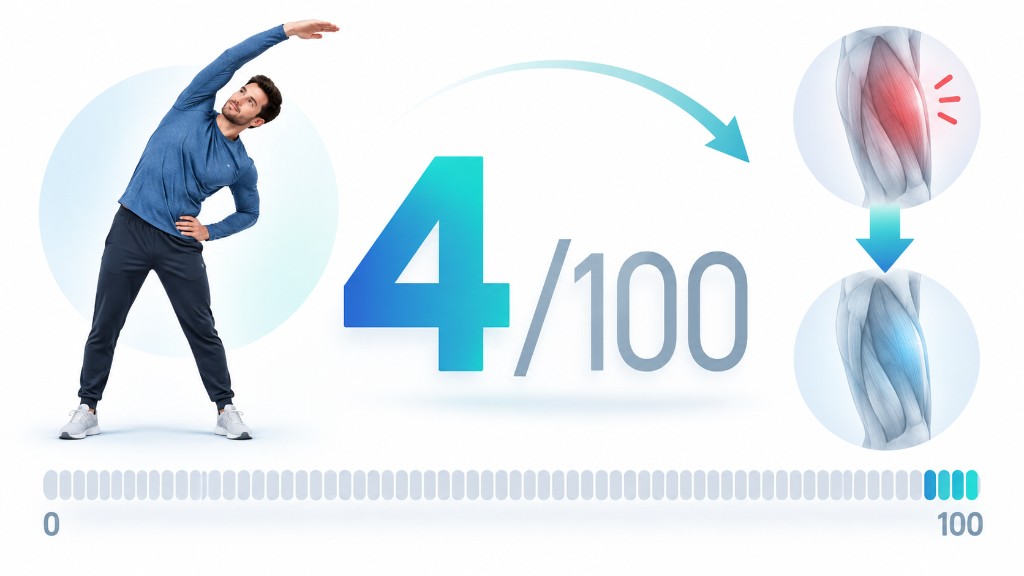
Stretching can feel pleasant after exercise. It should not be sold as reliable prevention of muscle soreness.
Why does stretching still feel good after exercise?
Feeling good and preventing DOMS are not the same outcome. A calm post-workout stretch can:
- increase range of motion temporarily;
- provide a low-intensity transition out of training;
- encourage slower breathing;
- feel pleasant after repeated muscle contractions;
- help someone maintain a regular flexibility habit.
All of those can be valid reasons to stretch without claiming it removes the microscopic and metabolic processes associated with post-exercise soreness.
Does stretching prevent sports injuries?
The pooled odds ratio of 0.93 (95% CI 0.78–1.11) is easy to misread. A point estimate below 1.0 numerically favours stretching, but the confidence interval includes both a potentially useful reduction and a possible increase. The appropriate conclusion is uncertainty/no statistically significant overall effect — not “stretching increases injuries” and not “stretching definitely prevents 7% of injuries”.
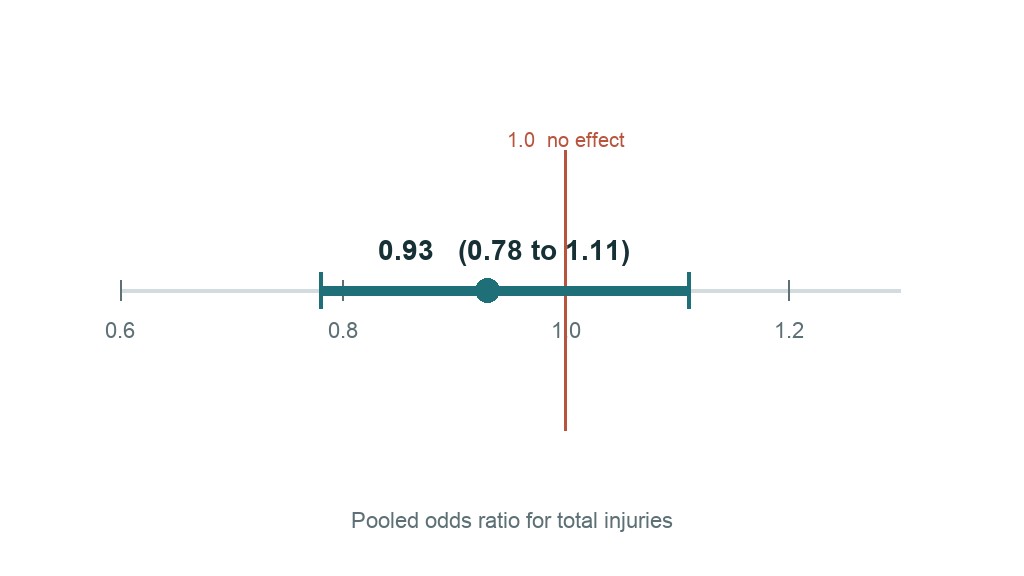
A separate systematic review of static stretching as part of warm-up reached a similar overall conclusion: routine static stretching did not reduce overall exercise-related injury rates, although some individual studies suggested possible reductions in musculotendinous injuries.
The evidence base for injury is thinner than most people realize
Modern stretching research has surprisingly little direct injury evidence. A 2024 scoping review mapped 300 trials involving 7,080 athletes, yet only five trials investigated injury-related outcomes.
That helps explain why injury discussions still cite older large military studies and pooled reviews. Injury trials need many participants, meaningful exposure time and enough actual injuries to distinguish groups; they are much harder to run than short experiments measuring immediate range of motion or jump performance.
The correct editorial conclusion is therefore two-part: stretching alone has not been shown to reduce total injury rates reliably, and the modern direct evidence base for injury outcomes remains limited.
Stretching is not the same as warming up
A proper warm-up can contain many elements: gradual cardiovascular activity, dynamic mobility, movement rehearsal, jumps, accelerations, changes of direction and task-specific loading.
If a multi-component warm-up reduces injury risk, it does not follow that the static stretching inside it was the active ingredient. This is a common error when translating sports science into advice.

Static stretching can temporarily reduce some performance measures
A 2016 systematic review reported small average immediate performance changes after different stretching methods. Static stretching was associated with about a −3.7% change overall, dynamic stretching with about +1.3%, and PNF with about −4.4% in the pooled summaries.
Duration mattered. Static stretching of 60 seconds or more per muscle group was associated with a larger performance reduction of around −4.6%, compared with about −1.1% when static stretching lasted less than 60 seconds per muscle group.
The effect is most relevant when maximum force, sprinting or explosive performance is required immediately afterwards. It does not mean long static stretching is harmful in a separate flexibility session.
What DOMS actually is
Delayed-onset muscle soreness typically develops after unfamiliar or demanding exercise, especially movements with a strong eccentric component. It usually peaks after the workout rather than during it. The soreness is not simply “lactic acid trapped in the muscle”; lactate clears far sooner than DOMS peaks.
Because DOMS reflects a complex response to unfamiliar loading, it makes sense that briefly lengthening the same muscles does not erase it. Stretching can change the sensation of range immediately without removing the training stress that produced the soreness.
Why injury prevention needs a multi-factor model
Sports injuries occur when load, tissue capacity, technique, exposure, contact, fatigue, previous injury and chance interact. A flexibility deficit can matter in some tasks, but extra passive range is not automatically protective.
For example, improving hamstring flexibility does not create the same adaptation as eccentric hamstring strength at high speed. Improving ankle range does not teach landing control. This is why modern prevention programmes often combine strength, balance, plyometrics, progressive running or cutting exposure and sport-specific movement.
Stretching can be one ingredient when range is relevant; it should not be mistaken for the whole recipe.
What should you do before sport?
For most sports, think of stretching as one possible component rather than the whole warm-up. A useful sequence is to raise body temperature, move the joints through relevant ranges, progressively increase speed or load, and rehearse the patterns the sport requires. Static stretching can be included when extra range is useful, but long intense holds immediately before maximal explosive work may not be the best priority.
Use the warm-up to prepare for the task ahead:
- raise body temperature gradually;
- move the joints through ranges needed for the activity;
- include dynamic movements rather than relying only on passive holds;
- progress toward sport-specific speed and force;
- use brief static stretching selectively if a particular restriction needs attention.
Flexor options such as Warm-Up: Full-Body Shakeout and Pre-Workout Mobility: Full Body fit that preparation model better than a long passive flexibility session immediately before explosive effort.
What should you do after sport?
If you enjoy stretching, use it for flexibility and a calm cooldown — just not as soreness insurance. Post-Workout Stretch: Full Body can provide structured range work after the demanding part of training is finished.
For recovery, the foundations remain adequate sleep, nutrition, hydration, sensible training load and enough time between hard sessions. Stretching can sit alongside those behaviours rather than replacing them.
Why the injury question needs precision
Different injuries have different mechanisms. An ankle sprain during contact, a hamstring strain at high sprint speed and a stress fracture from accumulated training load are not one biological category. It is unlikely that one generic stretching habit would influence all of them equally.
Some authors have proposed that stretching may be more relevant to musculotendinous injuries in activities involving stretch-shortening cycles than to overuse injuries or contact injuries. That remains a more specific hypothesis than “stretching prevents injury”.
What stretching can — and cannot — promise
Stretch because you want more range, because it feels good, because a movement requires it, or because it fits your routine. Do not rely on stretching alone as a proven injury-prevention strategy or a reliable way to prevent DOMS.
The evidence supports a more modern distinction: stretching develops range; warm-ups prepare performance; injury prevention requires a broader training strategy; recovery requires more than stretching.
Sources and further reading
- Cochrane — Stretching to prevent or reduce muscle soreness after exercise
- Afonso et al. — Post-exercise stretching and recovery: systematic review and meta-analysis of randomized trials
- Herbert & Gabriel — Effects of stretching before and after exercise on soreness and injury risk (BMJ systematic review)
- Hart — Effect of stretching on sport injury risk (pooled review)
- Behm et al. — Acute effects of stretching on performance, ROM and injury incidence
- Afonso et al. — Evidence gap map from 300 stretching trials in healthy athletes
Put the guide into practice
Related Flexor routines
These guided routines are linked to the article topic. Review the difficulty and exercise list before starting.
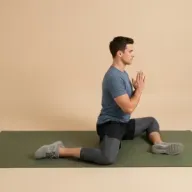
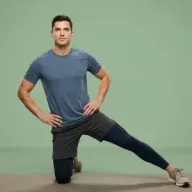
Warm-Up: Full-Body Shakeout
A 9-move rhythmic reboot — hip switches, adductor dips, and jumping jacks to raise core temperature and circulation.
-
-

-
-
-

- +4
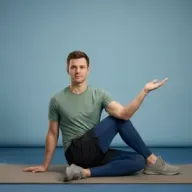
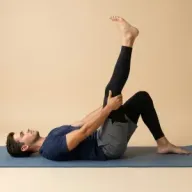
Pre-Workout Mobility: Full Body
A 12-move full-body pre-workout primer with dead hang, cat-cow, figure-four, hurdler, calf stretch, and puppy pose.
-
-

-

-

-
- +7
Post-Workout Stretch: Full Body
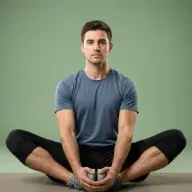
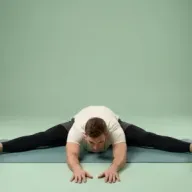
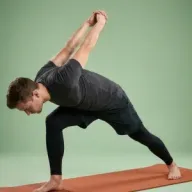
A 12-move post-training stretch — humble warrior, pancake, and legs-up-the-wall with elongated holds from head to toe.
-
-
-

-
-

- +7