
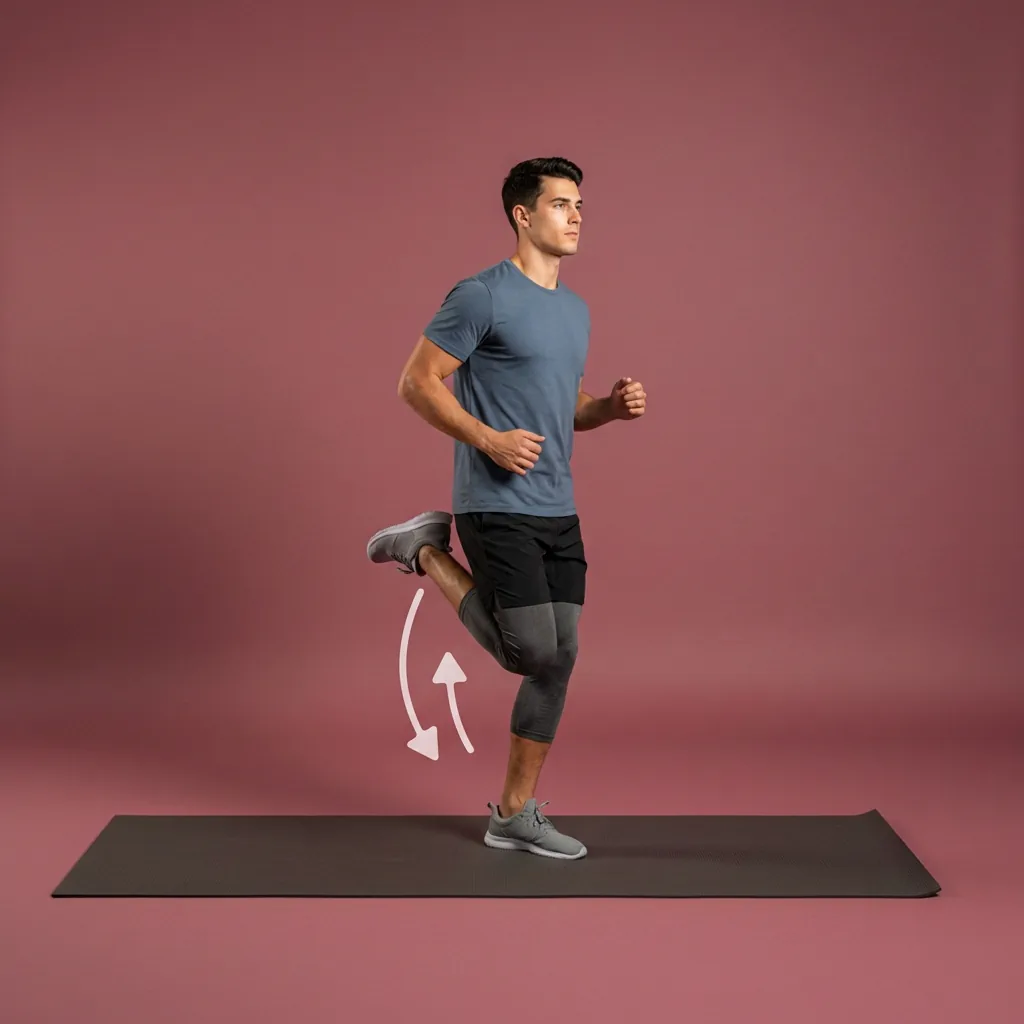
Butt Kicks
March or jog in place while flicking each heel toward the glute to warm hamstrings, calves, and running cadence.
Overview
Butt Kicks are a dynamic warm-up drill on Flexor. You march or jog in place while each heel flicks toward the glute in an alternating rhythm.
What Butt Kicks targets
The hamstrings bend the knees quickly while the calves and glutes help keep the landing springy and upright.
Why add Butt Kicks to your routine
They raise lower-body temperature and rehearse a running-style heel recovery before cardio, field sport, or sprint drills.
- Scale down to a march for low impact.
- Progress to a light jog as cadence improves.
- No equipment or travel distance required.
Who it's for
Beginners, runners, and field-sport athletes who want a simple heel-to-glute warm-up pattern.
When to do it
Use early in a warm-up before running, jumping, or agility work.
Butt Kicks are a warm-up march or light jog where each heel flicks toward the same-side glute. The thighs stay mostly under the body so the movement feels like quick hamstring recoil, not a big backward kick.
Setup cue
Stand tall and begin with an easy march in place, keeping the ribs stacked over the pelvis. Bend one knee and flick that heel toward the same-side glute while the opposite foot lands lightly.
Practice notes
In Flexor, Butt Kicks is typically prescribed as about 45 sec per round, 1 rep, and 1 set. Adjust the dosage to what feels sustainable, breathe steadily, and ease off if anything feels sharp or unsafe.
Guidance
How to perform, tips, mistakes, safety notes, and benefits for Butt Kicks.
Follow these cues in order. Move with control and stay in a comfortable range.
- Stand tall and begin with an easy march in place, keeping the ribs stacked over the pelvis.
- Bend one knee and flick that heel toward the same-side glute while the opposite foot lands lightly.
- Alternate heels in a steady march or gentle jog, keeping the thighs mostly under your hips.
- Stay springy on the mid-foot and slow down if the heel flick turns into heavy stomping.
Cues that help the movement stay smoother and more controlled.
- Think heel to glute, not knee swinging far behind the body.
- Keep the chest tall and let the arms swing naturally like an easy run.
- Land quietly under the hips so the cadence stays quick but controlled.
Patterns to watch for so the shape stays clearer.
- Leaning forward and kicking the feet behind instead of bending the knees.
- Arching the lower back to make the heel reach higher toward the glute.
- Starting at a sprint tempo before the ankles, calves, and hamstrings feel warm.
Keep things comfortable and stop if something feels wrong.
- Modify or avoid high-impact versions if you have acute joint pain or are returning from injury—use a lower-impact march instead.
- Stop if you feel sharp pain, numbness, tingling, dizziness, or symptoms that radiate.
- Stay within a comfortable, controlled range; muscular effort or mild stretch tension should not become pain.
- Move smoothly without bouncing, jerking, or forcing the range.
Why people include this movement in their practice.
- Warms the hamstrings through a running-like knee-bend pattern before faster work.
- Raises heart rate and lower-leg temperature without needing space to travel.
- Can be scaled from a low-impact march to a light jog in place.
Similar movements to explore next
-
Controlled Butt Kicks
March in place and draw each heel toward the glute at a slow, controlled tempo.
-
Bridge
Lie on your back, drive through both feet, and lift the pelvis by extending the hips while the ribs and lower back stay controlled.
-
Dynamic Wide Leg Forward Fold
Hinge forward from a wide stance and rise repeatedly to warm the hamstrings and hips.
-
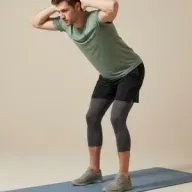
Good Mornings
Stand with hands behind your head and hinge forward at the hips, sending the hips back with a long spine.
-
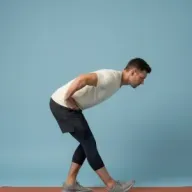
Hamstring Scoops
Step forward onto a flexed front foot and sweep both hands toward the toes in a dynamic hamstring hinge.
-
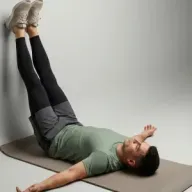
Legs Up the Wall
Lie on your back with both legs supported vertically by a wall for a calm, low-effort resting position through the hips and legs.
-
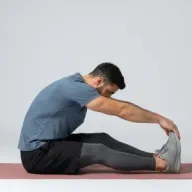
Seated Fold
Seated forward fold with legs extended to lengthen hamstrings and the entire back line.
-
Back Leg Raise
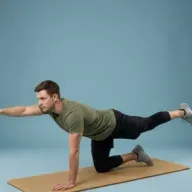
Stand with light wall or chair support and extend one straight leg behind you to activate the glute without arching the lower back.
Common questions
Which body areas does Butt Kicks target?
Butt Kicks is a warm up movement that mainly targets your hamstrings, calves, and glutes. Move within a comfortable range and skip it if it does not feel suitable for you.
Which muscles does Butt Kicks work?
Primary muscles associated with Butt Kicks include biceps femoris, gastrocnemius, and gluteus maximus. Flexor presents this as general wellness guidance, not a clinical assessment.
Is Butt Kicks suitable for beginners?
Butt Kicks is listed as beginner in Flexor. Choose a smaller range of motion, fewer repetitions, or an easier variation whenever you want more control.
How long should you hold Butt Kicks?
In Flexor, Butt Kicks runs for about 45 sec per round. Adjust the time to what feels sustainable, breathe steadily, and ease off sooner if anything feels sharp.
How do you do Butt Kicks?
Butt Kicks has 4 guided steps. Follow them in order on this page, breathe steadily, and keep the movement smooth and within a comfortable range. Stop if anything feels sharp, unstable, or unsafe for you.
Do you need any equipment for Butt Kicks?
No. Butt Kicks is a no-equipment movement you can do at home with just enough space to move comfortably.
Which Flexor routines include Butt Kicks?
Butt Kicks appears in guided Flexor sessions such as Warm-Up: Court Quickness. Open a routine page to follow the full sequence, or practise this movement on its own from this guide.
Is this medical advice?
No. Flexor provides general fitness and wellness guidance. It does not diagnose, treat, or prevent medical conditions. Speak with a qualified professional about injuries, persistent pain, or health concerns.