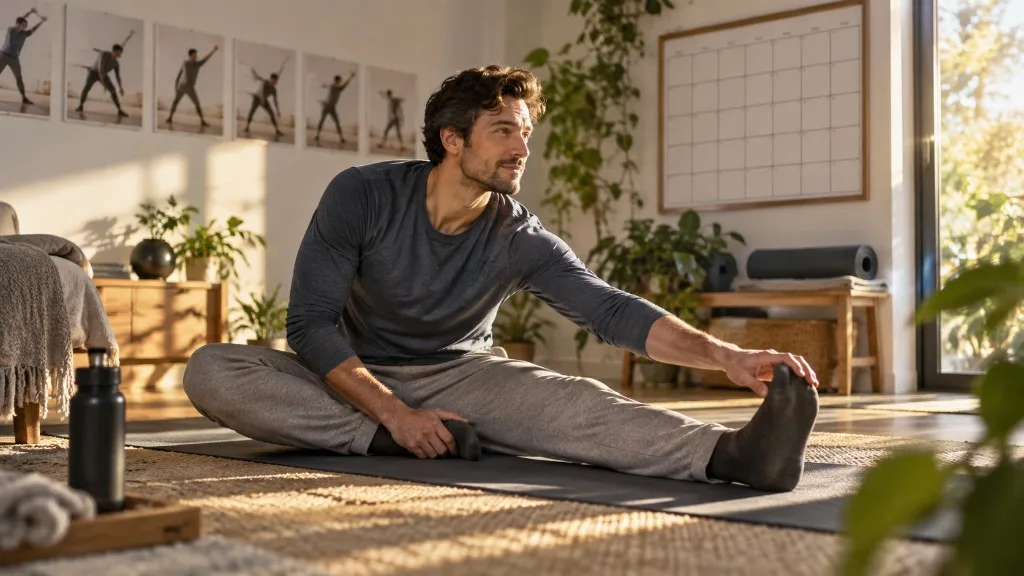
10-Minute Full-Body Stretch Routine for Beginners
A balanced ten-minute sequence that touches the main body regions without trying to stretch everything.
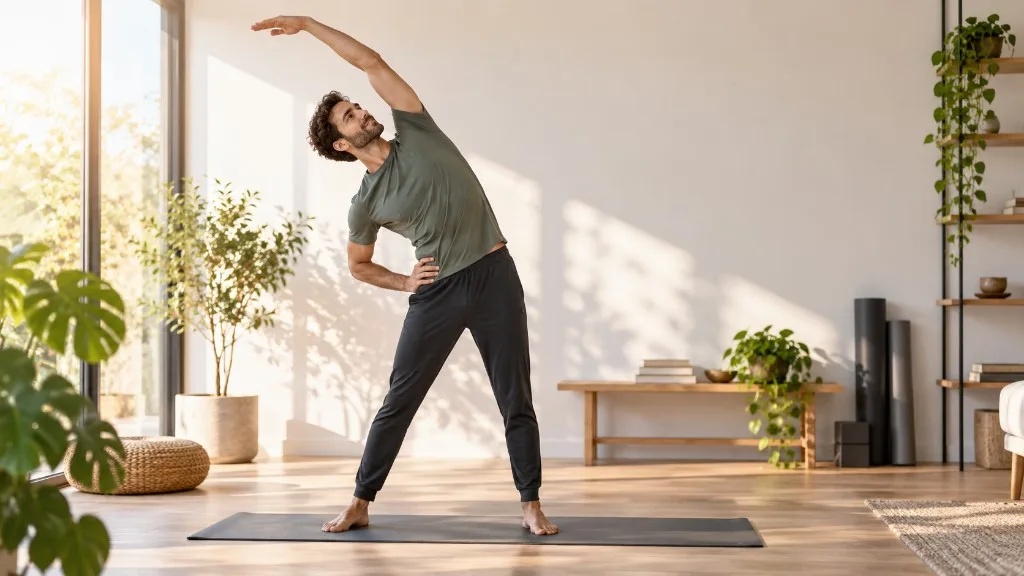
You do not need to stretch every muscle to feel looser. A sensible full-body routine visits the main regions - back, hips, legs and shoulders - and gives each a little attention. This ten-minute sequence does exactly that, with eight movements and clear timings so the whole thing fits the time you have.
All you need is a mat or soft floor. Keep each position within a comfortable range and let your breathing stay slow.
Who this suits
This is a general beginner routine for people who want one repeatable session rather than a long list of stretches. It is not tailored to a specific injury. If you have one, ask a clinician which movements fit your recovery plan.
The ten-minute sequence
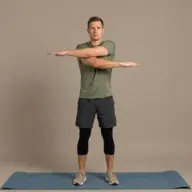
- Arm circles - 40 seconds. Loosen the shoulders with slow forward and backward circles.
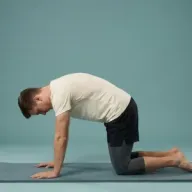
- Cat-cow - 60 seconds. Move the spine gently between rounding and arching.
- Child's pose - 60 seconds. Lengthen the back and hips, breathing into the stretch.
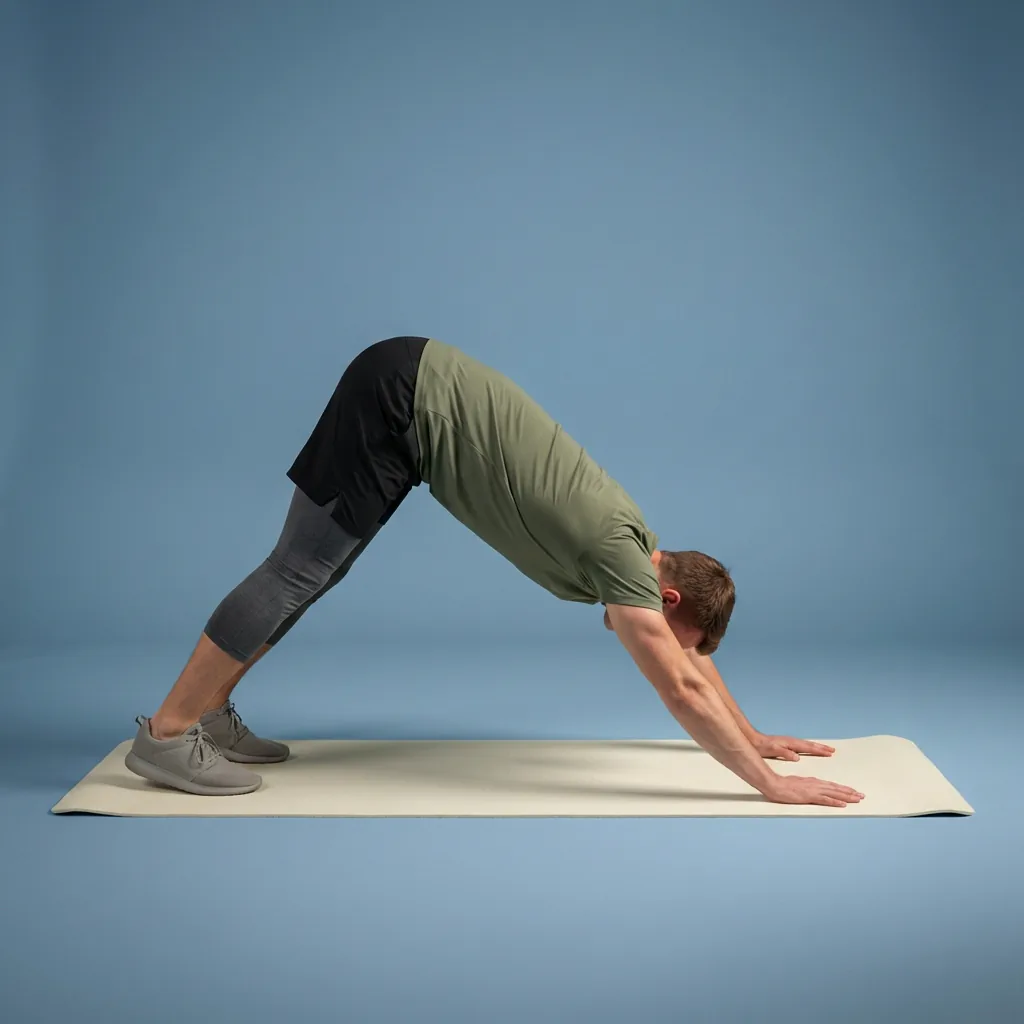
- Downward dog - 60 seconds. From all fours, lift the hips up and back, keeping the knees soft, to lengthen the backs of the legs and the spine.
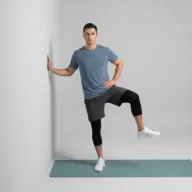
- Standing hip openers - 60 seconds, split across sides. Circle each hip in turn to open the front and sides of the hips.
- Forward fold - 60 seconds. Hinge forward with soft knees for the hamstrings and lower back.
- Seated twist - 80 seconds, both sides. Sitting tall, rotate gently towards one side, then the other, to mobilise the spine.
- Calf stretch - 80 seconds, both sides. Ease one heel towards the floor to lengthen the calf, then swap.
Left and right sides
For the hip, twist and calf movements, share the time evenly between sides. Roughly equal attention keeps the routine balanced.
Easier variations
- Bend the knees generously in downward dog and forward fold to protect the lower back.
- Do the twist on a chair if the floor is uncomfortable.
- Use a wall or step for the calf stretch if balance is tricky.
Common mistakes
- Trying to reach a deep range on day one. Comfortable and repeatable beats deep and sore.
- Skipping sides so one hip or calf gets more attention than the other.
- Bouncing in and out of positions rather than easing in and holding.
When to stop
Ease off if you feel sharp pain, numbness or tingling. Occasional stiffness is normal; pain that builds through the routine is a signal to stop and reassess.
What you should feel in each area
A useful rule of thumb is to aim for a stretch you would rate around three or four out of ten - noticeable, but easy to breathe through. In the downward dog and forward fold you should feel the backs of the legs and the lower back gently lengthen; keep the knees soft so the sensation stays in the muscle rather than the joints. In the twist, the feeling should be a broad rotation through the mid-back, not a pinch. If any position sharpens past a comfortable stretch, ease back until it settles.
How to progress over the weeks
Rather than forcing deeper positions, let range come to you. As the sequence becomes familiar, you can hold each stretch a little longer, add a second slow round of cat-cow or the twist, or reduce how much you bend the knees in the forward fold. Progress in mobility usually shows up as positions feeling easier at the same depth, not as dramatic new range overnight.
Making it fit a real day
Ten minutes is short enough to slot in after a shower, during a work break, or in the evening while something cooks. If you only have five, do the first four movements; if you have fifteen, spend longer on a few comfortable movements. Treating it as flexible rather than all-or-nothing is what keeps it going.
Related routines
For a guided beginner option, try Rise and Shine. Full Body Flow and Recovery: Full-Body Reset are marked intermediate in the catalogue; they include more demanding floor positions and are choices to build towards.
Sources
Put the guide into practice
Related Flexor routines
These guided routines are linked to the article topic. Review the difficulty and exercise list before starting.