10-Minute Daily Mobility Routine for Stiff Joints
A controlled, top-to-toe sequence for neck, spine, hips, knees and ankles when joints feel stiff.

Stiff joints often feel better with gentle, regular movement that takes them through their range without strain. This ten-minute routine works from the neck down to the ankles, using slow and controlled movements. A quick caveat before we start: not all joint stiffness is down to a lack of stretching - age, arthritis, activity levels and general health all play a part - so treat this as comfortable daily movement rather than a fix for any specific condition.
Who this suits
Anyone who feels generally stiff and wants a calm daily habit. If you have a diagnosed joint condition, this can often complement - not replace - advice from your clinician.
The ten-minute sequence
- Neck rotation - 40 seconds. Turn slowly to look over each shoulder within an easy range.
- Shoulder rolls - 40 seconds. Roll the shoulders backwards in slow circles.
- Arm circles - 40 seconds. Gradually widen the circles as the shoulders warm.
- Cat-cow - 70 seconds. Move the spine gently between rounding and arching.
- Seated spinal twist - 70 seconds, both sides. Rotate gently through the mid-back.
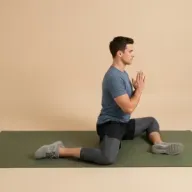
- Kneeling hip circles - 70 seconds. Slow circles to mobilise the hips in every direction.
- Knee circles - 60 seconds. With feet together and knees softly bent, draw gentle circles to ease the knees.
- Ankle circles - 60 seconds, both sides. Circle each ankle both ways.
- Heel-to-toe rocks - 60 seconds. Rock gently from heels to toes to finish at the feet and ankles.

Controlled pace and comfortable range
Speed is not the point. Move slowly enough that you could stop at any moment, and keep every joint inside a range that feels smooth. If a joint clicks painlessly, that is usually nothing to worry about; if a movement is sharp, make it smaller.
Easier variations
- Do the twist and hip circles seated if kneeling is uncomfortable.
- Hold a chair for the standing foot and ankle work.
- Shorten any movement that aggravates a sensitive joint.
When to stop
Stop for sharp joint pain, swelling that worsens with movement, or symptoms that spread. Persistent or worsening joint pain deserves a professional assessment.
What gentle daily movement does for joints
Joints are designed to move, and regular, comfortable movement is part of keeping them feeling supple. Moving a joint through its range encourages the natural fluid that lubricates it to circulate, and helps you maintain the range you already have. None of this is a cure for any condition - it is simply the everyday movement that stiff joints tend to appreciate. If you have arthritis or another diagnosed joint condition, organisations such as Versus Arthritis encourage staying active within comfort, alongside advice from your own clinician.
Consistency over intensity
For stiff joints, a little every day usually beats a long session now and then. You may find daily practice comfortable, but a gentle label does not guarantee that a routine will suit every joint. Reduce the amount or take a recovery day if symptoms increase. On days when a particular joint feels more sensitive, reduce the range for that joint and keep the rest of the sequence going.
Adapting the routine to you
Treat the sequence as a template. If your stiffness is mostly in the lower body, spend a little longer on the hips, knees and ankles; if it is upper body, give more time to the neck, shoulders and spine. The order - working from the top down - simply makes it easy to remember, so you can run through it without thinking.
Related routines
For guided daily movement, Mobility and Control and a gentle mobility day keep the intensity low, and Rise and Shine works well first thing.
Sources
Put the guide into practice
Related Flexor routines
These guided routines are linked to the article topic. Review the difficulty and exercise list before starting.