5-Minute Morning Stretch Routine for Beginners
A short, follow-along sequence to ease morning stiffness without turning waking up into a workout.

Mornings often feel stiff because you have been still for hours and your joints have not moved through much range yet. A short sequence of gentle movements can help you feel more comfortable before the day starts. This five-minute routine uses six easy movements and needs no equipment, just enough floor space to kneel and stand.
Move slowly, breathe steadily, and stay within a range that feels like mild tension rather than a strong pull. If anything feels sharp, ease off.
Who this suits
This is aimed at beginners and anyone who wakes up feeling a little seized up. It is deliberately calm, so it also works as a gentle start on a rest day.
The five-minute routine
Timings below add up to roughly five minutes including short pauses to move between positions.
- Neck laterals - 40 seconds. Sitting or standing tall, gently tilt one ear towards that shoulder, feel a light stretch along the side of the neck, then return and repeat to the other side. Keep it slow and small.
- Arm circles - 30 seconds. Circle the arms forwards for several rotations, then backwards, gradually making the circles a little larger as the shoulders warm up.
- Cat-cow - 60 seconds. On all fours, alternate between gently rounding and softly arching the spine in time with your breath. This wakes up the whole back.
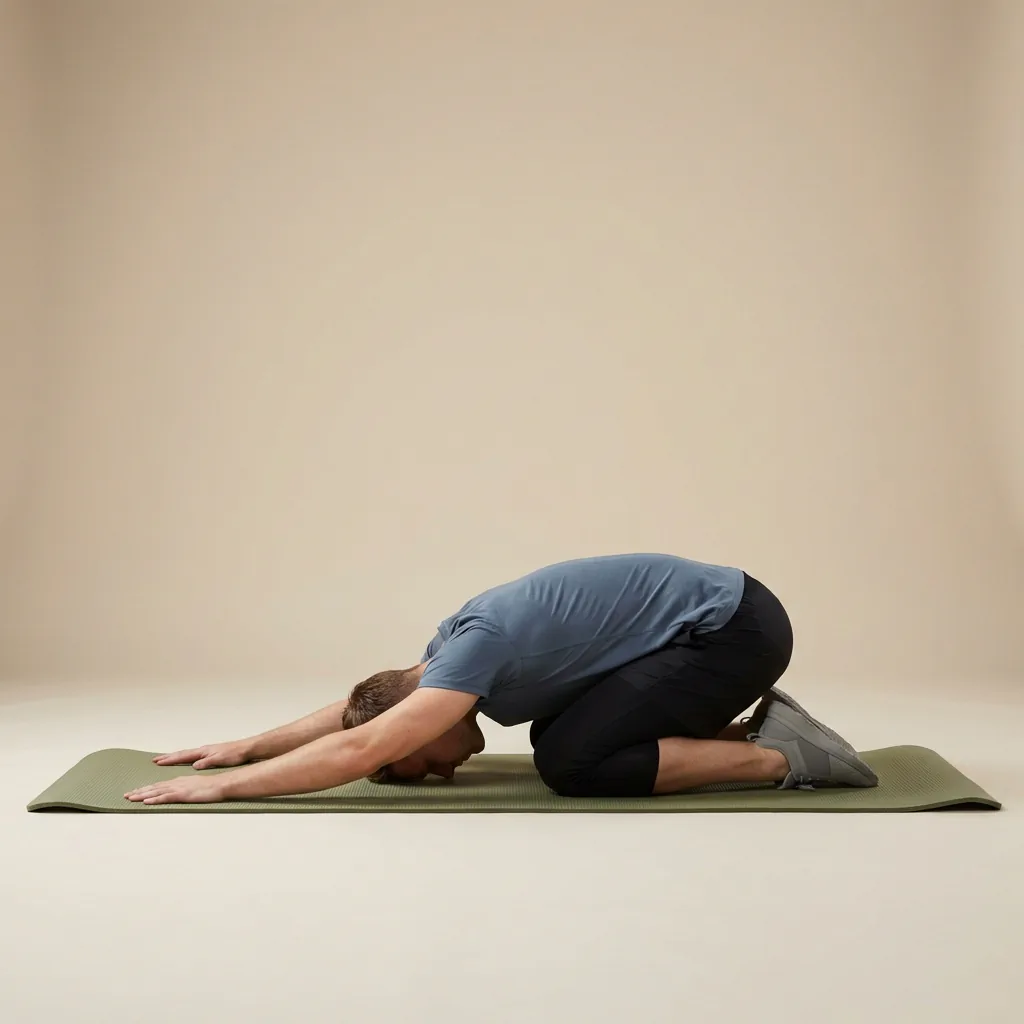
- Child's pose - 45 seconds. Sit your hips back towards your heels and reach the arms forward, letting the back and hips lengthen. Breathe slowly.
- Standing hip openers - 40 seconds. Standing tall, lift one knee and draw slow circles with the hip, then swap sides. Hold something stable if you need balance.
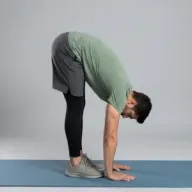
- Forward fold - 45 seconds. Stand and hinge forward with soft knees, letting the head and arms hang. Bend the knees as much as you need so the lower back stays comfortable.
Sides and balance
For the neck and hip movements, give each side roughly equal time. If one side feels tighter, you can spend a few extra seconds there, but there is no need to force it to match.
Easier variations
- Do cat-cow seated on a chair if kneeling is uncomfortable.
- Rest your forearms on a sofa for child's pose instead of reaching to the floor.
- Keep the forward fold shallow, hands to your thighs or shins, if your hamstrings or back feel tight.
Common mistakes
- Rushing. Five minutes is plenty; speed removes the benefit of a calm start.
- Pushing into a deep stretch first thing, when the body is least warmed up.
- Holding your breath instead of letting it stay slow and even.
When to stop
Mild stretching sensations are fine. Stop and reassess if you feel sharp pain, pins and needles, or dizziness on standing. If morning stiffness is severe, lasts well into the day, or comes with swelling, it is worth mentioning to a GP.
Make it a habit
For a longer guided beginner option, Rise and Shine is a beginner morning flow, and Mini Mobility Boost is a good option when you are short on time.
Why mornings feel stiff
After several hours lying still, your joints have not moved through much range and everything can feel a little seized up. That morning stiffness is common and usually eases within minutes of moving. Gentle movement may help you feel more comfortable, although not everyone responds in the same way.
What each movement should feel like
Aim for a light, comfortable stretch or an easy sense of movement - never a sharp pull first thing. In cat-cow, follow the movement with your breath: inhale as you arch, exhale as you round. In child's pose and the forward fold, let gravity do the work rather than forcing the range. If a position feels strong in the morning, make it smaller; the same stretch will usually feel easier later in the day.
Turning five minutes into a lasting habit
The simplest way to make a morning routine stick is to attach it to something you already do - rolling out of bed, waiting for the kettle, or before your first coffee. Keeping it genuinely short removes the main excuse for skipping it. If you miss a day, simply pick it up the next morning; consistency over weeks matters far more than a perfect streak.
Sources
Put the guide into practice
Related Flexor routines
These guided routines are linked to the article topic. Review the difficulty and exercise list before starting.