Tight Hips? 8 Hip Flexor and Glute Stretches to Try
Hip flexor and glute stretches plus controlled hip mobility, with easier variations for stiff hips.
"Tightness" is a sensation, not a diagnosis. A hip can feel tight because of position, how much you have been sitting, how strong the area is, or simply a lack of recent movement - not necessarily because a muscle is permanently short. The good news is that gentle, regular hip work usually feels good. Here are eight options that target the hip flexors at the front, the glutes at the back, and controlled movement in between.
Who this suits
Anyone with generally stiff hips, especially if you sit a lot. Work within a comfortable range and skip anything that pinches at the front of the hip.
Hip flexor stretches (front of the hip)
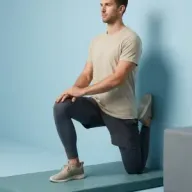
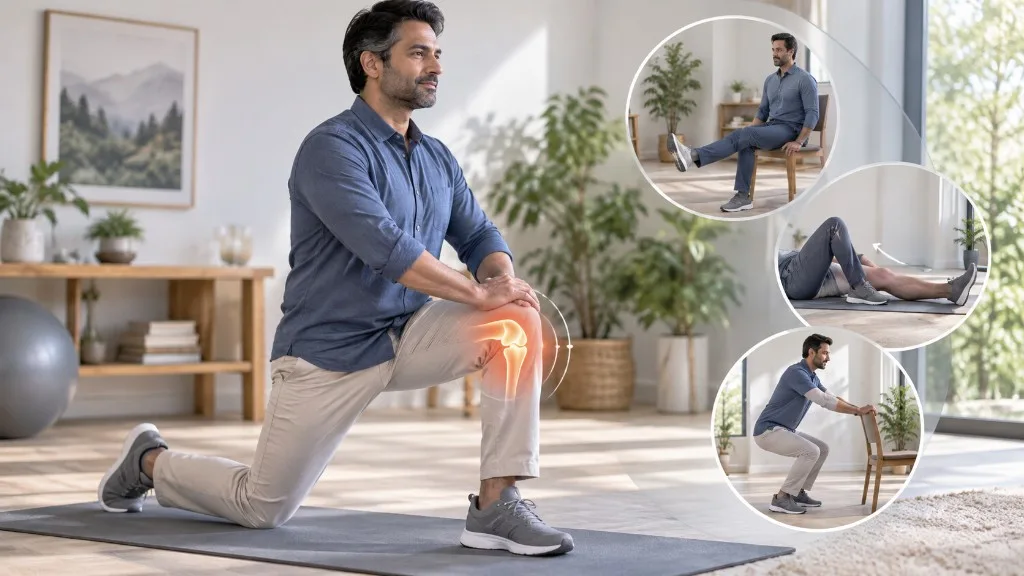
- Kneeling hip flexor stretch. From a half-kneeling position, ease the hips forward until you feel a gentle stretch at the front of the back leg. Hold 20-30 seconds each side.
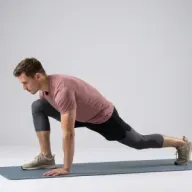
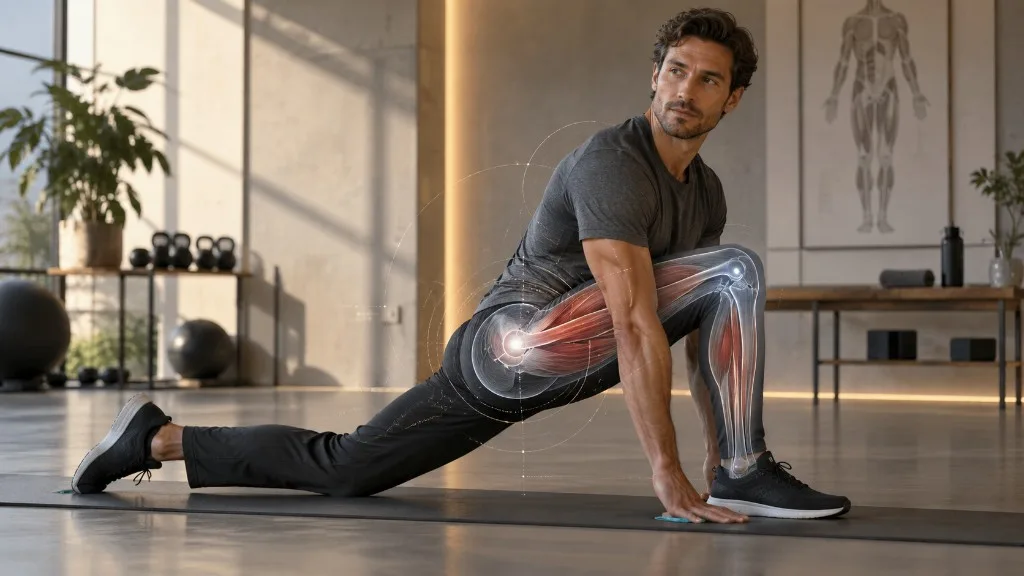
- Low lunge. Step one foot forward and sink gently, keeping the front knee over the ankle, to open the trailing hip.
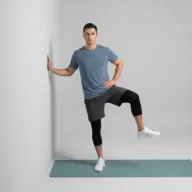
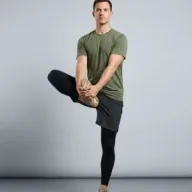
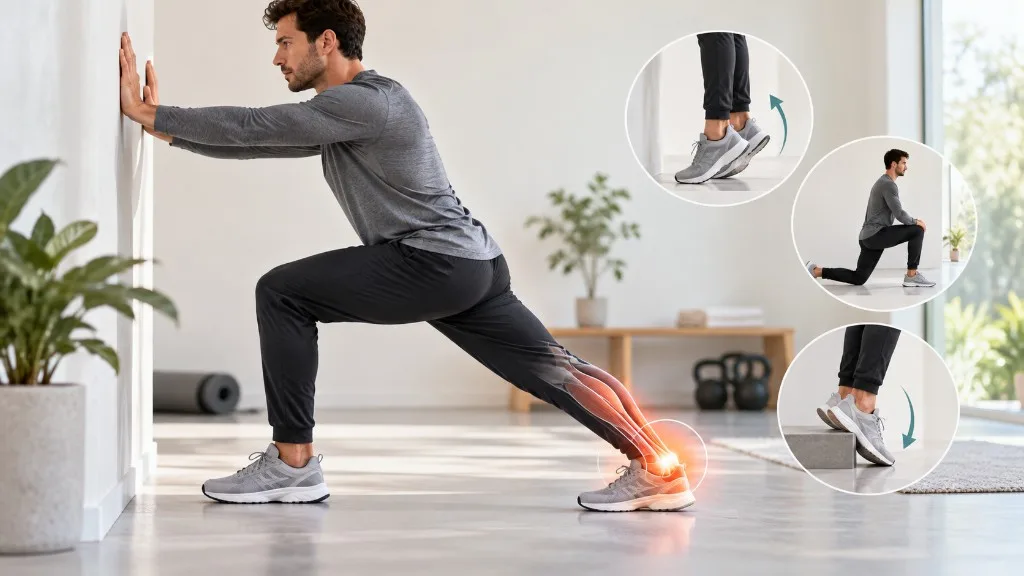
- Couch stretch. A stronger hip-flexor and quad stretch with the back foot elevated; ease in slowly and only if the front-of-hip stretch feels comfortable.
Glute stretches (back of the hip)
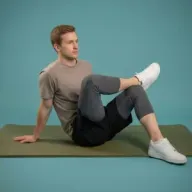
- Lying figure-four. On your back, cross one ankle over the opposite thigh and draw the legs gently towards you.
- Seated figure-four. The same shape in a chair - handy at a desk.
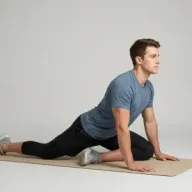
- Pigeon. A deeper glute and hip stretch; use support under the hip and keep it gentle.
Controlled hip mobility
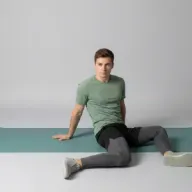
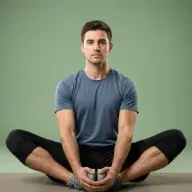
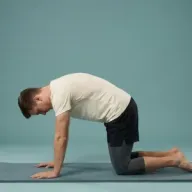
- 90/90 hip switch. Rotate between two seated hip positions under control to work rotation actively.
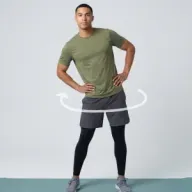
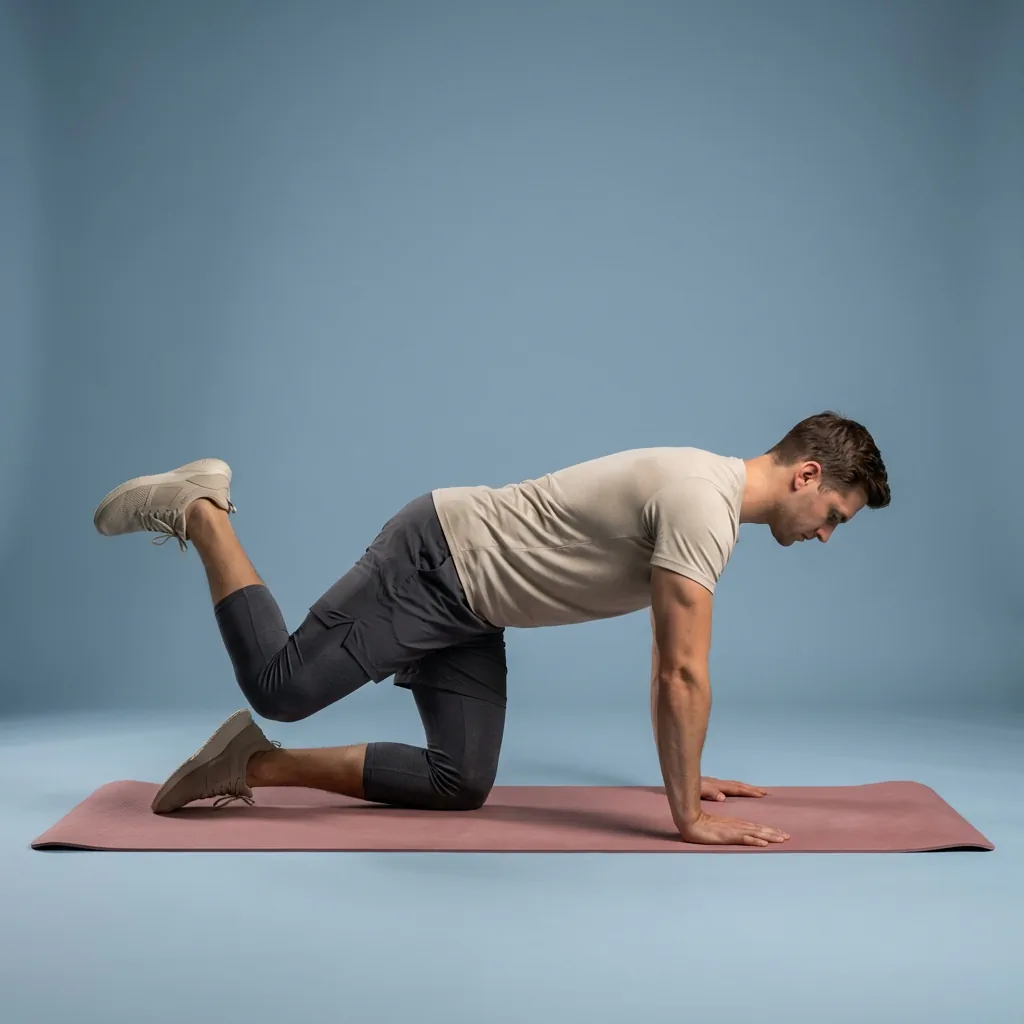
- Kneeling hip circles. Draw slow circles with the hip to explore range in every direction.
Easier variations
- Pad the knee for any kneeling stretch.
- Choose the seated figure-four over pigeon if the floor version feels too strong.
- Keep the lunge shallow and hold something stable for balance.
Common mistakes
- Forcing depth in pigeon before the hips are ready.
- Arching the lower back in hip-flexor stretches instead of gently tucking the pelvis.
- Only stretching the front of the hip and neglecting the glutes, or vice versa.
When to stop
Ease off for sharp pain at the front of the hip, pinching in the joint, or any pain that travels down the leg. A broad muscular stretch is fine; a sharp catch is not.
Why sitting can leave hips feeling tight
When you sit for long stretches, the hips stay bent in a limited set of positions. This does not mean the glutes switch off or the muscles become permanently short. Gentle movements for the front and back of the hips offer different ways to explore your available range; choose positions you can enter and leave comfortably.
How to progress the deeper stretches
Pigeon and the couch stretch are the strongest options here and are worth building towards rather than forcing. Start with the seated figure-four and kneeling hip-flexor stretch, and only move to the floor versions once those feel comfortable. Use cushions generously under the hip or knee. As with all mobility work, the sign of progress is a familiar position feeling easier, not a dramatic new depth in one session.
Pairing stretching with a little strength
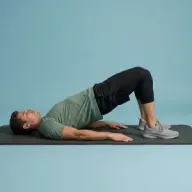
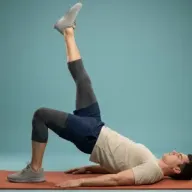
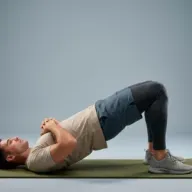
Hips that both move well and are a little stronger tend to feel more comfortable day to day. Once the stretches feel easy, adding gentle glute work - like a bridge - complements the mobility and helps the area feel more supported. Think of it as making room with the stretches, then learning to use that room.
Related routines
Guided options include Hip Opener Flow, Unlock Hip Flexors for the front, and Glute Hip Reset for the back.
Sources
Put the guide into practice
Related Flexor routines
These guided routines are linked to the article topic. Review the difficulty and exercise list before starting.