Knee Pain and Stiffness: 7 Gentle Mobility Exercises
Low-intensity knee movements, plus the hip and ankle work that supports comfortable knees.
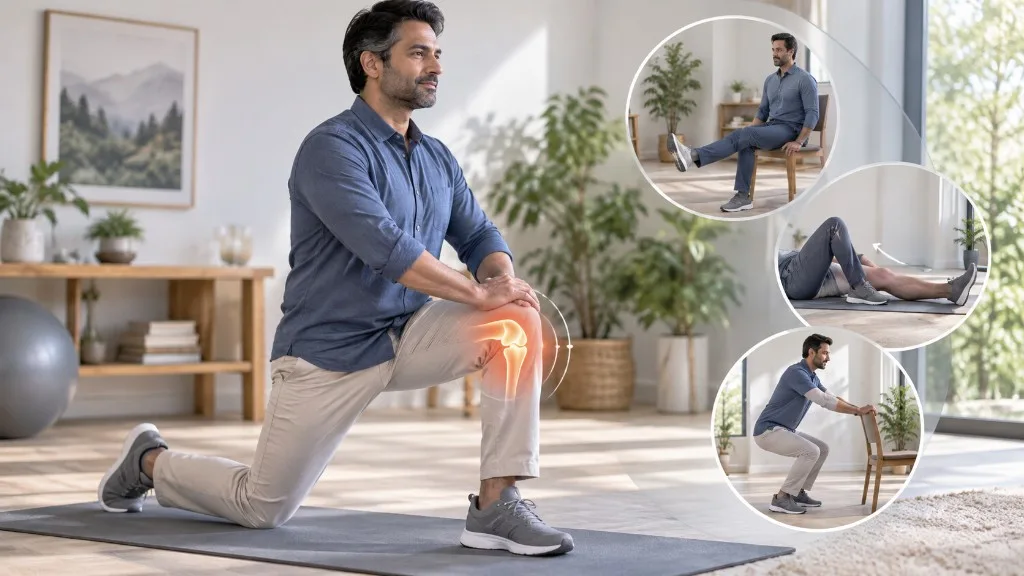
Knee comfort depends on more than the knee itself: the hips above and the ankles below both influence how the joint moves. This guide offers low-intensity movements for general knee stiffness. Knee pain has many possible causes, so no single routine suits every situation - if your pain is significant, follows an injury, or keeps returning, a professional assessment is the right next step.
Who this suits
People with mild, general knee stiffness who want gentle daily movement. Avoid ranges that are sharply painful.
Seven gentle movements
- Knee circles. With feet together and knees softly bent, draw slow circles to ease the joint.
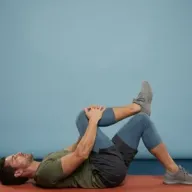
- Knee to chest. Draw one knee gently towards the chest to move the knee and hip together.
- Standing quad stretch. Hold a support, draw one heel towards the seat within comfort, and keep the knees close.
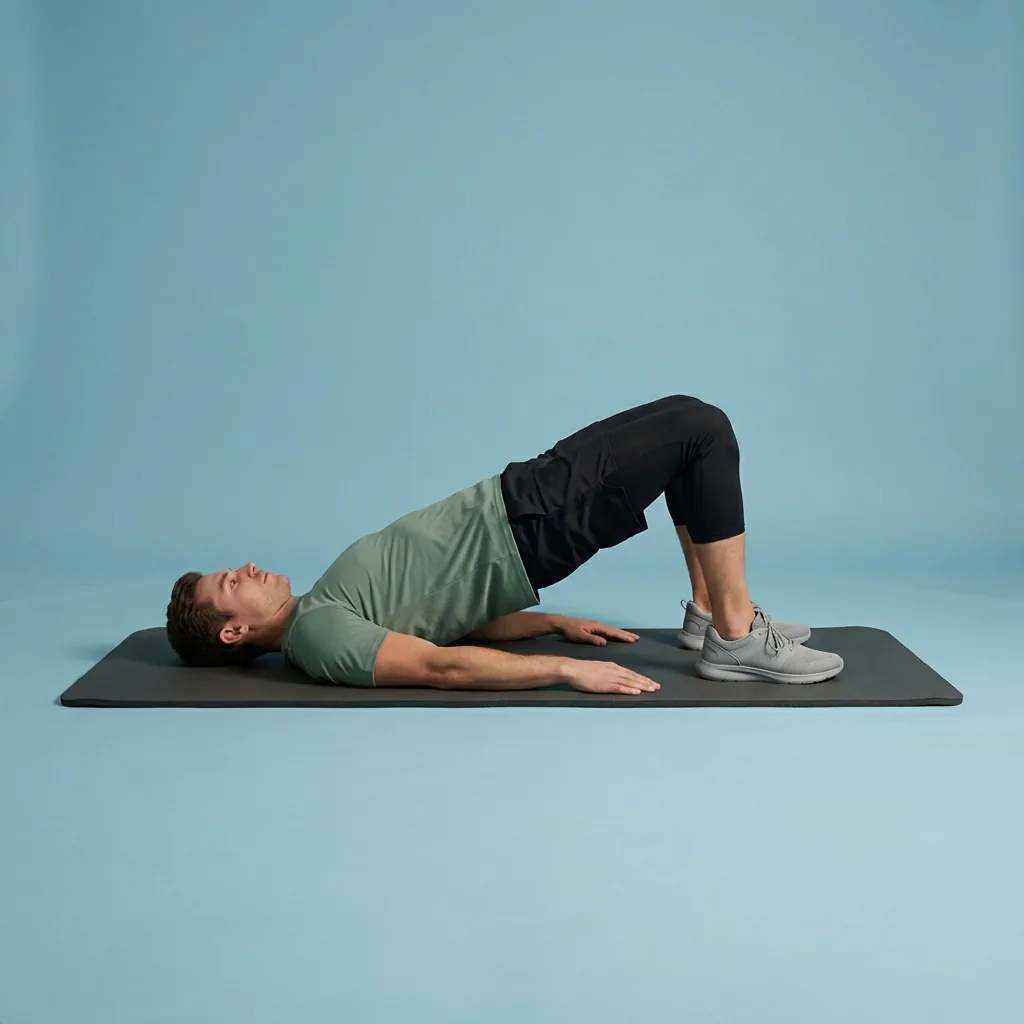
- Bridge. Lift the hips using the glutes to build support around the knee without loading it deeply.
- Standing hip openers. Circle the hips to keep the joint above the knee moving well.
- Calf raises. Slow raises support the ankle and lower leg that share load with the knee.
- Supported shallow squat. Lower only as far as is comfortable, using a support, and avoid pushing into a painful depth.
Why hips and ankles matter
If the hip is stiff or the ankle lacks range, the knee often takes up the slack. Keeping both neighbours moving well can make the knee feel more comfortable, which is why this routine includes hip and ankle work rather than the knee alone.
Avoiding painful depth
Deep bending under load is where many people provoke knee discomfort. Stay in a comfortable range, use a chair or wall for support, and progress depth slowly over time only if it stays pain-free.
Easier variations
- Do the quad stretch lying on your side if standing balance is hard.
- Keep the squat very shallow, or simply sit down and stand up from a chair.
- Reduce the range of any movement that the knee dislikes.
When professional assessment is appropriate
Seek urgent medical advice if your knee is very painful, you cannot move it or bear weight, it is badly swollen or deformed, or it locks or gives way. A hot or red knee with fever or feeling shivery also needs urgent assessment because infection is possible. Do not try this routine while waiting.
Knee discomfort is common and often settles
Aches and stiffness around the knee are very common and frequently improve with gentle movement and time. Guidelines encourage staying active within comfort rather than resting completely, because movement helps maintain the strength and range that support the joint. The movements above deliberately include the hip and ankle, because a comfortable knee usually depends on its neighbours moving well too.
Managing load rather than avoiding it
The aim with a sensitive knee is to find the right amount of movement, not to avoid movement altogether. That often means reducing depth, range or repetitions to a level the knee tolerates, then gradually building back up as comfort allows. Deep, loaded bending is the most common thing to scale back at first; supported, shallow versions let you keep moving while you build tolerance.
When to seek assessment
Arrange a routine appointment if mild knee symptoms have not improved after a few weeks. After an injury, reduce activities that aggravate the knee and ask for advice on a gradual return; the urgent signs above take priority over any exercise plan.
Related routines
Guided options include Knee-Friendly Mobility and Knee Comfort Builder, plus a legs and hips cool-down.
Sources
Put the guide into practice
Related Flexor routines
These guided routines are linked to the article topic. Review the difficulty and exercise list before starting.