Neck Pain from Sitting? 8 Gentle Stretches for Desk Workers
Gentle neck and upper-back movements for desk workers, plus screen-position and work-break ideas.

Neck tension is common when a lot of your day is spent looking at a screen. It is worth saying up front: no single posture is universally "correct", and posture alone does not cause neck pain. Staying in any position for a long time is more likely to be the issue than the exact angle of your head. Gentle, regular movement is a reasonable response, and these eight stretches are easy to fit into a working day.
Who this suits
Desk and remote workers with general neck stiffness. If you have had a recent neck injury, or pain with arm numbness or weakness, see the safety note before starting.
The eight stretches
- Neck flexion. Gently lower the chin towards the chest, feel a light stretch at the back of the neck, then return. Around 20 seconds.
- Neck extension. Slowly look upwards a small amount, keeping the movement controlled and comfortable.
- Neck laterals. Tilt one ear towards the shoulder, hold briefly, then swap sides.
- Ear-to-shoulder. A slightly deeper side-neck stretch; let the opposite shoulder relax down.
- Neck rotation. Turn slowly to look over each shoulder within an easy range.
- Chin retractions. Gently draw the chin straight back, making a "double chin", to work the deeper neck muscles.
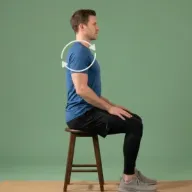
- Shoulder rolls. Roll the shoulders backwards to release the upper traps that share load with the neck.
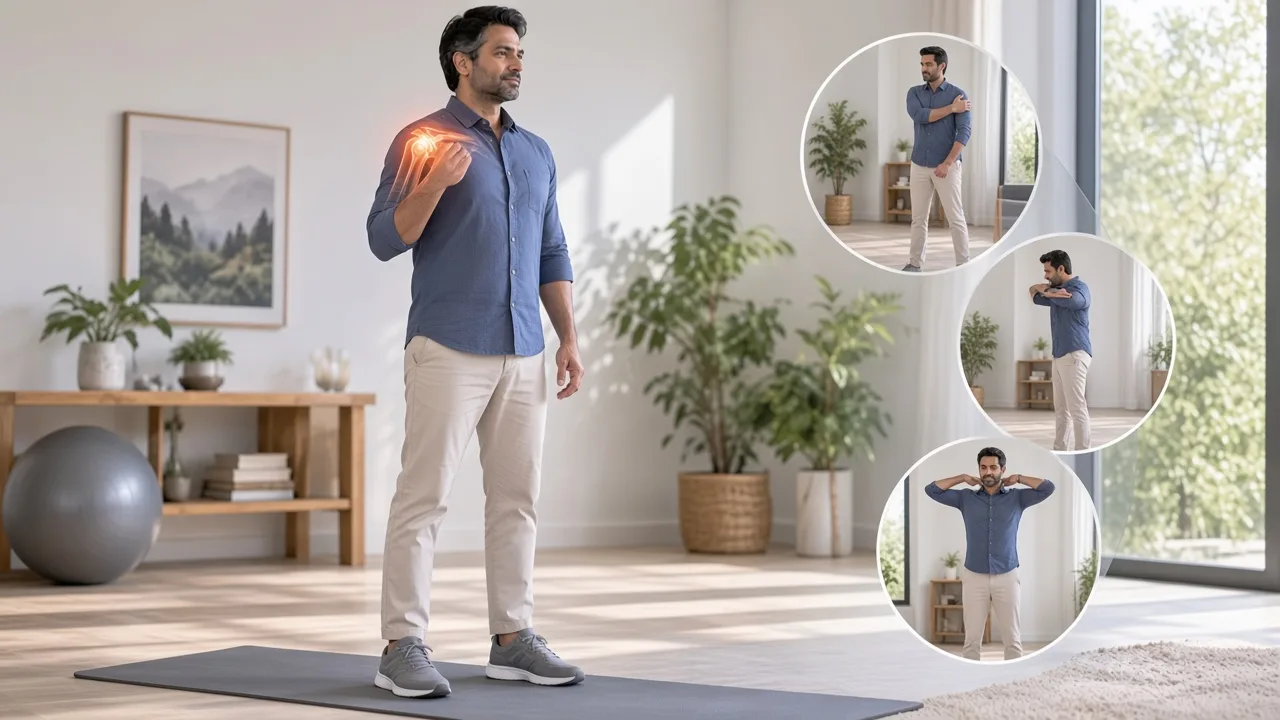
- Bear hug. Wrap the arms across the chest to open the upper back between the shoulder blades.

Work-break suggestions
The neck rarely needs a long session. Two or three of these movements every hour, plus standing up and looking away from the screen, usually helps more than one big stretch at the end of the day.
Screen position and task variation
- Raise the screen so the top is roughly at eye level, reducing how far you look down.
- Vary tasks so you are not fixed in one position for long stretches.
- Take short "look into the distance" breaks to relax the eyes and the neck together.
Common mistakes
- Forcing a big range or rolling the head aggressively backwards.
- Chasing a "perfect" posture instead of simply changing position often.
- Stretching hard once, then sitting still for hours again.
When to stop and seek help
Ease off if a movement causes sharp pain or dizziness. Seek medical advice if you have numbness, pins and needles or weakness travelling into the arm or hand, neck pain after an injury, or pain that steadily worsens.
Why the neck tenses during screen work
Neck discomfort during desk work is common and usually settles. It is rarely about one "wrong" angle and more about holding the head and shoulders fairly still for long periods while concentrating. The muscles that support the head simply get tired of one position. That is why the most effective habit is not a perfect posture but frequent, small changes of position through the day.
Micro-breaks that add up
The neck responds well to little and often. A practical approach is a short reset every hour or so: two or three of the movements above, a look into the distance, and a few slow breaths with the shoulders relaxed. These micro-breaks take under a minute and tend to help more than one long stretch at the end of the day, because they stop tension building in the first place.
Gentle strength matters too, not just stretching
Chin retractions and shoulder work above do more than stretch - they gently ask the deeper neck and upper-back muscles to work, which can help the area feel more comfortable holding a position. Over time, a neck that is both mobile and a little stronger tends to tolerate screen days better than one you only ever stretch. Keep the effort light and the range comfortable.
Related routines
Guided neck options include Express Neck Release for a quick reset and Neck Mobility Recharge. Because the neck and upper shoulders work together, Upper Trap Unwind is a useful companion.
Sources
Put the guide into practice
Related Flexor routines
These guided routines are linked to the article topic. Review the difficulty and exercise list before starting.