Shoulder Pain and Tightness: 7 Gentle Mobility Exercises
Comfortable, controlled shoulder movements for general stiffness, with supported options and clear limits.

Shoulders feel tight for many reasons - long hours at a desk, carrying tension, or simply not moving them through much range. This guide covers gentle mobility for general stiffness. It is not for an acute injury: a shoulder that is suddenly very painful, weak, or unable to lift after a fall or wrench needs assessment, not stretching.
General stiffness versus acute injury
General tightness tends to ease as you move and warms up over minutes. An acute injury usually involves sudden pain, marked weakness, or a joint that will not move through its normal range. If that sounds like your situation, seek urgent medical assessment before trying exercises.
Working in a comfortable range
Shoulders respond well to movement that stays inside a pain-free arc. Aim for a gentle stretch or an easy sense of work, never a sharp catch. If a range hurts, work just short of it and let it open over time.
Seven gentle movements
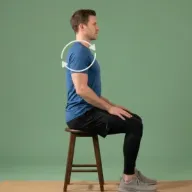
- Shoulder rolls. Slow, large circles backwards to loosen the whole shoulder girdle.
- Arm circles. Controlled forward and backward circles, starting small and growing only as it feels easy.
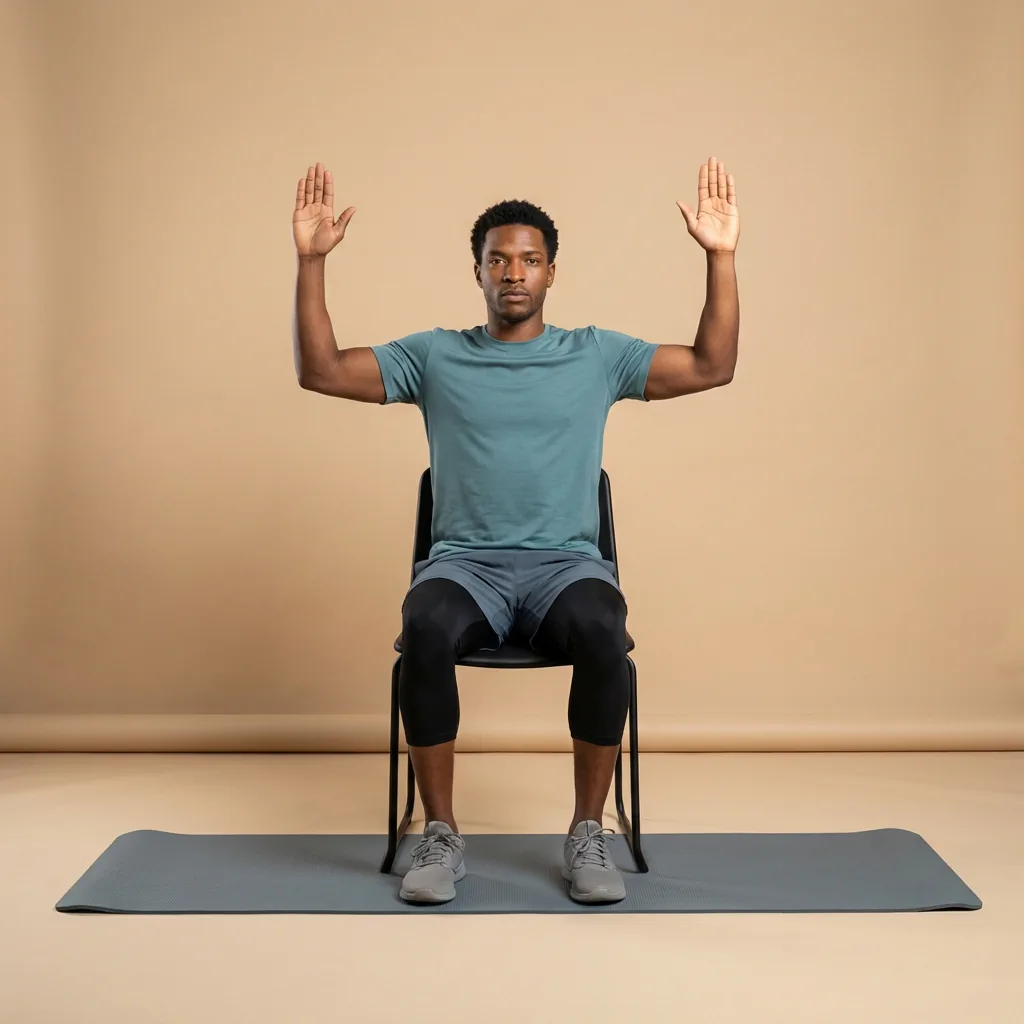
- Cactus arms. Open the arms wide with bent elbows to draw the shoulder blades together.
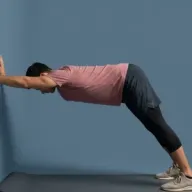
- Thread the needle. From all fours, reach one arm under the body and gently rotate through the upper back.
- Chest opener. Ease the chest open to counter a rounded, forward position.
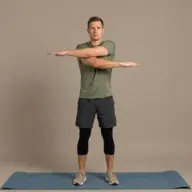
- Eagle arms. Cross the arms and lift the elbows to stretch across the back of the shoulders.
- Reverse shoulder. A gentle backward shoulder movement to explore range behind the body.
Regressions and supported options
- Reduce the size of every circle and reach; small ranges still help.
- Do thread the needle with a folded towel under the supporting knee for comfort.
- Perform chest and arm openers seated if standing is tiring.
Common mistakes
- Cranking into an overhead range that pinches.
- Rushing, so the shoulders never get a chance to warm up.
- Only working the front of the shoulder and ignoring the upper back.
When to stop, and when assessment may help
Stop if a movement causes sharp pain, catching, or a sense of the joint slipping. Seek urgent medical advice for sudden or very bad pain, inability to move the arm, major swelling or deformity, persistent pins and needles or loss of feeling, or pain after an injury. A shoulder that is hot or cold to touch, or pain with fever or feeling unwell, also needs urgent advice. Otherwise, arrange assessment if pain is worsening or has not started improving after two weeks.
Understanding shoulder range
The shoulder is the most mobile joint in the body, which is part of why it can feel vulnerable when it is stiff or sore. Range and control matter together here: a shoulder that can reach overhead but feels unstable there benefits from controlled movement more than from aggressive stretching. The movements above deliberately mix opening the front of the shoulder with mobilising the upper back, because the two work as a unit.
Easing in and building gradually
If a shoulder has been tight or grumpy, think in terms of gradually reintroducing range rather than chasing it. Begin with the smallest, most comfortable versions and expand slowly over sessions. Gentle, repeated movement through a pain-free range is usually better tolerated than forcing an end position. As comfort grows, you can add slow, controlled reaching movements that build a little strength through the range.
What "comfortable range" looks like in practice
A comfortable range is one where you feel a broad stretch or an easy sense of work, can breathe normally, and could stop at any moment. Warning signs to respect are a sharp pinch at the top of a movement, a catching sensation, or a feeling that the joint might shift. If you meet any of those, work just short of that point and let the range open over time.
Related routines
For guided shoulder work, Overhead Mobility and Shoulder Glide Routine keep things controlled, while The Chest Opener balances the front of the shoulders.
Sources
Put the guide into practice
Related Flexor routines
These guided routines are linked to the article topic. Review the difficulty and exercise list before starting.