Stretching vs Mobility: What's the Difference and Which Do You Need?
Flexibility, mobility, active and passive range - what the terms actually mean and when each is useful.
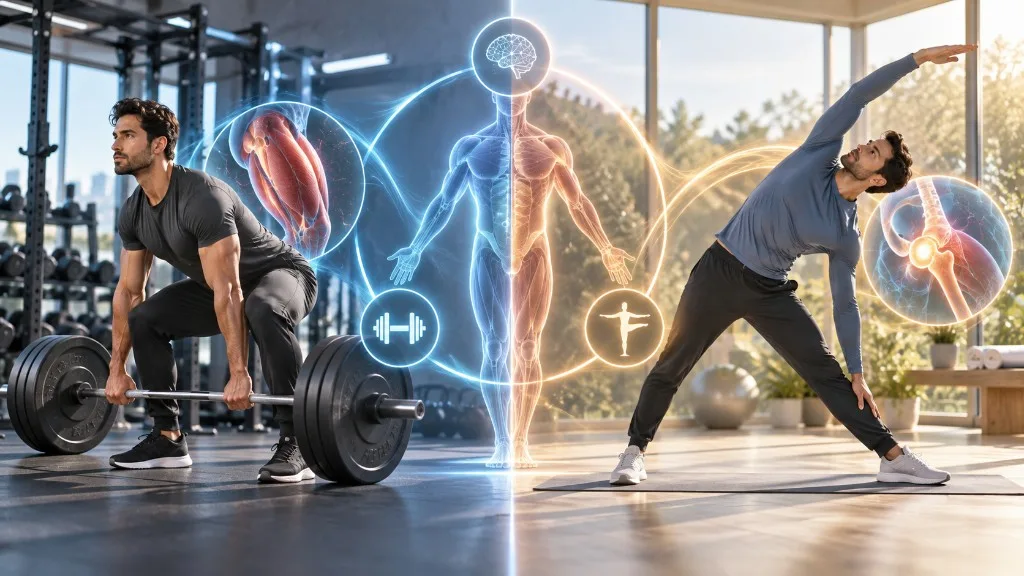
The short version: flexibility is the available range of motion at a joint, stretching is one way to work on it, and mobility is how well you can actively move and control a joint through its range. You can be flexible in a relaxed position yet still lack the strength and control to use that range while moving. Most people benefit from a bit of both.
Defining the terms
- Flexibility - the available range of motion at a joint, influenced by muscles, connective tissues and stretch tolerance, often assessed passively.
- Stretching - deliberately lengthening tissue towards the end of its range. It can be static (held) or dynamic (moving).
- Mobility - the ability to move a joint actively through a range with control and strength.
Active versus passive range of motion
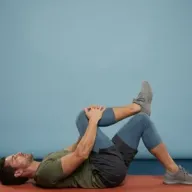
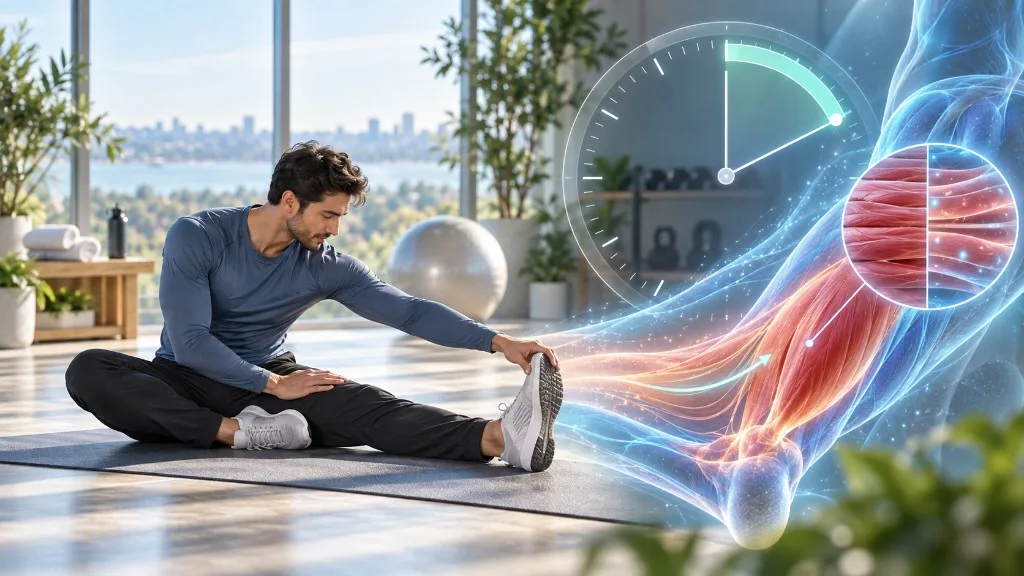
Passive range is how far a joint moves when something else does the work - gravity, your hands, or a helper easing you into a position. Active range is how far you can move it using your own muscles. A useful way to picture the difference: lie down and see how high you can lift a straight leg on your own (active), then compare it with how far it goes when you pull it gently with a strap (passive). The gap between them is range you can access but not yet control.
Mobility work aims to close that gap, so the range you have is range you can actually use.
When each approach is useful
| Situation | Lean towards |
|---|---|
| Before activity | Dynamic mobility to prepare joints to move |
| After activity or in the evening | Calmer static stretching |
| Feeling generally stiff | Gentle mobility through the day |
| Wanting usable range for squatting, reaching or sport | Active mobility that builds control, not just length |
Examples you can feel
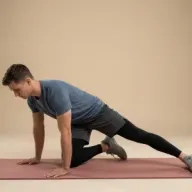
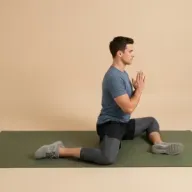
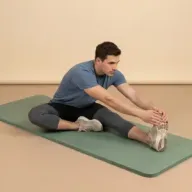
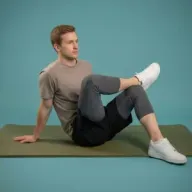
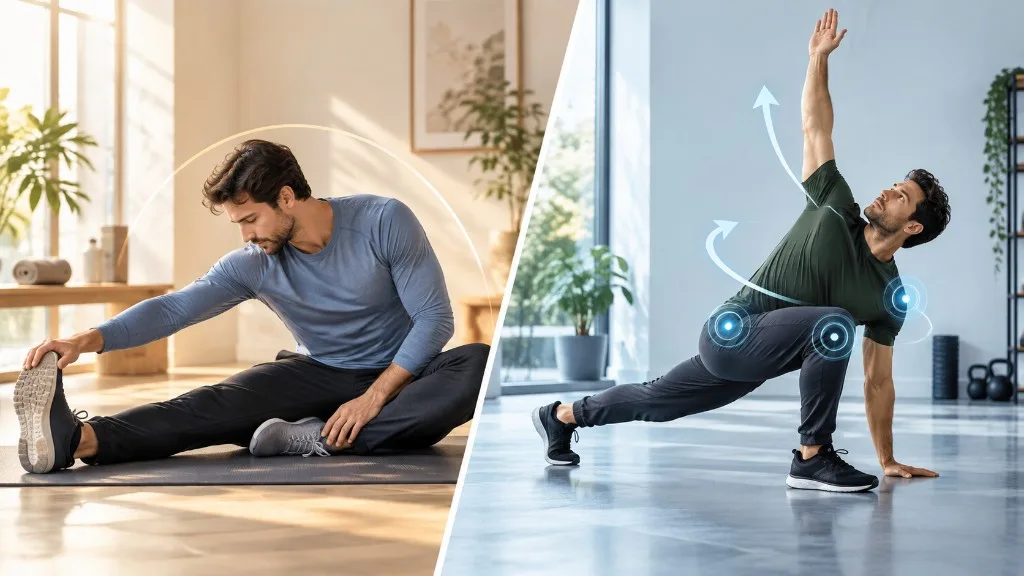
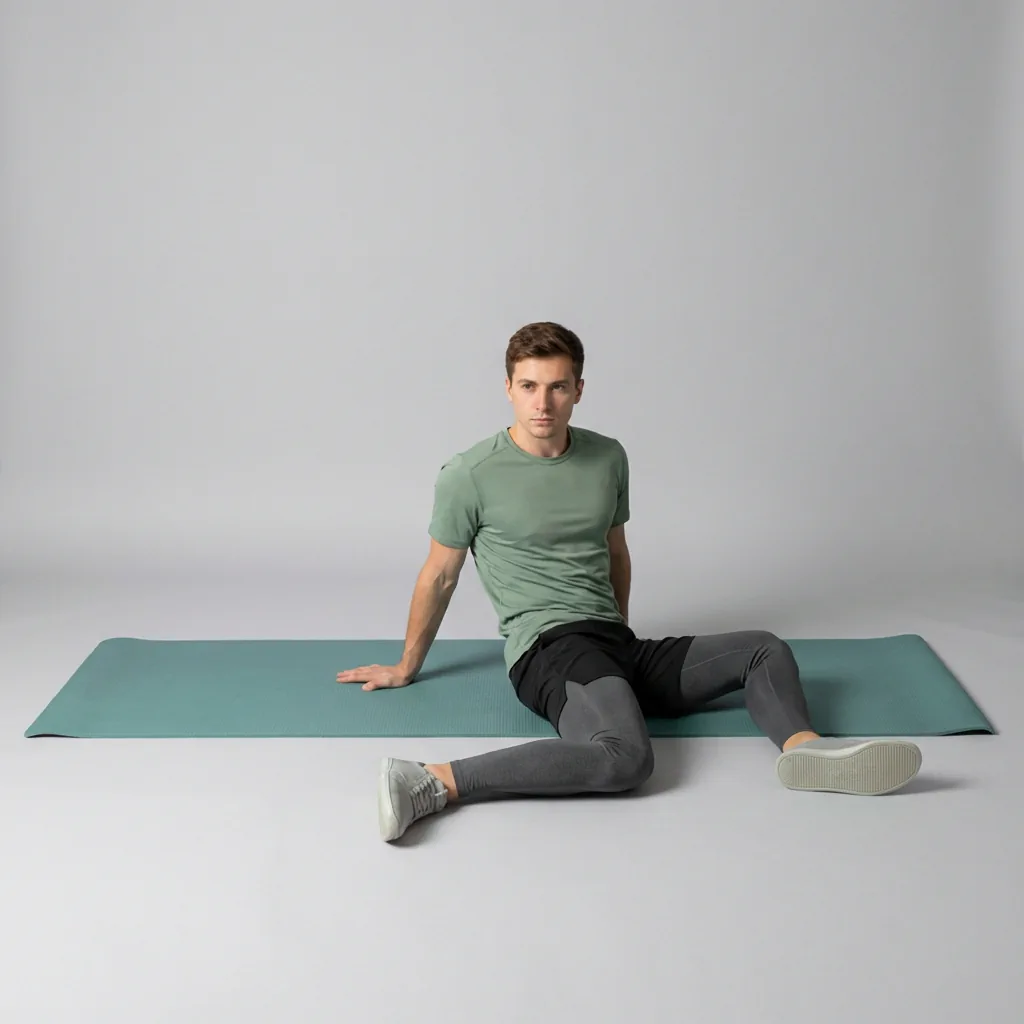
A held seated hamstring stretch is classic flexibility work. A controlled 90/90 hip switch, where you rotate between hip positions under your own power, is mobility work: it asks for range and control.
Why many routines combine both
Length without control can feel unstable, and control without length can feel restricted. Blending the two - some stretching to make room, some active movement to own that room - tends to feel more useful in everyday life and sport. This is why many guided sequences mix held stretches with slow, controlled patterns.
Which do you need?
- If you feel tight but move fine, gentle stretching may be enough.
- If you have range but feel wobbly or weak at the end of it, prioritise mobility and control.
- If you are preparing to train or play, favour dynamic mobility first.
A simple self-test
Here is an easy way to feel the difference between flexibility and mobility. Sit on the floor with your legs straight and see how far you can lean forward on your own - that is your active range. Now imagine gently pulling yourself a little further with a towel around your feet; that extra distance is passive range you have but cannot yet control. Mobility work aims to shrink that gap so more of your range is usable under your own power.
How mobility is actually trained
Because mobility is range plus control, it responds to more than passive holds. Useful methods include slow, controlled movements through a full range, brief gentle contractions at the end of a range, and controlled patterns like the 90/90 switch that ask the muscles to work while lengthened. The common thread is that you are not just waiting in a stretch - you are actively owning the position.
Clearing up two common myths
- "More flexible is always better." Not necessarily. Usable, controlled range tends to matter more than extreme passive range, which can feel unstable if strength does not match it.
- "Feeling tight always means a short muscle." Tightness is a sensation with many causes - position, activity, strength and how much you have moved recently - so it does not automatically mean a muscle needs lengthening.
Related routines
To practise controlled range, Mobility and Control blends both ideas, while a full-body flexibility builder leans more towards length. For hips specifically, Hip Opener Flow is a good place to feel the difference.
Sources
In short
Stretching is a tool, flexibility is a quality, and mobility is flexibility you can control. Choose the emphasis that matches your goal, and combine them when in doubt.
Put the guide into practice
Related Flexor routines
These guided routines are linked to the article topic. Review the difficulty and exercise list before starting.