
How Long Should You Hold a Stretch? What 189 Studies Tell Us
Why total stretching dose matters more than a universal 30-second rule, and how to apply the evidence before workouts, after training and for flexibility.

“Hold each stretch for 30 seconds” is one of the most familiar rules in fitness. It is also an oversimplification. Research does not point to one universally optimal hold length for every muscle, person and goal. The better-supported idea is cumulative stretching volume: how much total stretching a muscle or movement receives in a session and across a week.
A large 2025 dose-response meta-analysis gives us the clearest modern estimate. Across 189 studies and 6,654 adults, flexibility gains from static stretching were maximised at about four cumulative minutes per session for an acute effect and about 10 cumulative minutes per week for longer-term training. Importantly, those figures are not instructions to hold one position continuously for four or ten minutes.
What the 189-study review actually included
The dose-response analysis pooled controlled studies in adults aged 18 and over. Across the dataset, participants were 61% male and the mean age was 26.8 years. The authors examined both single-session effects and repeated stretching programmes, then used meta-regression to estimate where additional volume stopped producing larger average gains.

That is a strong basis for answering a general flexibility question, but it is not a prescription for every clinical situation. A person recovering from surgery, an older adult with balance problems, someone with hypermobility, and a healthy 25-year-old athlete may need very different programming even if they appear in the same broad category of “stretching”.
The two numbers worth remembering
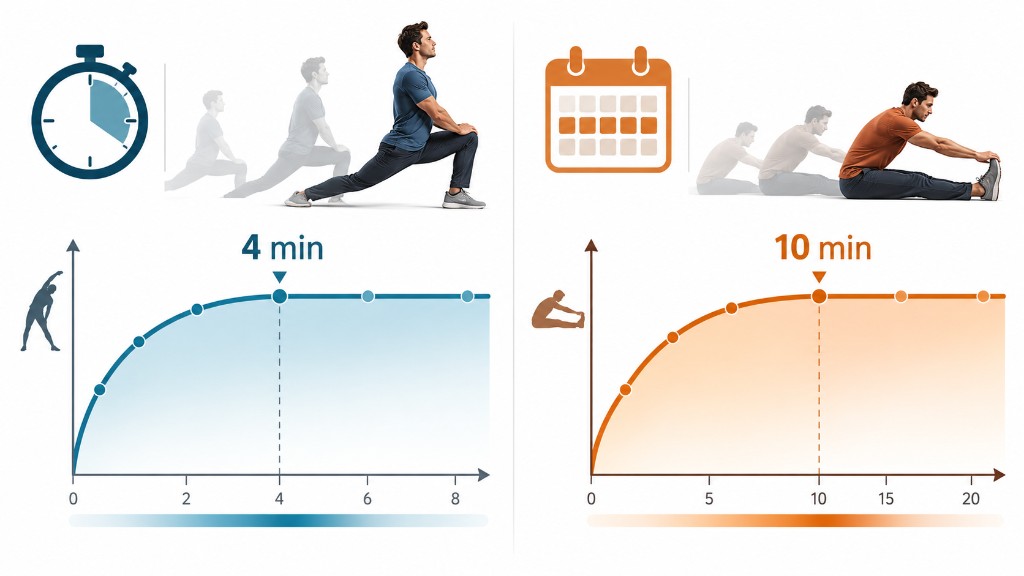
The acute threshold answers a short-term question: how much static stretching in one session was associated with the largest immediate flexibility gain? The chronic threshold answers a training question: how much cumulative weekly volume was associated with maximised longer-term flexibility gains?
The review found no evidence that continually increasing volume beyond those levels produced additional flexibility benefit in the pooled data.
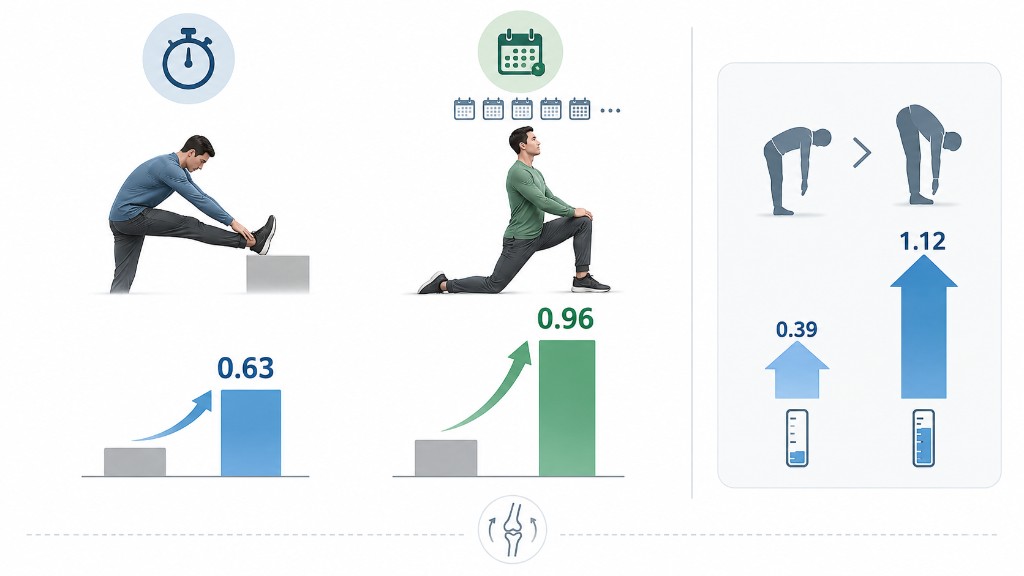
The same analysis also estimated how large the change was. One session had a pooled effect of Hedges’ g 0.63. A repeated programme had a pooled effect of Hedges’ g 0.96. Those are standardized effects, not a number of degrees or centimetres.
So how long should one individual hold last?
The meta-analysis does not establish one magic hold length such as 30 seconds for every muscle. Its dose-response findings concern cumulative stretching time. Several short holds can therefore contribute to the same session total as one longer hold, and the optimal distribution may vary with the muscle group, goal and tolerance.
For ordinary practice, holds in the tens-of-seconds range are commonly used because they are easy to control and repeat. That is a practical programming choice, not proof that a particular stopwatch value is biologically superior. The more defensible evidence-based question is: how much total stretching exposure are you accumulating, and can you repeat it comfortably?
Total dose matters more than obsessing over the stopwatch
If two people both accumulate two minutes of comfortable hamstring stretching, one using four 30-second holds and the other using two 60-second holds, the research does not justify assuming that one method will always produce a superior long-term outcome.
Intensity also matters less than many people assume. In the 2025 analysis, stretching intensity did not significantly moderate flexibility improvements. That does not mean intensity is irrelevant to sensation or safety. It means harder stretching was not shown to be a reliable shortcut to greater gains.
What a newer hamstring dose-response analysis adds
A 2026 dose-response meta-analysis focused specifically on people with clinically identified hamstring shortening. It included 84 studies, with 3,008 non-athletes and 1,059 athletes. In non-athletes, static stretching improved active knee extension by about 9.03°, passive knee extension by 8.44° and straight-leg raise by 12.11° compared with no intervention.
The dose-response pattern was nonlinear. A brief single-session dose of about 1.5 minutes did not exceed the authors’ 12° minimal-detectable-change threshold for active knee extension, while programmes delivered for at least a week with around 70 cumulative minutes were more likely to exceed that threshold.
That does not contradict the broader 189-study review. The two analyses ask different questions, use different populations and outcomes, and define “maximised average gains” versus “exceeding a particular detectable-change threshold” differently. Their shared message is simpler: repeated exposure matters, and a single tiny dose should not be expected to produce the same change as a sustained programme.
Do the 4- and 10-minute numbers apply to the whole body?
No. The 4 minutes per session acute estimate and 10 minutes per week chronic estimate from the 189-study review are pooled dose-response estimates across the stretching literature included in that analysis. They should not be read as “stretch your entire body for exactly 10 minutes a week and every joint is maximally trained”.
Studies differ in which muscles were stretched, how many sets were performed, whether time was counted per muscle or across a protocol, and how range of motion was measured. The 2026 hamstring-specific analysis also demonstrates that dose-response conclusions can look different when the population and outcome are narrowed.
Use the pooled thresholds as orientation points, not prescriptions. If the goal is a specific joint or muscle group, the relevant dose is the repeated exposure that area actually receives.
How long should you stretch before a workout?
The goal before sport is different from the goal of a dedicated flexibility session. Immediately before sprinting, jumping or heavy lifting, long passive holds can temporarily reduce some measures of performance.
A systematic review found that static stretching bouts of 60 seconds or more per muscle group were associated with a larger immediate performance reduction than shorter bouts: about −4.6% versus −1.1% in the review’s pooled summary. Dynamic stretching, by contrast, was associated with a small positive performance effect of about +1.3%.
That does not make static stretching “bad”. It means timing and purpose matter. If your main goal is to perform maximally in the next few minutes, a dynamic warm-up is usually more appropriate. If your main goal is to improve passive range over time, static stretching can be placed after training or in a separate session.
How long should you stretch after a workout?
There is no special post-workout hold length that prevents soreness. Cochrane’s review found little to no clinically important reduction in DOMS from stretching before or after exercise.
Post-workout stretching can still be useful if you enjoy it, want to maintain or develop range, or prefer a calmer transition out of training. Just do not confuse that purpose with proven soreness prevention.
Practical examples — not universal dose thresholds
The research supports accumulating a tolerable amount of stretching rather than chasing one perfect hold. The examples below are therefore implementation ideas, not clinical prescriptions derived directly from one meta-analysis.
| Situation | A practical way to organise it | Why |
|---|---|---|
| Quick mobility break | 1–2 comfortable holds per target area, then move on | Keeps the session brief while adding movement variety |
| Dedicated flexibility session | Several repeated holds or sets for the priority muscles | Builds meaningful cumulative exposure |
| Before explosive sport | Keep static holds brief when needed, then continue with dynamic and sport-specific movement | Longer isolated static stretching immediately before maximal performance can transiently reduce some performance measures |
| Older or very stiff beginner | Use a comfortable range and progress total exposure gradually | Tolerance and repeatability matter more than forcing intensity |
If a particular hold produces sharp pain, numbness, tingling or a sense of joint instability, the solution is not to extend the timer.
Why holding harder is not necessarily better
A stretch should create a clear sensation of tension, not pain. Moving deeper can increase passive resistance and discomfort without guaranteeing more adaptation. The large dose meta-analysis did not find intensity to be a significant moderator of flexibility gains.
This supports a simple rule: choose an intensity you can repeat consistently while breathing normally. Progress can come from exposure over time rather than from making every session feel extreme.
What about older adults?
Older adults can still respond to stretching. A meta-analysis focusing on passive stiffness found that acute static stretching reduced muscle-tendon or muscle stiffness in older adults with a small-to-moderate pooled effect, and the response was not significantly different from younger adults in the available comparison studies.
Age therefore changes the context — balance, joint health, medical conditions and training history matter — but it does not make flexibility untrainable.
A simple Flexor way to apply the evidence
Instead of giving every stretch the same arbitrary timer, match the session to the goal. A full-body routine can spread total exposure across multiple areas, while a focused hamstring or hip session can give more time to one region.
Useful options include Full-Body Flexibility Builder, Evening Mobility Unwind and Post-Workout Stretch: Full Body.
How to use the timing evidence
There is no magic 30-second rule. Use holds that let you accumulate a comfortable dose. The clock is a guide; repeating the work is the stimulus.
Sources and further reading
- Ingram et al. — Optimising the Dose of Static Stretching to Improve Flexibility
- Optimal stretching dose for hamstring shortening — dose-response meta-analysis (2026)
- Acute effects of muscle stretching on performance, ROM and injury incidence
- Cochrane — Stretching to prevent or reduce muscle soreness
- Acute effects of static stretching on passive stiffness in older adults
Put the guide into practice
Related Flexor routines
These guided routines are linked to the article topic. Review the difficulty and exercise list before starting.
Full-Body Flexibility Builder
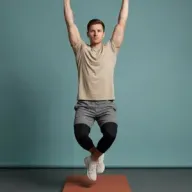
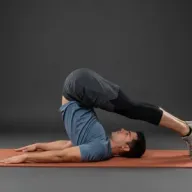
A 12-move advanced flexibility practice for spine, hips, hamstrings, and shoulders with dead hang, figure-four, hurdler, puppy pose, and plow.
-
-
-
-
-

- +7
Evening Mobility Unwind
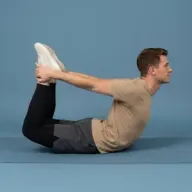
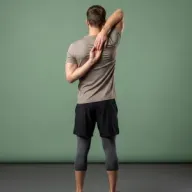
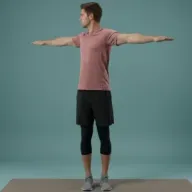
An 8-move evening unwind with chest flys, trunk twist, cow face, frog pose, and plow for a slower pre-bed mobility downshift.
-
-
-
-
-
- +3
Post-Workout Stretch: Full Body
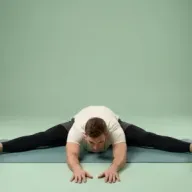
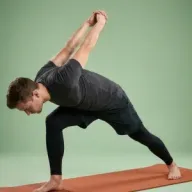
A 12-move post-training stretch — humble warrior, pancake, and legs-up-the-wall with elongated holds from head to toe.
-

-
-

-
-
- +7