
Stretching vs Strength Training for Flexibility: Which Works Better?
A 55-study meta-analysis shows that full-range resistance training can improve flexibility too — so when should you stretch, lift, or combine both?

If your goal is to become more flexible, stretching is the obvious tool. But it is not the only one. A large systematic review found that resistance training performed through range of motion can also increase joint range, and in direct comparisons it was not significantly different from stretch training.
That does not mean stretching is obsolete, or that every strength exercise automatically improves flexibility. It means range of motion can be trained in more than one way — by spending time in stretched positions and by producing force through large ranges.
What the 55-study meta-analysis found
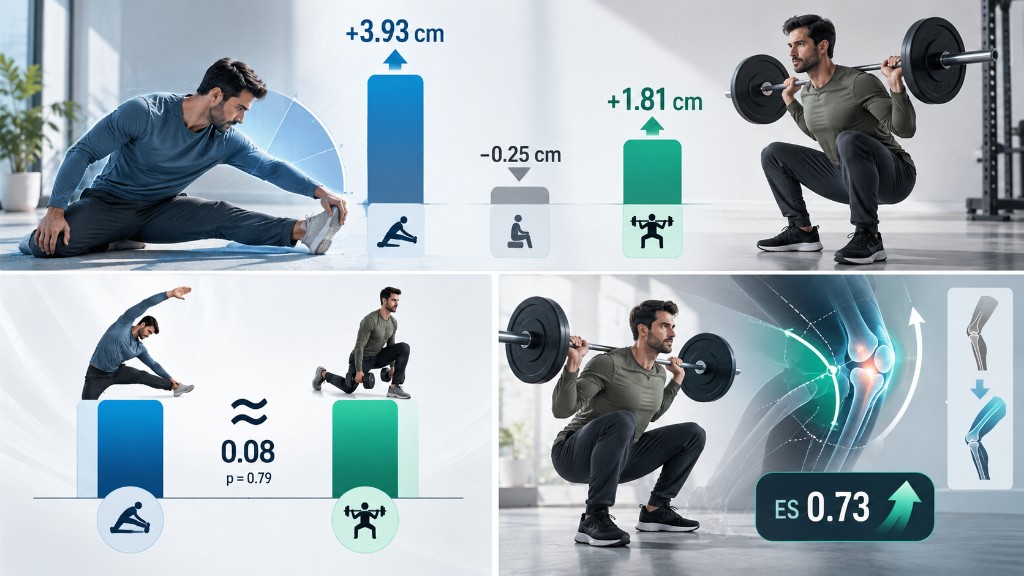
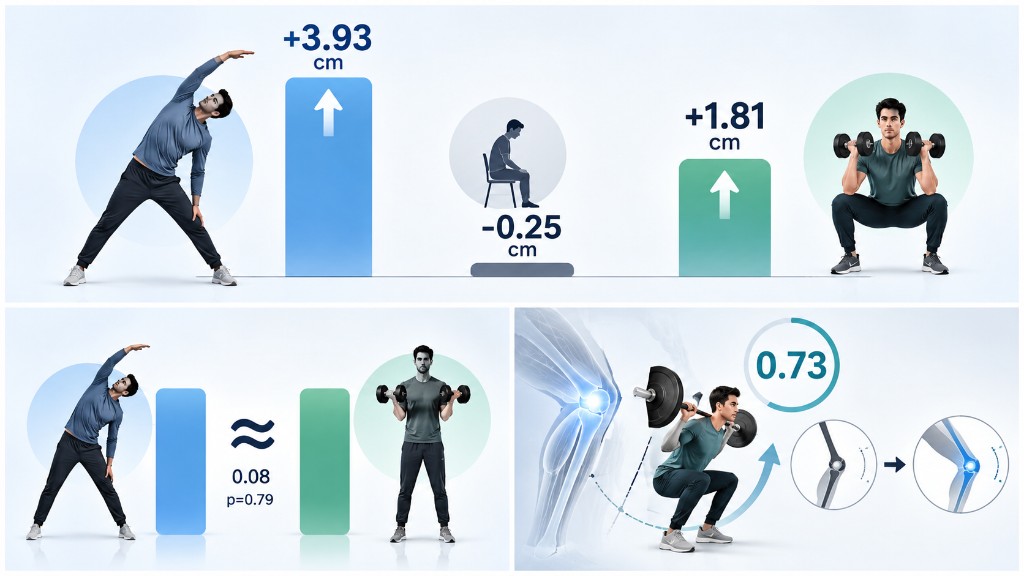
A 2023 systematic review found 55 eligible studies examining chronic resistance training and range of motion in healthy participants. Compared with control conditions, resistance training improved ROM with an overall effect size of 0.73.
The most relevant comparison for this article is direct: resistance training versus stretching differed by only 0.08 standardized units, and that difference was not statistically significant (p=0.79). Combining resistance training and stretching also was not significantly different from stretching alone in the smaller set of studies making that comparison (ES −0.001; p=0.99).
“No statistically significant difference” does not prove the methods are identical for every joint, exercise or person. It means the available pooled comparisons did not establish a reliable overall ROM advantage for one method.
The centimetre bars in the figure are from a separate once-weekly trial, not this review. In that trial, sit-and-reach changed by about +3.93 cm after static stretching, +1.81 cm after full-range resistance training, and −0.25 cm in the control group.
Why can strength training make someone more flexible?
A resistance exercise performed through a large range repeatedly takes joints and muscles toward lengthened positions under load. A deep split squat, Romanian deadlift, calf raise through full ankle range or overhead press can therefore expose tissues to end-range positions while the muscles are actively producing force.
This is different from passive static stretching, but both approaches can change the range a person can access.
Training status seems to matter
In the meta-analysis, untrained and sedentary participants showed a larger range-of-motion effect from resistance training (effect size 1.042) than trained or active participants (0.43).
That should not be interpreted as proof that sedentary people are biologically more responsive. They may simply have more room to improve, just as people with poorer baseline flexibility often improve more from stretching.
A 2024 randomized trial gives a practical comparison
A 2024 randomized trial provides a useful illustration, but it should not be over-weighted: it enrolled only 18 physically active adults — six per group. Participants were assigned to full-range resistance training, static stretching or control for eight weeks.
Both training groups improved the sit-and-reach test relative to control, with no significant difference between resistance training and stretching. The resistance-training group improved hip and lower-back extensor strength more.
Because the sample was tiny, this trial is better treated as a practical example that agrees with the broader meta-analysis than as strong standalone proof.
Does this mean you should stop stretching?
No. Training choice depends on what you need.
| Goal | Stretching may be useful when… | Strength training may be useful when… |
|---|---|---|
| Increase passive range | You want a simple, low-equipment way to spend time near end range | You want range while also building force capacity |
| Warm up for sport | Short or dynamic mobility fits the task | Progressive loaded movement can prepare the exact pattern |
| Improve end-range control | Combine passive range with active mobility | Use full-range loading and controlled tempo |
| Relax / downshift | Static stretching can be calm and low demand | Heavy loading is usually not the same experience |
| Build strength | Stretching alone is a limited strength strategy | Resistance training is the direct tool |
Full range is an important detail
This is also why the headline should not be simplified to “lifting makes you flexible”. The review found that resistance training using only body mass did not significantly improve ROM in its subgroup analysis, and the movement ranges, exercises and loading strategies varied between studies. The stimulus is not the label “strength training”; it is what the joint actually does under load.
The resistance-training review did not find significant ROM improvement in the subgroup using body-mass-only resistance training, while externally loaded resistance training overall was effective. Exercise selection and the range actually trained therefore matter.
A shallow squat that never approaches the person’s available hip or ankle range should not be expected to create the same flexibility stimulus as a controlled full-range split squat or loaded hinge.
Flexibility is not only passive length
One reason strength and mobility overlap is that useful range needs control. A person may be able to reach a position with gravity or a strap yet struggle to hold or move through it actively.
This is the difference between passive flexibility and active mobility. Strength training near end range can help close that gap by asking muscles to produce force where they are long.
Stretching still has practical advantages
Static stretching is accessible. It requires little space, little skill and often no equipment. A person can target a specific muscle group without fatigue from a full strength session. That makes stretching especially useful for:
- short mobility sessions on rest days;
- areas not loaded deeply in the current strength programme;
- people who cannot tolerate heavy resistance training;
- dedicated flexibility goals that require more range than strength training alone provides;
- relaxed evening or recovery routines.
Strength training has practical advantages too
- builds muscle strength and often muscle size;
- can increase range while improving load tolerance;
- trains active control rather than only passive availability;
- can make the acquired range more relevant to sport and daily tasks.
What if your only goal is a deeper squat?
For a movement-specific goal, combine the tools. Ankle and hip mobility may improve the available positions, while squats and split squats progressively teach the body to control and load those positions.
Flexor’s Strength Prep Mobility Flow or Pre-Workout Mobility: Full Body can prepare range before lifting. A separate Full-Body Flexibility Builder session can focus more directly on passive range.
Can long-duration stretching itself build strength?
Some chronic static-stretching studies report small strength and muscle-size adaptations, especially when the stretching dose is much larger than an ordinary brief mobility routine. A 2024 meta-analysis of 42 studies with 1,318 cumulative participants found small improvements in maximal strength (d=0.30) and muscle hypertrophy (d=0.20), with stretching duration and intervention length influencing some results.
A separate 2023 review also reported small positive effects on strength and power alongside a much larger flexibility effect. These findings are scientifically interesting, but they should not be translated into “stretching is a substitute for resistance training”. The protocols capable of producing meaningful mechanical tension can involve long-duration, high-volume stretching that looks very different from a few comfortable 30-second holds.
If strength or muscle growth is the main goal, progressive resistance training remains the direct and much better established tool.
When using both methods makes sense
Using both can be practical because the methods offer different things. Stretching can target a specific range with little equipment or fatigue; resistance training can build force and control through the range being trained.
The evidence does not show that combining them automatically produces more ROM than stretching alone. The reason to use both is broader training utility — range plus strength and control — not a guaranteed flexibility advantage.
For example, someone working toward a deeper squat might use ankle and hip mobility to access a comfortable position, then progressively train squats and split squats through that range. Longer static holds can be added separately when passive range itself remains a limiting goal.
Who should be cautious with loaded end-range training?
Loaded flexibility places more demand on tissues than a gentle passive hold. Progress gradually after injury, surgery or long periods of inactivity. If a range produces sharp joint pain, instability or neurological symptoms, reduce the load or seek professional guidance rather than pushing deeper.
Choosing the right tool for the goal
Choose from the goal. Passive range is where stretching is efficient. Range plus load tolerance is where full-range lifting fits. Using both is sensible because each trains a different quality, not because the evidence shows the combination maximises range of motion.
Sources and further reading
- Resistance Training Induces Improvements in Range of Motion — systematic review/meta-analysis
- Open-access full text of the 55-study resistance-training review
- Resistance training vs static stretching randomized controlled trial
- Low-volume stretching versus full-range resistance training on sit-and-reach — randomized trial
- Chronic static stretching effects on strength and power — systematic review
- Static stretching effects on maximal strength and hypertrophy — meta-analysis
Put the guide into practice
Related Flexor routines
These guided routines are linked to the article topic. Review the difficulty and exercise list before starting.
Strength Prep Mobility Flow
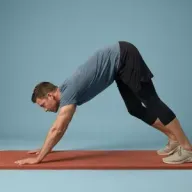
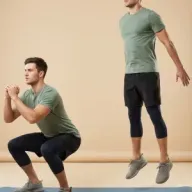
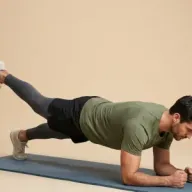
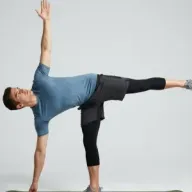
A 9-move advanced strength prep — jump squats, dip hold, and elbow plank leg lift weaving mobility and active stability.
-
-
-
-
-
- +4
Pre-Workout Mobility: Full Body
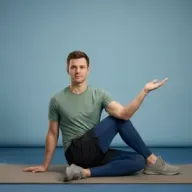
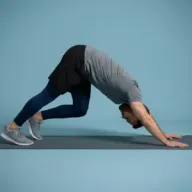
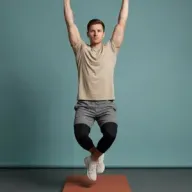
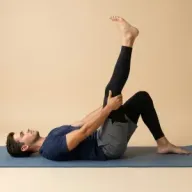
A 12-move full-body pre-workout primer with dead hang, cat-cow, figure-four, hurdler, calf stretch, and puppy pose.
-
-
-
-

-
- +7
Full-Body Flexibility Builder
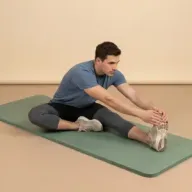
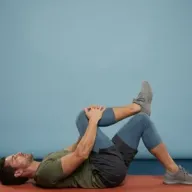
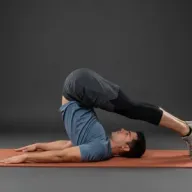
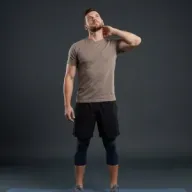
A 12-move advanced flexibility practice for spine, hips, hamstrings, and shoulders with dead hang, figure-four, hurdler, puppy pose, and plow.
-
-
-
-
-
- +7