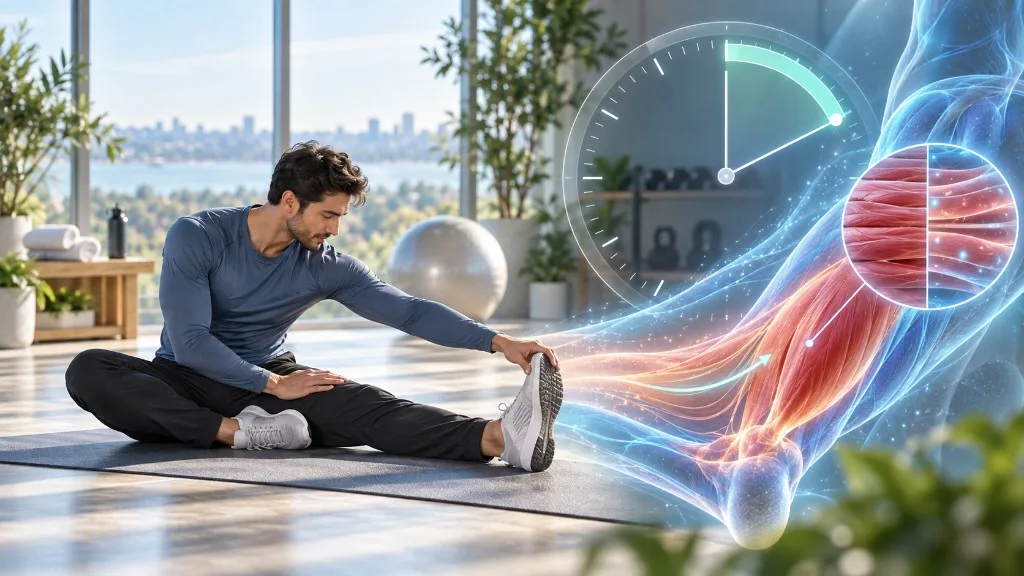
Benefits of Stretching: What the Research Actually Shows
A data-led look at flexibility, everyday function, workplace discomfort, well-being, soreness, injury claims and the limits of what stretching can promise.

Stretching has an unusually broad reputation. It is recommended for tight hamstrings, desk stiffness, warm-ups, recovery, posture, pain and even stress. That makes it useful territory for an evidence check, because these are not all the same claim and they are not supported equally well.
Across systematic reviews and controlled trials, the clearest conclusion is that stretching can increase joint range of motion. Beyond that, the picture becomes more specific: some workplace and population studies report benefits for comfort, function or well-being, while evidence for preventing injuries or materially reducing delayed-onset muscle soreness is much weaker. This article separates those outcomes instead of treating “stretching is good for you” as one scientific statement.
The evidence at a glance
The strongest evidence concerns range of motion. Other proposed benefits are more dependent on the population, the programme and the outcome being measured. The labels below are an editorial summary of the literature discussed in this article; they are not formal GRADE certainty ratings.
| Claim | What the evidence supports | Editorial reading |
|---|---|---|
| Stretching improves flexibility / joint range of motion | Consistent improvements in large systematic reviews and meta-analyses | Strongest evidence in this article |
| Stretching can reduce passive stiffness | Meta-analytic evidence shows small reductions in muscle–tendon stiffness after acute and chronic static stretching | Supported physiological effect |
| Stretching may reduce discomfort in some office workers | Several workplace trials report improvements, but programmes and populations differ | Promising and context-specific |
| Stretching is associated with better later physical function | One longitudinal cohort found lower odds of later functional limitation among people reporting stretching | Association, not proof of causation |
| Stretching improves anxiety or well-being | Positive workplace findings exist, but the evidence base is much smaller than for flexibility | Interesting but not established broadly |
| Stretching prevents sports injuries by itself | Pooled studies have not shown a clear reduction in total injury risk | Not established |
| Stretching prevents delayed-onset muscle soreness | Randomized evidence shows little or no clinically important reduction | Evidence argues against a meaningful effect |
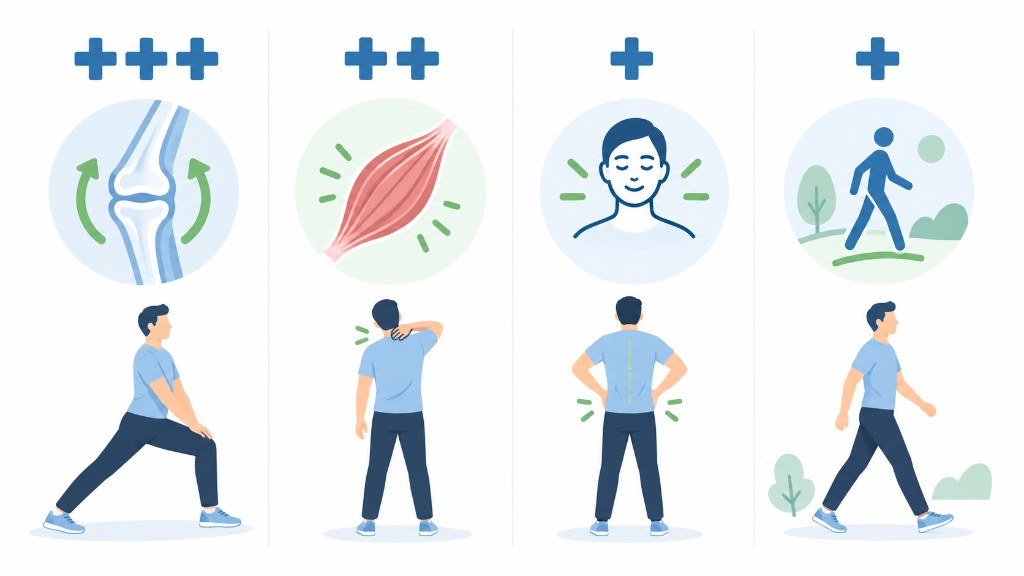
How to read the evidence in this article
Not every number below carries the same weight. Randomized controlled trials are useful for asking whether an intervention caused a change under particular conditions. Meta-analyses can combine many such studies, but their conclusion is only as general as the studies they include. Observational studies can show that two things travel together in real life, but they cannot prove that one caused the other.
That distinction matters here. The largest modern static-stretching dose review included 189 studies and 6,654 adults, but participants were relatively young on average (26.8 years) and 61% were male. Its flexibility findings are therefore strong for the outcome it measured, but they should not be stretched into a universal claim about pain, ageing or disease.
The strongest benefit: flexibility and range of motion
A 2025 systematic review and meta-analysis pooled data from 189 studies involving 6,654 adults. A single session of static stretching produced a moderate improvement in flexibility, with a pooled Hedges’ g of 0.63. Repeated stretching programmes produced a larger chronic effect, with a pooled Hedges’ g of 0.96.
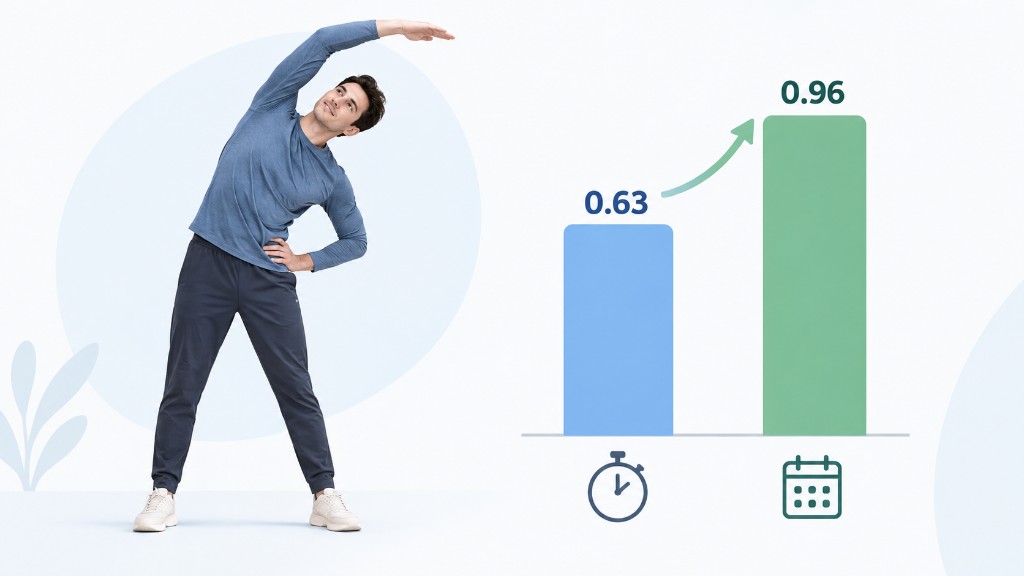
That does not mean everyone becomes “96% more flexible”. Standardized effect sizes describe the size of the difference relative to the variation in the measurements. What matters for a reader is the direction and consistency: across many studies, stretching reliably increased measured range of motion.
The same review found that people who started with poorer flexibility tended to improve more than people who began around average. Age, sex and training status did not significantly change the effect in that analysis. This is useful because it suggests that flexibility training is not only an athlete’s tool; adults with very different starting points can improve.
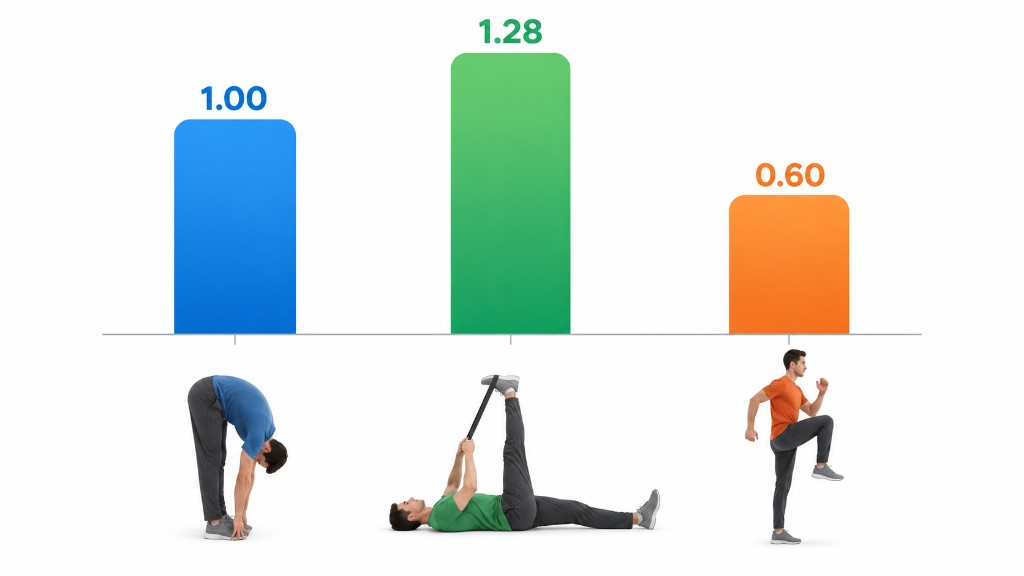
A separate review of repeated stretch training compared methods. Static stretching had an effect size of about 1.00, proprioceptive neuromuscular facilitation about 1.28, and ballistic or dynamic stretching about 0.55.
What changes inside the body?
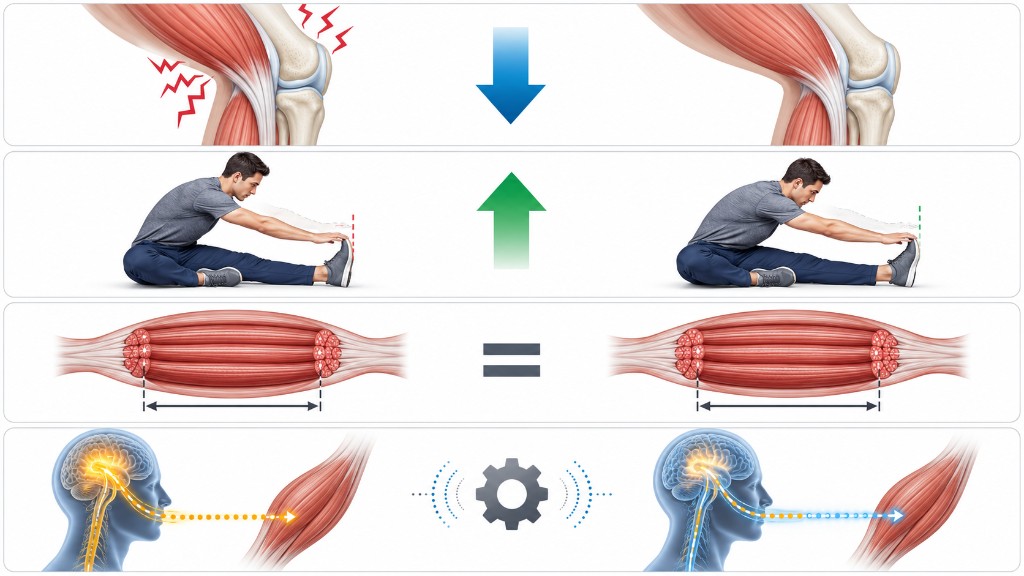
The traditional explanation is that stretching simply “lengthens the muscle”. The physiology is more nuanced. A 2025 systematic review of 65 studies and 1,542 adults examined several possible mechanisms behind increases in range of motion. Both acute and chronic static stretching were associated with small reductions in overall stiffness. Repeated stretching also increased the amount of passive torque participants could tolerate at the end of a range. In other words, part of the improvement appears to come from the tissues resisting movement less, and part from becoming more comfortable at the edge of the available range.
The review did not find a significant overall change in muscle fascicle length. That does not mean structural adaptation never happens; it means the pooled evidence did not support a simple story in which ordinary stretching gains are explained mainly by muscles physically becoming longer.
Can stretching help with everyday movement?
A longitudinal study followed 1,318 generally healthy middle-aged and older adults who did not report functional limitation at baseline. During follow-up, people who reported stretching had about 24% lower adjusted odds of developing a functional limitation. In the study, functional limitation meant difficulty with activities of daily living rather than a laboratory flexibility score.
The result is relevant to everyday life, but it needs careful interpretation. The cohort was 98.7% White and 14.9% female, participation in stretching was self-reported, and the design was observational. People who choose to stretch can differ from people who do not in physical activity, health behaviours and other factors that are difficult to measure completely. The accurate conclusion is therefore that stretching participation was associated with lower odds of later functional limitation — not that stretching was proved to prevent disability by 24%.
This distinction is useful for Flexor readers: improving measured range of motion is well established; proving that a stretching habit independently preserves day-to-day function for years is a bigger question and the evidence is much thinner.
What workplace studies tell us
Workplace studies are useful because many people stretch for comfort and movement variety rather than athletic flexibility. They also show why it is important not to generalise one programme to everyone.
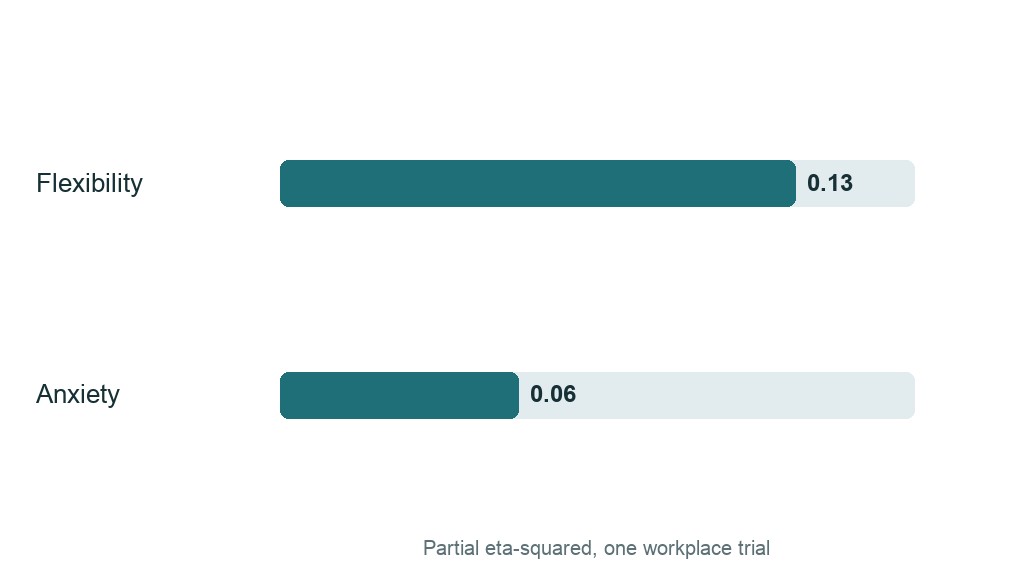
In a Spanish controlled trial, 134 logistics workers were assigned to a 10-minute stretching programme after work or to an untreated control group for three months. The trial reported a moderate effect on anxiety (partial η² 0.06), a larger effect on flexibility (0.13), and smaller-to-moderate effects on bodily pain, vitality, mental health, general health and exhaustion.
A separate intervention-control study enrolled 313 office workers in a programme of about 10 minutes of stretching twice a week for 12 weeks and reported improvements in several SF-36 quality-of-life domains. Another randomized trial of 142 office workers with neck, shoulder and lower-back pain found lower pain scores in the stretching-exercise group than in controls at the measured body regions.
These findings are encouraging, but they are not evidence that a short stretch can “undo” a sedentary day. A workplace programme also creates a break from the task, changes position, introduces movement and may change breathing and attention. Those co-occurring effects are part of the real-world intervention.
Does stretching reduce pain?
There is no honest single yes-or-no answer. Pain depends on the condition, the person and the intervention. The workplace trials above already reported lower pain scores after stretching programmes.
But stretching is not a universal treatment for pain. Back pain, neck pain and joint pain can arise for many reasons, and increasing range is not always the appropriate goal. For persistent, severe or unexplained pain, the useful question is not “which stretch cures this?” but “what is driving this problem and what combination of activity, strength, mobility, education and clinical care fits it?”
What stretching does not reliably do
Two popular claims deserve special caution.
- Preventing injuries: reviews of stretching alone have generally not demonstrated a significant reduction in total sports injuries. Modern injury-prevention programmes tend to combine progressive loading, strength, balance, movement preparation and sport-specific warm-up rather than relying on passive stretching.
- Preventing post-workout soreness: Cochrane’s review of randomized studies found that stretching before or after exercise made, on average, only a very small difference to soreness over the following 72 hours.
That does not make post-workout stretching pointless. A gentle cool-down can be enjoyable, can increase range of motion and may help someone transition out of training. It simply should not be sold as a reliable way to prevent DOMS.
Can stretching improve mental well-being?
The workplace trial above reported changes in anxiety and several mental-health-related quality-of-life measures. That is interesting, but stretching is difficult to separate from the context in which it is performed. Slow breathing, a break from screens, reduced work demand and the act of moving may all contribute.
So it is reasonable to say that a calm stretching session can be a useful part of a wind-down routine. It is not reasonable to present stretching as a treatment for an anxiety disorder or depression.
What about circulation and blood pressure?
This is an emerging area, not an established benefit. Small reviews report changes in arterial stiffness and blood pressure, and the newest pooled blood-pressure evidence is explicitly exploratory. For someone with hypertension, stretching can be convenient movement. It should not replace prescribed care or aerobic exercise.
How to translate the research into a normal day
The evidence does not suggest that every stretch needs to be intense, long or difficult. In the large 2025 dose-response analysis, chronic flexibility gains were maximised at a cumulative volume of about 10 minutes of static stretching per week, with no evidence that simply adding more volume continued to improve flexibility indefinitely.
A practical routine might therefore combine small amounts of mobility with a few focused holds. For example:
- use Mini Mobility Boost when you have only a few minutes;
- use Full-Body Flexibility Builder when the goal is range of motion;
- use Mobility and Control when you want active movement as well as passive flexibility.
The important distinction is between using stretching as one useful tool and treating it as a solution for every health outcome. The first position is supported by a substantial research literature. The second is not.
When stretching needs more caution
Stop or reduce the range if a stretch causes sharp pain, numbness, tingling, dizziness, a feeling of joint instability or symptoms that travel down an arm or leg. Recent injuries, surgery, significant joint disease and neurological symptoms may require individualized guidance before aggressive flexibility work.
For most healthy adults, the aim is simple: controlled tension that remains easy to breathe through. Flexibility is trainable, but forcing range is not a shortcut.
What the evidence supports
The clearest proven benefit of stretching is improved flexibility and range of motion. There is useful evidence that well-designed stretching programmes can also improve comfort and quality-of-life measures in some workplace and older-adult populations, and observational research links stretching participation with better long-term function. Cardiovascular findings are promising but preliminary. Injury prevention and DOMS reduction, by contrast, are commonly overstated.
That distinction is useful for Flexor: stretching does not need exaggerated promises to be worthwhile. A few repeatable minutes that help someone move through a larger, more comfortable range can be valuable on their own.
A realistic expectation: use stretching primarily to improve or maintain range of motion and as a low-friction way to move more often. Treat improvements in comfort, function or well-being as possible benefits that depend on the person and context. Do not rely on stretching as a stand-alone treatment for persistent pain, as an injury-prevention guarantee, or as a replacement for aerobic and strength activity.
Sources and further reading
- Ingram et al. — Optimising the Dose of Static Stretching to Improve Flexibility (Sports Medicine, 2025)
- Mechanisms Underlying Range of Motion Improvements Following Static Stretching (2025)
- Are flexibility and muscle-strengthening activities associated with functional limitation?
- Workplace stretching and anxiety/quality of life randomized study
- Office Work and Stretch Training study
- Cochrane — Stretching to prevent or reduce muscle soreness after exercise
- Shariat et al. — Stretching and ergonomic modifications for office-worker musculoskeletal discomfort (randomized trial)
Put the guide into practice
Related Flexor routines
These guided routines are linked to the article topic. Review the difficulty and exercise list before starting.
Full-Body Flexibility Builder
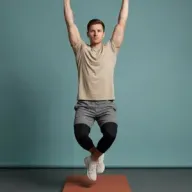
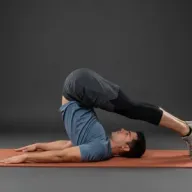
A 12-move advanced flexibility practice for spine, hips, hamstrings, and shoulders with dead hang, figure-four, hurdler, puppy pose, and plow.
-
-
-
-
-
- +7
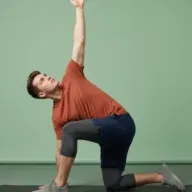
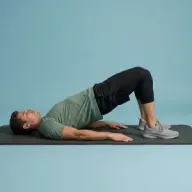
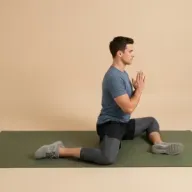
Mobility and Control
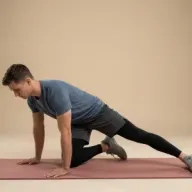
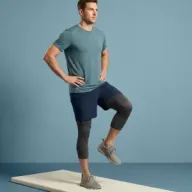
A slow 22-move session for end-range joint control — single-leg stand, dead bug, and 90/90 hip switches build active flexibility.
-
-
-
-
-
- +17
Mini Mobility Boost
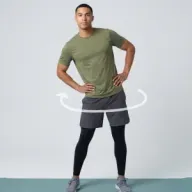
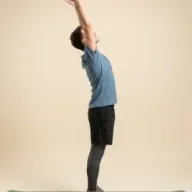
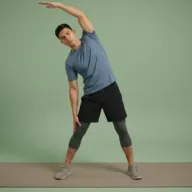
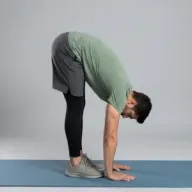
An 8-move movement snack — ankle circles, hip circles, zombie walks, and toe touches to wake key joints fast.
-
-
-
-
-
- +3