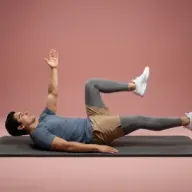
Sciatica Symptoms: Gentle Stretches, What to Avoid and When to Seek Help
What sciatica actually describes, gentle options some people find helpful, what to avoid, and urgent red flags.
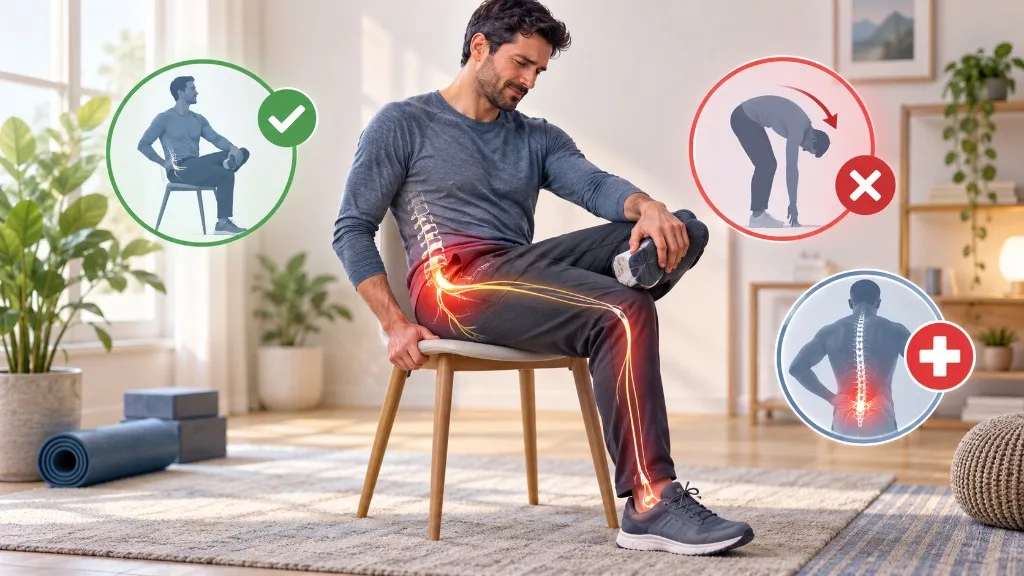
This article is general educational information, not medical advice or a diagnosis. Please read the safety guidance carefully. "Sciatica" is a description of symptoms - pain, tingling or numbness that travels from the lower back or buttock down the leg, following the path of the sciatic nerve - rather than a single identical condition. It can have different underlying causes, which is one reason the same exercise does not suit everyone.
What sciatica describes
People often report a shooting or burning pain down one leg, sometimes with pins and needles or a numb patch. The NHS notes that sciatica frequently improves over a few weeks to months, and that keeping gently active is usually better than bed rest. But because causes vary, the right approach is cautious and individual.
Gentle movement options some people find helpful
The following are low-intensity movements that some people with mild symptoms tolerate well. Introduce one at a time, keep the range small, and use the "does not worsen leg symptoms" rule below.
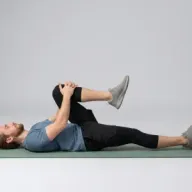
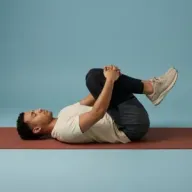
- Single knee to chest. Draw one knee gently towards the chest and release.
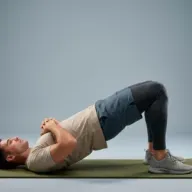
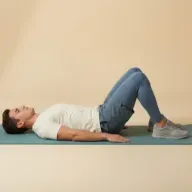
- Pelvic tilts. Small, slow tilts of the pelvis while lying with knees bent.
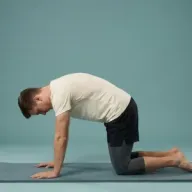
- Cat-cow. Gentle, slow spinal movement following the breath.
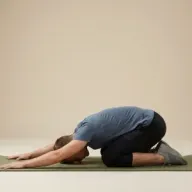
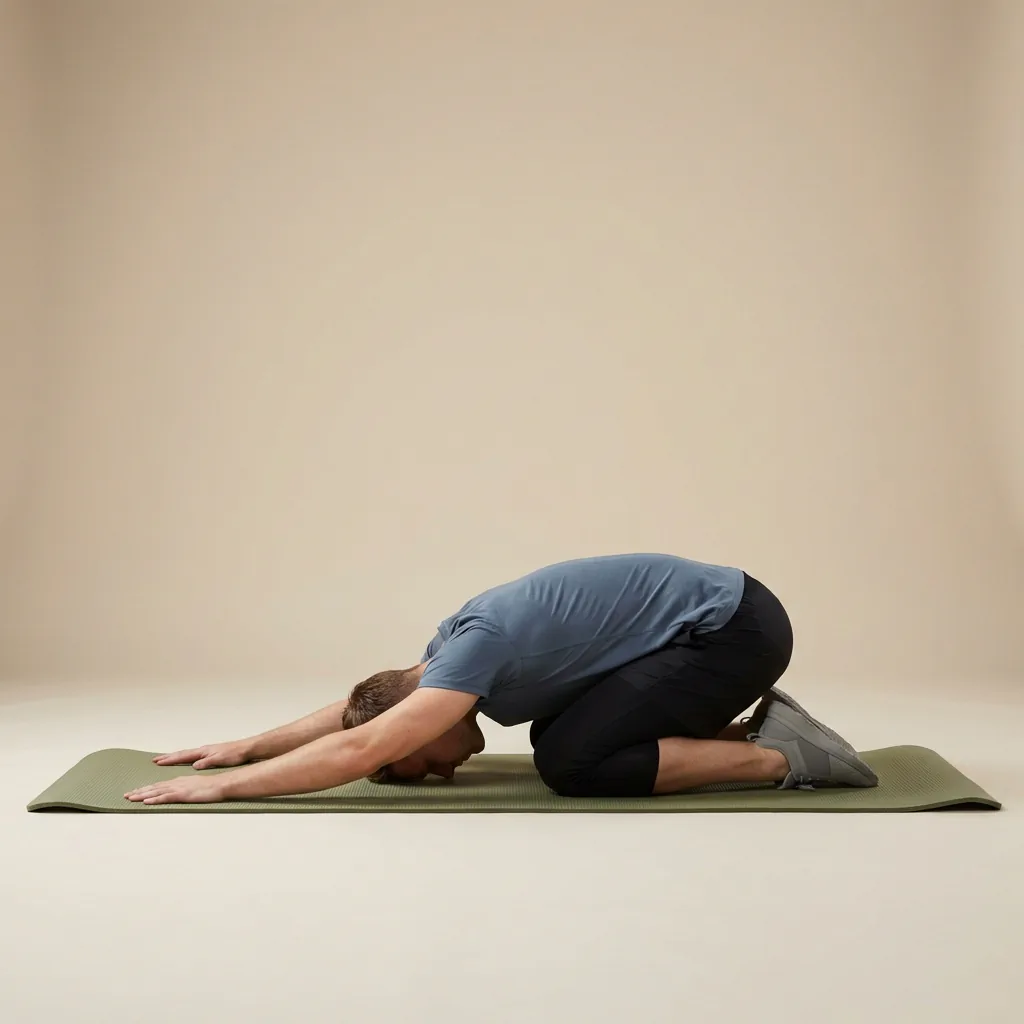
- Child's pose. A supported rest position for the lower back, knees wide if that eases it.
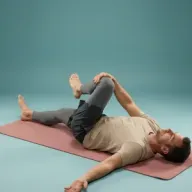
- Lying figure-four. A gentle glute stretch that some find soothing - stop if it increases leg symptoms.
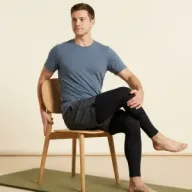
A gentle "nerve gliding" idea - slowly straightening and bending the knee while seated, within a comfortable range - is used in some programmes. Keep it light and stop if symptoms travel further down the leg.
The key rule: do not chase pain down the leg
The most useful safety principle is simple: if a movement increases the radiating pain, tingling or numbness in your leg, stop that movement. Centralising symptoms (pain easing back towards the spine) is generally a better sign than symptoms spreading further down.
Movements and behaviours that may be inappropriate for some readers
- Aggressive forward folds or deep seated hamstring stretches can pull on an already sensitive nerve for some people, so ease off if they increase leg symptoms.
- Forcing end-range movement, bouncing, or pushing through leg pain.
- Long periods of complete rest, which tends to be less helpful than gentle activity.
Urgent warning signs - seek help immediately
The NHS advises seeking emergency help if sciatica-type symptoms come with any of the following, which can indicate a rare but serious condition (cauda equina syndrome). In the UK, call 999 or go to A&E; elsewhere, contact your local emergency service or emergency department:
- Numbness or tingling around the genitals, buttocks or inner thighs (a "saddle" area).
- Difficulty passing urine, loss of bladder or bowel control, or not feeling when you need to go.
- Numbness or weakness in both legs that is severe or getting worse.
- Sciatica-type symptoms affecting both sides.
Seek emergency care after a serious accident. Also see a doctor if pain is severe, is getting worse, or has not improved after a few weeks.
Seek appropriate assessment
Because sciatica has several possible causes, a GP or physiotherapist can help work out what is going on and tailor movement to you. Stretching does not "cure" sciatica; gentle, well-chosen movement is one part of a broader, individual plan.
How long sciatica tends to last
For many people, sciatica-type symptoms ease over a few weeks to a couple of months, though the timeline varies and some cases take longer. The NHS notes that staying gently active is usually more helpful than resting in bed, even though movement can feel counter-intuitive when a leg is painful. Understanding that symptoms often settle can take some of the fear out of the experience, which itself tends to help.
Sitting, position and daily habits
Long periods in one position - particularly prolonged sitting - can aggravate symptoms for some people. Breaking up sitting, changing position regularly, and gentle walking within comfort are simple habits worth trying. As with the movements above, the guiding principle is to notice what settles your leg symptoms and what provokes them, and to do more of the former.
Introducing movement carefully
If you try the gentle options, add them one at a time and in small amounts, so you can tell how each affects you. Increases in range or repetitions should be gradual. Because sciatica has several possible underlying causes, the same movement genuinely suits some people and not others - your own response is the most reliable guide, alongside professional advice.
What a clinician can offer
A GP or physiotherapist can help work out what is driving your symptoms and tailor movement and other treatment to you. They can also reassure you about the red-flag symptoms and explain what to watch for. Stretching is not a cure for sciatica; well-chosen, gradually progressed movement is one part of a broader, individual plan - and the urgent warning signs above always take priority over any exercise.
Related routines
If a clinician has recommended a movement plan, check that any guided sequence matches it. Spine-Friendly Mobility is marked beginner level, while Gentle Nerve-Friendly Mobility is intermediate. The name Sciatic Nerve Floss does not establish that it treats sciatica or suits your symptoms. Stop any movement that increases leg symptoms.
Sources
Put the guide into practice
Related Flexor routines
These guided routines are linked to the article topic. Review the difficulty and exercise list before starting.