How Can I Stay Strong and Mobile as I Get Older? A Practical Starting Guide
Build an adaptable mix of walking, strength, balance and flexibility to support everyday abilities, with guidance on starting safely and seeking individual help.

A useful starting point is to practise several kinds of activity: aerobic movement, strengthening, balance and flexibility. Together they support different parts of everyday function. Stretching can be one part of that mix, but it does not provide all the strength or balance work needed for an active later life.
Start from what you can do now and the abilities you want to support. Walking to a familiar place, carrying shopping, getting out of a chair or moving comfortably for a hobby are more practical goals than trying to match a flexibility score for your age. Adaptations and professional guidance can help make the plan fit you.
Begin with an everyday ability
Think about something you value doing. If you want to keep visiting a nearby friend, the relevant activities may involve walking capacity, managing steps and confidence on an uneven path. If you enjoy gardening, reaching, changing levels and tolerating the task may matter. No single stretch covers all those demands.
Choose an ability that is meaningful and reasonably safe to practise. Notice what makes it difficult: effort, pain, balance, access or uncertainty. You do not need to diagnose the cause yourself. That description can help a professional suggest an appropriate plan when guidance is needed.
Our article on flexibility and age addresses a different question. This guide focuses on maintaining a varied activity pattern for daily life, rather than comparing your range with an age-based ideal.
Four activity types, four complementary jobs
Aerobic activity increases breathing and effort over time. Walking is one option when it is accessible, and its intensity depends on your current capacity. An easy stroll and a brisk walk may serve different roles. Other suitable activities can be chosen if walking is uncomfortable or impractical.
Strengthening challenges muscles against resistance. It supports the capacity used in tasks such as standing up or carrying things. The right resistance and movement depend on the person. Using an exercise that is familiar to someone else does not automatically make it suitable for you.
Balance practice addresses controlling your position while standing or moving. It is different from simply holding a deep stretch. If you feel unsteady, seek advice on a safe setup rather than deliberately removing support to make an exercise harder.
Flexibility and mobility work focuses on range and comfortable movement. The 2025 expert consensus on stretching supports its role in range of motion, with limits on broader claims. Stretching alone should not be sold as sufficient muscle-building, fall prevention or a way to reverse ageing. For more on the distinction, read stretching and strength training.
Use guidelines as a direction, not a test
The NHS guidelines for adults aged 65 and over recommend being active daily and doing activities that improve strength, balance and flexibility on at least two days a week. They also include at least 150 minutes of moderate aerobic activity across the week, or 75 minutes of vigorous activity if you are already active. The vigorous option is not advice for an inactive beginner to start with demanding exercise.
At moderate effort, you can talk but not sing. That description is more useful than assuming everyone should walk at the same pace. The targets do not mean you must meet them immediately. The WHO also emphasises that some activity is better than none and that activity can be adapted to ability.
People differ widely at the same age. A person returning after illness may need a different starting point from someone who has remained active for years. Your own capacity, symptoms and support matter more than a generic timetable.

Your first suitable day: choose, try, check
Begin after a familiar daytime task, when you have time and are not rushing. Clear the floor, choose suitable footwear and use a stable chair that will not slip. You do not have to complete all of the following on one day; it is a way to choose a starting point for each role.
- Walk for aerobic movement. Pick a familiar, level route that is easy to shorten. Keep the effort comfortable for your current capacity. If the route is unavailable, choose a shorter indoor walk; if walking itself is unsuitable, ask about a different appropriate activity.
- Choose a simple strength movement. If getting out of a chair is already comfortable and steady, review the NHS sit-to-stand demonstration. With feet flat, lean forwards slightly, rise slowly from a stable chair and return with control, using support as needed. Start with only an amount you can manage comfortably; pain, unsteadiness or difficulty controlling the movement is a reason to stop and obtain advice. The same NHS page shows wall press-ups and supported alternatives to review when appropriate.
- Treat balance as its own task. If you are steady and already comfortable stepping sideways, the NHS balance demonstrations show slow, controlled sideways walking. Use a clear space with stable support within reach. If you have fallen, feel unsteady or are unsure about the setup, seek guidance before trying a new balance exercise; do not practise unsupported challenges alone.
- Keep mobility comfortable. Choose familiar movements within an easy range. Preview the positions before following a new sequence; a beginner label does not make every standing or bending movement suitable.
Afterwards and later that day, ask whether the activities felt manageable. Keep or reduce the amount at the next suitable opportunity rather than increasing it automatically. New concerning symptoms or unusual delayed worsening call for advice, not a catch-up session. Over the week, consider each activity role separately; one chair exercise is a starting option, not a complete programme for all the major muscles.
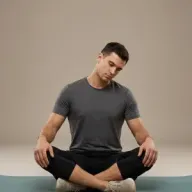
For one accessible upper-body mobility option, preview Flexor's Express Neck Release. Its beginner neck, shoulder and upper-back instructions allow sitting or standing, which may be more practical than a full-body sequence involving floor transfers. Use a stable seat if you choose to sit, keep head movements comfortable, and stop for pain or dizziness. Save the routine only if it fits your abilities. It can organise one part of mobility practice; it does not supply a complete strength or balance plan, and a beginner label is not individual clearance for osteoporosis, frailty or falls risk.
Adapt the setup before increasing the challenge
Look at practical barriers. Is the floor clear? Is lighting adequate? Can you get into and out of the exercise position? Do you need an accessible route, suitable footwear or someone nearby? These questions can make the activity more workable without changing your goal.
A seated or supported version may be appropriate for some activities, but not every exercise can be converted by simply changing position. Ask about alternatives when standing, kneeling or getting down to the floor is difficult. An app sequence should be selected for its actual movements, rather than assuming a beginner label means it suits every ability.
Notice your response during activity and afterwards. Ordinary effort and new concerning symptoms are different. Adjust the plan when needed, and avoid fixed increases if exertion leads to unusual or delayed worsening.
What research and guidance can promise
Public-health guidance supports regular, varied activity for health and physical function: maintaining the capacity to walk, use strength and control balance is the reason for combining activities rather than relying on flexibility alone. It does not promise a particular improvement in your shopping, chair-rise or gardening task, or guarantee that you will avoid falls, illness or all future changes in ability.
Function also depends on health conditions, environment, treatment and support. Mobility aids and adaptations can be part of staying active. Using them does not cancel the value of your movement or mean that your activity plan has failed.
When to seek individual support
Ask for advice if you have fallen, feel increasingly unsteady, have significant pain or notice a change in your ability to manage everyday tasks. New weakness, fainting, chest discomfort or unusual breathlessness needs appropriate assessment. Call your local emergency number for sudden chest pain that does not go away, or chest pain with sweating, faintness or breathlessness, or for severe difficulty breathing.
If you have osteoporosis, a recent fracture or surgery, a neurological condition or another illness that affects exercise, ask about relevant restrictions and adaptations. A suitable plan can still contain movement, but it should respect your medical situation.
Follow-up questions
Is it too late to begin if I have never exercised?
A suitable starting point can be much smaller than a formal workout. Choose an amount appropriate to your current health and seek guidance if you are unsure. Age alone does not tell you what you can manage.
Can walking cover everything I need?
Walking can support aerobic activity, but it does not automatically provide the full range of strengthening, balance and flexibility practice. Consider those components separately when planning the week.
Should I avoid support during balance work?
No. Safety and an appropriate challenge matter more than performing without support. Someone with unsteadiness or falls risk should obtain advice before attempting exercises that challenge balance.
What is a useful sign of progress?
A valued task may feel more manageable or your activity may become easier to organise. Progress can also mean finding an adaptation that allows you to keep participating. It does not need to mean an ever-harder exercise.
To bring guidance and structure to the mobility part of your plan, download Flexor. Pick a routine whose positions fit your abilities, alongside the strength, balance and aerobic activity appropriate to you.
Sources
- NHS: Physical activity guidelines for older adults.
- NHS: Strength exercises — stable-chair setup and beginner demonstrations.
- NHS: Balance exercises — controlled movements and safe support.
- WHO: Physical activity — general health and adapted activity.
- Practical recommendations on stretching exercise: expert consensus — range of motion and limits.
Put the guide into practice
Related Flexor routines
These guided routines are linked to the article topic. Review the difficulty and exercise list before starting.