
Can Stretching Lower Blood Pressure or Improve Circulation? What the Research Shows
Promising findings on blood pressure, arterial stiffness and endothelial function — and why the evidence is still too early for treatment claims.

Stretching is usually discussed as a flexibility tool, not a cardiovascular intervention. But a small and growing body of research is examining whether repeated stretching can influence blood pressure, arterial stiffness and vascular function.
The findings are interesting enough to study — and not strong enough to turn stretching into a blood-pressure treatment. The newest 2026 systematic review explicitly describes its pooled analysis as exploratory.
What the 2026 blood-pressure review found
The review included 11 records published between 2014 and 2025 involving adults with elevated blood pressure or hypertension. All of the protocols used static stretching, although intervention design, duration and participant characteristics varied substantially.
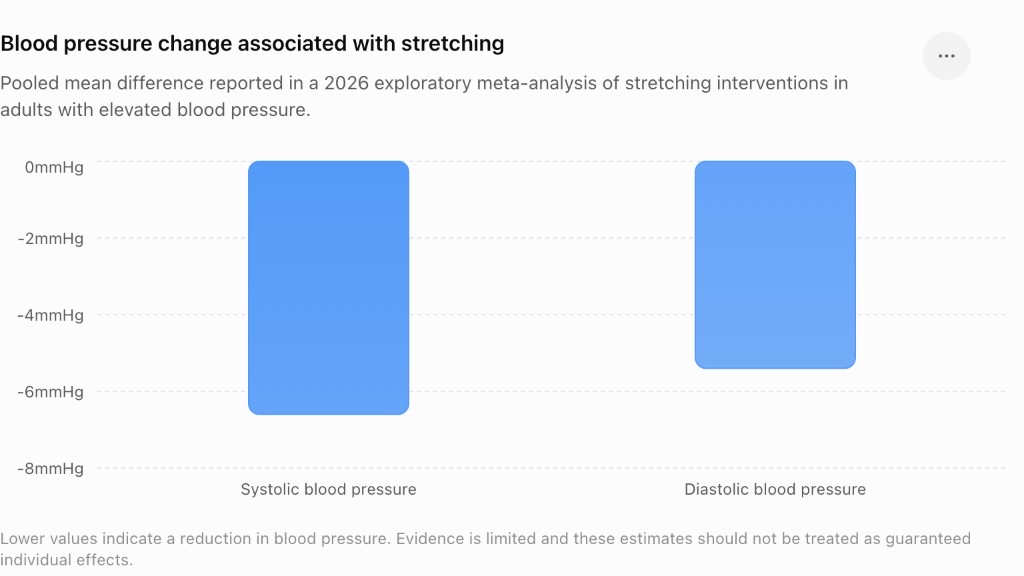
In the primary pooled analysis, stretching was associated with a mean systolic blood-pressure difference of −5.39 mmHg, but the 95% confidence interval ranged from −11.32 to +0.53 mmHg, so the estimate was not statistically significant. For diastolic blood pressure, the pooled mean difference was −3.93 mmHg, with a 95% confidence interval from −7.25 to −0.60 mmHg, which did reach statistical significance.
A sensitivity analysis that included a third study produced larger pooled estimates — approximately −6.6 mmHg systolic and −5.4 mmHg diastolic — but also more heterogeneity for systolic pressure. The authors therefore warned against treating the estimates as definitive clinical effects.
Why might stretching affect the vascular system?
Muscles and blood vessels are mechanically linked. When a muscle is stretched, vessels within and around the tissue can also experience mechanical deformation. Repeated stretch-relax cycles may influence vascular tone, endothelial signalling and arterial stiffness.
These are plausible mechanisms, but a plausible mechanism is not the same as proof of meaningful long-term cardiovascular protection. That requires larger and longer randomized trials.
What arterial-stiffness research adds
Blood pressure is only one cardiovascular outcome studied in stretching research. Researchers also use pulse-wave velocity (PWV) as a marker of arterial stiffness and measures such as flow-mediated dilation to study endothelial function.
A 2020 meta-analysis of eight controlled trials involving 213 middle-aged and older adults reported lower arterial stiffness (SMD −1.00), better endothelial-function measures (SMD +1.15), a small reduction in resting heart rate (about −0.95 beats/min) and a reduction in diastolic blood pressure (about −2.72 mmHg). The review included randomized and non-randomized trials, so the pooled result should be treated as promising rather than definitive.
A newer 2026 systematic review and meta-analysis separated acute from longitudinal PWV responses. It pooled six acute and six longitudinal studies. A single stretching bout produced a small, non-significant PWV change (SMD −0.22), while programmes lasting roughly 4–12 weeks produced a larger pooled reduction (SMD −1.02, 95% CI −1.79 to −0.25).
The newer result strengthens the signal that repeated stretching may influence arterial-stiffness markers. It still does not prove that stretching prevents heart attacks or strokes: PWV is a surrogate physiological outcome, study numbers remain small and protocols differ.
What arterial stiffness means
Healthy arteries expand and recoil with each heartbeat. With age and cardiovascular disease, large arteries can become stiffer. Researchers often estimate arterial stiffness using measures such as pulse wave velocity.
A reduction in arterial stiffness can be favourable, but the standardized effect size in a research paper does not translate directly into a known reduction in heart attacks or strokes. Clinical outcomes require much larger, longer studies.
What endothelial function means
The endothelium is the inner lining of blood vessels. It helps regulate vessel dilation, blood flow, inflammation and clotting. Some stretching studies assess endothelial function using measures such as flow-mediated dilation or reactive hyperaemia.
Again, these are useful physiological markers rather than proof that stretching alone prevents cardiovascular disease.
Stretching is not a replacement for established blood-pressure care
This is the most important section of the article. Someone with high blood pressure should not stop medication or replace evidence-based exercise with stretching because a small meta-analysis showed a few millimetres of difference.
Blood-pressure management may include medication, aerobic physical activity, resistance training, dietary changes, weight management, sleep, limiting excess alcohol, smoking cessation and clinical follow-up depending on the individual.
Stretching may eventually prove to be a useful adjunct, particularly because it is accessible to people who find vigorous exercise difficult. But “adjunct” is very different from “treatment replacement”.
Why accessibility makes the research interesting
Static stretching can be performed at home, in a chair or on a floor, often with no equipment. For older adults or people beginning from a very inactive baseline, that low barrier is valuable.
If future high-quality trials confirm vascular effects, stretching could become one additional way to increase movement exposure in populations who struggle to meet conventional exercise recommendations. That possibility is worth studying precisely because stretching is simple and scalable.
What the evidence cannot tell us yet
- the optimal stretching type for blood pressure;
- the optimal session length or weekly frequency;
- whether effects persist for years;
- whether blood-pressure changes translate into fewer cardiovascular events;
- which patient groups benefit most;
- how stretching compares directly with well-established aerobic and resistance exercise programmes.
Acute and chronic effects may differ
The 2026 review noted that chronic interventions more often showed favourable changes in arterial-stiffness markers, while immediate blood-pressure responses were more variable. That is another reason not to take one reading directly after stretching and treat it as evidence of a long-term cardiovascular adaptation.
Why a few millimetres of mercury can sound more certain than they are
A pooled mean such as −5.39 mmHg can look precise, but the confidence interval is the more important guardrail. In the primary 2026 analysis, the systolic estimate ranged from −11.32 to +0.53 mmHg. That interval includes both a potentially meaningful reduction and essentially no true reduction. The diastolic interval stayed below zero, but it came from only a small number of sufficiently comparable studies.
Statistical significance therefore does not remove concerns about sample size or study quality. Most randomized trials were judged to have “some concerns” for risk of bias, and the non-randomized studies were judged at critical risk of bias. The authors called the synthesis exploratory and hypothesis-generating. It should not be shortened to “stretching lowers blood pressure by 5 mmHg”.
How this fits with established physical-activity evidence
WHO recommends that adults accumulate regular moderate- or vigorous-intensity aerobic activity and muscle-strengthening activity. A stretching routine can sit alongside that programme because it is accessible and can improve range of motion. Emerging vascular findings are an additional research interest, not a reason to replace established cardiovascular care.
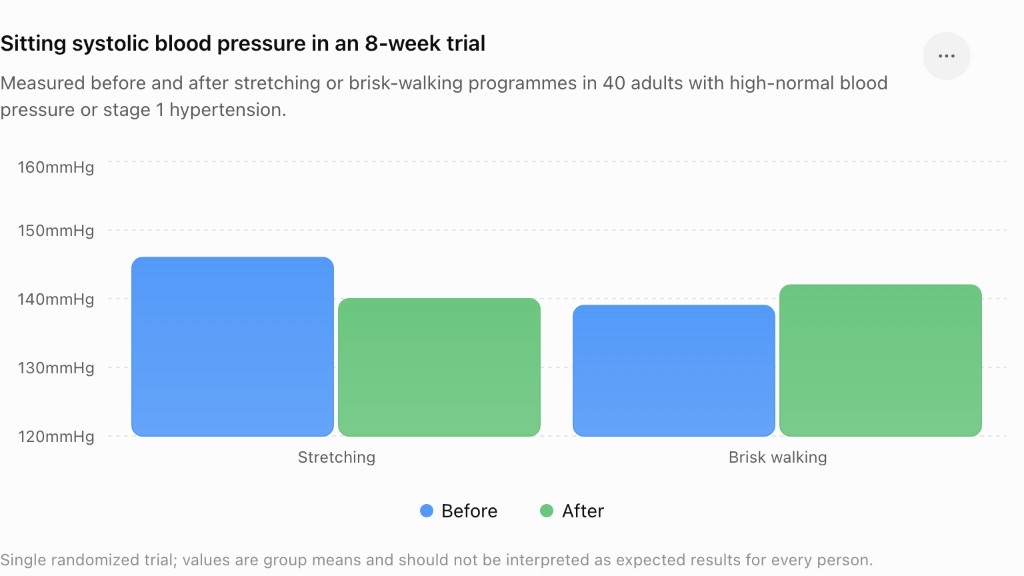
A single randomized trial has compared stretching with brisk walking over eight weeks in 40 adults with high-normal blood pressure or stage 1 hypertension. Group means moved in different directions, and one trial is not a reason to replace walking with stretching.
A safe way to use stretching alongside general activity
For most people, a gentle routine can sit alongside walking, cycling, resistance training or other activity. Options such as Recovery: Breath and Reset, Evening Mobility Unwind or Gentle Mobility Recovery are better framed as accessible movement and relaxation than as blood-pressure treatments.
If you have diagnosed hypertension, cardiovascular disease, dizziness with position changes or medication that affects blood pressure, follow your clinician’s exercise advice.
How strong is the cardiovascular case?
The fair summary is a research signal, not a treatment: repeated stretching has been linked with favourable changes in some arterial-stiffness markers, and exploratory 2026 analyses favoured it for blood pressure. It has not been shown to prevent cardiovascular events.
Sources and further reading
- Musculoskeletal stretching and arterial stiffness — 2026 systematic review and meta-analysis
- Effects of Different Types of Stretching on Hypertension — 2026 systematic review and exploratory meta-analysis
- Open-access full text of the 2026 hypertension stretching review
- Stretching and arterial stiffness in middle-aged and older adults — meta-analysis
- Open-access full text of arterial stiffness meta-analysis
Put the guide into practice
Related Flexor routines
These guided routines are linked to the article topic. Review the difficulty and exercise list before starting.
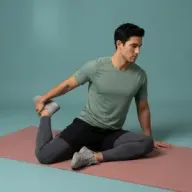
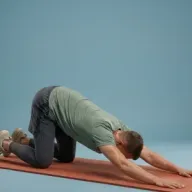
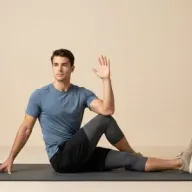
Recovery: Breath and Reset
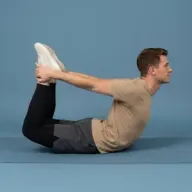
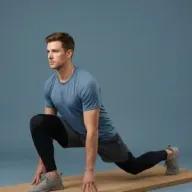
A 10-move breath-led recovery reset for chest, spine, and hips with doorway pecs, 90-90, couch stretch, cobra, camel, and puppy pose.
-
-
-
-
-
- +5
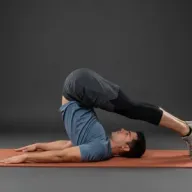
Evening Mobility Unwind
An 8-move evening unwind with chest flys, trunk twist, cow face, frog pose, and plow for a slower pre-bed mobility downshift.
-
-
-
-
-
- +3
Gentle Mobility Recovery
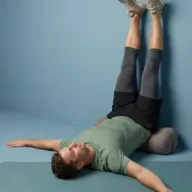
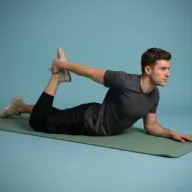
An easy recovery session using calm, controlled movement and steady breathing across the major joints.
-
-
-

-

-
- +4