Why Am I So Tired After Sitting All Day—and Can Moving More Help?
A sedentary day can still be exhausting. Explore sleep, workload and activity patterns, plus when fatigue or worsening after activity needs assessment.

A day spent sitting can still be exhausting. Concentration, stress, poor sleep and an uninterrupted workday can all contribute to how tired you feel. Moving more may help some people establish a healthier daily pattern, but tiredness should not automatically be blamed on inactivity.
The key distinction is between an ordinary end-of-day slump that responds to a manageable change and fatigue that is persistent, unexplained or made worse by exertion. The second situation needs a different approach. You do not need to push through unusual exhaustion to prove that you are trying.
Sitting does not make a day effortless
Work can demand sustained attention, frequent decisions and emotional effort even when your body stays in a chair. A long commute, caring responsibilities or worry can add to that load. If the day also leaves little time for meals, rest or enjoyable activity, the overall pattern may feel draining.
Sleep matters too. Spending enough hours in bed does not guarantee restful sleep, and sleeping poorly can affect the next day regardless of how physically active you were. It helps to ask about the whole day and night, rather than assuming a desk job should leave you full of energy.
The NHS tiredness and fatigue guide describes lifestyle, psychological and medical explanations. Its breadth is useful: fatigue is a symptom, not a diagnosis. A list of possible causes cannot explain your own symptoms without an appropriate assessment.
What movement can reasonably offer
Regular activity is associated with broad physical and mental-health benefits, and the WHO recommends building activity and reducing sedentary time. Those recommendations give a reason to make room for movement when it is suitable. They do not prove that sitting caused your fatigue or that a routine will fix it.
A short break can change your position, interrupt a long task and create a pause in the workday. A walk may also get you away from the desk. These practical effects are enough to make a break worth trying; there is no need to promise an immediate energy boost or claim that every stretch improves circulation in a way that explains your tiredness.
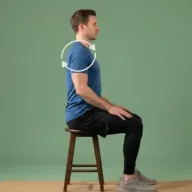
Light mobility, walking and strengthening serve different purposes. A gentle shoulder movement can be a comfortable break, while a brisk walk places a different demand on breathing and effort. Strengthening is another part of a broader activity pattern. You do not have to fit all of them into the first experiment.
Before changing your routine, notice the pattern
Consider whether this is familiar tiredness after a busy day or something new and unusual. Is it mainly sleepiness, a sense of low energy, weakness, pain, or several things together? Does it improve with rest? Is it happening away from work as well? Describing the pattern clearly can help both your own decisions and a conversation with a clinician.
Also notice what happens after activity. Some people experience a marked worsening of symptoms after physical or mental effort, sometimes delayed until later or the following day. That response is different from simply finding a new activity tiring. It should not be treated as a signal to increase effort until the body adapts.
NICE guidance on myalgic encephalomyelitis/chronic fatigue syndrome (ME/CFS) specifically warns against programmes based on fixed increases in activity and against advising people to push through symptoms. This article cannot diagnose ME/CFS. It can make the boundary clear: delayed or disproportionate worsening deserves individual advice, not generic exercise progression.

A workday pause you can keep, shorten or skip
This example is for familiar desk-day tiredness when activity is comfortable, not persistent unexplained fatigue or exertion-related symptom worsening. After sending a piece of work, pause before starting another. If you feel able, walk to another room and back at an easy effort. If that is not comfortable, rest or simply change position rather than turning the break into an exercise obligation.
- During the pause: notice whether the activity is comfortable. Stop for unusual symptoms instead of finishing a planned amount.
- Later that day: ask whether the break felt manageable, neutral or draining. Do not assume a brief burst of alertness proves the fatigue is resolved.
- At the next suitable opportunity: keep or shorten the same option if it suited you. If effort causes unusual or delayed worsening, stop the experiment and seek individual advice; there is no fixed progression.
Also review the work pattern itself. Could meetings leave room for a proper meal or rest break? Are tasks running late because expectations need discussion? Movement should not become another responsibility piled onto an unreasonable day.
Do not overlook reasons to seek care
Arrange medical advice if fatigue lasts, has no clear explanation, affects everyday life or comes with other symptoms. Possible causes include sleep disorders, anaemia, medication effects and other health conditions; listing them does not identify which, if any, applies to you. A clinician can decide what history, examination or tests are appropriate.
Stop activity and seek prompt medical advice for new unusual breathlessness, fainting or chest discomfort. Call your local emergency number for sudden chest pain that does not go away, or chest pain with sweating, faintness or breathlessness, or for severe difficulty breathing. Avoid starting an exercise experiment when you feel acutely unwell. If you already have a condition involving exertion intolerance, follow your individual plan and discuss changes with the relevant professional.
Where a guided break fits
Our desk-stretch guide focuses on practical positions, while the sitting guide discusses the wider sedentary pattern. Neither replaces assessment of unexplained fatigue.
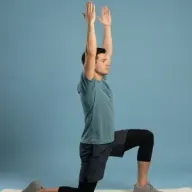
For familiar desk-day tiredness when movement feels comfortable, preview Flexor's Quick Desk Reset. It combines neck and shoulder movements with standing hip work, a lunge and floor stretches, so it needs more space than a chair-only break. The beginner label does not make every position suitable. If the sequence fits you, its timing and audio cues can organise a break after a work task. Rest is the better choice when activity worsens symptoms; the routine cannot diagnose fatigue or reliably restore energy.
Questions about getting started
Does being tired mean I should skip all movement?
Not necessarily. Familiar tiredness may still allow comfortable activity, while unusual fatigue, illness or symptom worsening may call for rest and advice. The decision depends on your response and health, rather than a rule that everyone must exercise through tiredness.
Why can I feel worse the day after doing more?
Several explanations are possible, and the pattern deserves attention. If the worsening is disproportionate, delayed or recurrent, seek assessment. Do not assume it is ordinary soreness or make fixed increases to overcome it.
Should I replace sleep with an early workout?
Movement and sleep meet different needs. If you are already short of sleep, removing more rest may make the overall pattern harder to sustain. Look for an activity opportunity that does not require sacrificing needed sleep.
What should I tell a clinician?
Explain when fatigue began, how it affects life, sleep patterns, medication and what happens after effort. Brief notes may help if they are manageable. You do not need a detailed activity record before asking for advice.
If guided mobility fits your energy and symptoms, download Flexor for a structured break between tasks. Keep it optional and manageable, and seek advice about fatigue that needs assessment.
Sources
- NHS: Tiredness and fatigue — multiple causes and assessment; older displayed review date.
- NICE NG206: ME/CFS recommendations — exertion-related symptom worsening and activity limits.
- WHO: Physical activity — broader guidance, not fatigue diagnosis.
Put the guide into practice
Related Flexor routines
These guided routines are linked to the article topic. Review the difficulty and exercise list before starting.