Bulldog
Hover knees just off the floor from all fours to build core bracing, shoulder stability, and crawling strength.
Overview
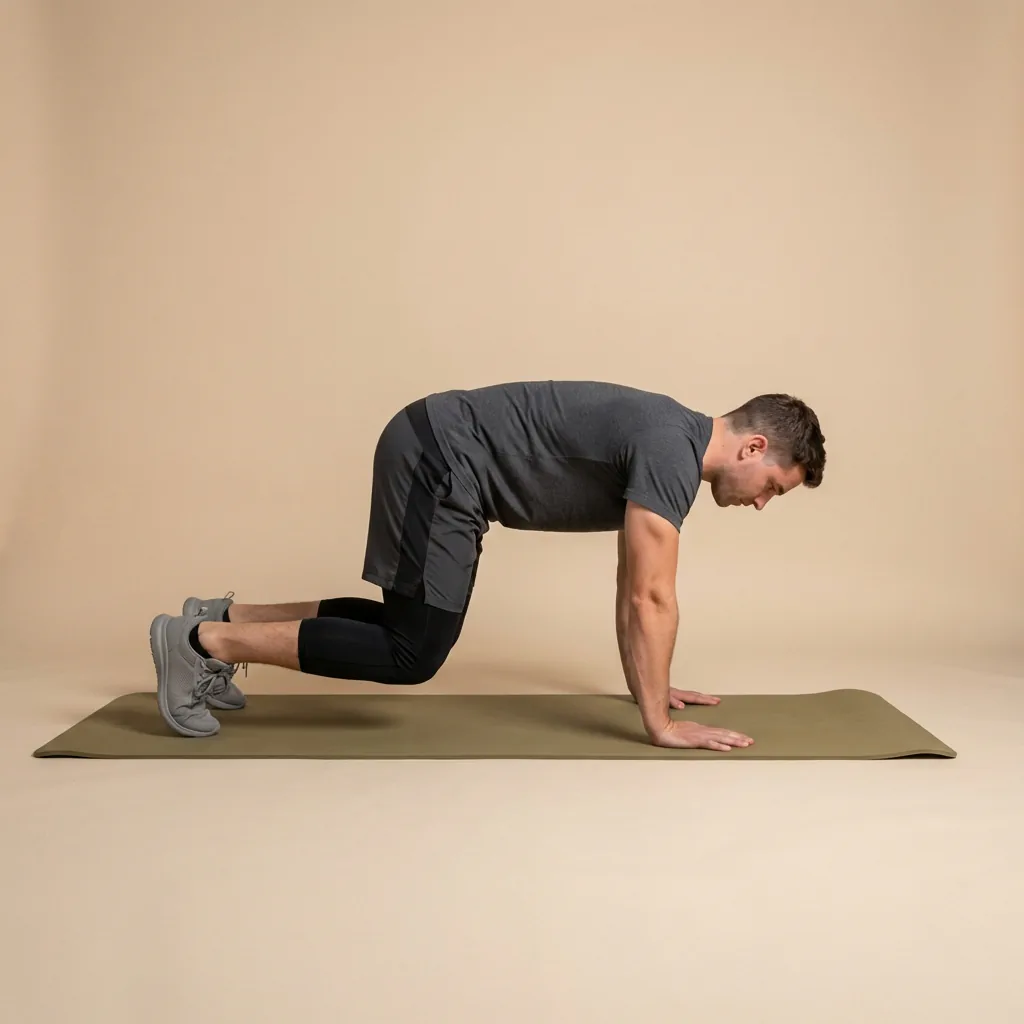
Bulldog is a quadruped knee-hover hold on Flexor. The knees float just above the floor while the hands, feet, shoulders, and core keep the trunk level.
What Bulldog targets
You will feel the deep abdominals and shoulders working, with the hips staying quiet so the spine does not sag or pike.
Why add Bulldog to your routine
It builds the bracing and shoulder support needed for bear crawls, planks, and athletic ground transitions.
- Isometric core hold, not a stretch.
- Low hover keeps the drill precise.
- No equipment needed.
Who it's for
Intermediate movers who can hold a stable tabletop and want a stronger crawling-pattern progression.
When to do it
Use in core warm-ups, movement prep, or stability blocks for short quality holds.
Bulldog is an isometric quadruped hover. From hands and knees, the toes tuck under and the knees lift just above the floor while the trunk stays level like a short bear-crawl hold.
Setup cue
Set up on all fours with hands under shoulders, knees under hips, and toes tucked into the floor. Spread your fingers, press the floor away, and brace the belly as if preparing for a gentle cough.
Practice notes
In Flexor, Bulldog is typically prescribed as about 45 sec per round, 1 rep, and 1 set. Adjust the dosage to what feels sustainable, breathe steadily, and ease off if anything feels sharp or unsafe.
Guidance
How to perform, tips, mistakes, safety notes, and benefits for Bulldog.
Follow these cues in order. Move with control and stay in a comfortable range.
- Set up on all fours with hands under shoulders, knees under hips, and toes tucked into the floor.
- Spread your fingers, press the floor away, and brace the belly as if preparing for a gentle cough.
- Lift both knees only a few inches off the floor while keeping the hips level and the back flat.
- Hold the hover with quiet breathing, then lower the knees softly before your hips pike or your back sags.
Cues that help the movement stay smoother and more controlled.
- Keep the knees close to the floor; a smaller hover is usually stronger and cleaner.
- Push evenly through both palms and the balls of both feet.
- Imagine balancing a glass of water on your low back while you breathe.
Patterns to watch for so the shape stays clearer.
- Lifting the hips high and turning the drill into a short downward-dog shape.
- Letting the low back sag because the brace relaxes during the hold.
- Shifting all the weight into the wrists instead of sharing it with the feet.
Keep things comfortable and stop if something feels wrong.
- If you have a history of spinal/neck injury, disc issues, or recent surgery, consult a clinician before progressing range or intensity.
- Stop if you feel sharp pain, numbness, tingling, dizziness, or symptoms that radiate.
- Stay within a comfortable, controlled range; muscular effort or mild stretch tension should not become pain.
- Move smoothly without bouncing, jerking, or forcing the range.
Why people include this movement in their practice.
- Builds anti-extension core strength in a low hover rather than a full plank.
- Trains shoulder, wrist, and hip stability for crawling patterns and ground-based movement.
- Scales easily by changing the hold length or briefly lowering the knees between efforts.
Similar movements to explore next
-
Bird Dog Plank
High-plank bird dog that holds the long line while resisting hip rotation and low-back sag.
-
Flutter Kicks
Lie on your back and alternate small, quick leg kicks while keeping the lower back pressed to the floor.
-
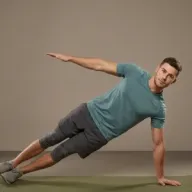
Single Arm Plank
High plank with one arm lifted to train anti-rotation core strength and shoulder stability.
-
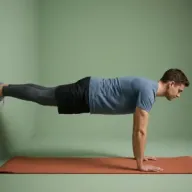
Wall Plank
Hold a horizontal body line with feet on the wall and hands on the floor to train inverted core and shoulder stability.
-
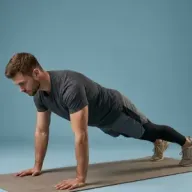
Hand Plank
Hold a high plank on straight arms with a straight line from head to heels and steady core bracing.
-
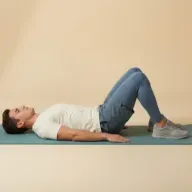
Pelvic Tilt Press
Supine posterior pelvic tilt that presses the lower back into the mat to train core and pelvic control.
-
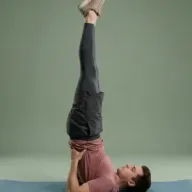
Shoulder Stand
Inverted shoulder-supported hold with legs overhead to load the neck, core, and upper back.
-
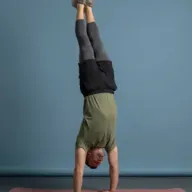
Wall Handstand
Kick up into a wall-supported handstand to build inverted shoulder stability and body alignment.
Common questions
Which body areas does Bulldog target?
Bulldog is a movement that mainly targets your core, shoulders, and hips. Move within a comfortable range and skip it if it does not feel suitable for you.
Which muscles does Bulldog work?
Primary muscles associated with Bulldog include transversus abdominis, rectus abdominis, and deltoids. Flexor presents this as general wellness guidance, not a clinical assessment.
Is Bulldog suitable for beginners?
Bulldog is listed as intermediate in Flexor. Choose a smaller range of motion, fewer repetitions, or an easier variation whenever you want more control.
How long should you hold Bulldog?
In Flexor, Bulldog runs for about 45 sec per round. Adjust the time to what feels sustainable, breathe steadily, and ease off sooner if anything feels sharp.
How do you do Bulldog?
Bulldog has 4 guided steps. Follow them in order on this page, breathe steadily, and keep the movement smooth and within a comfortable range. Stop if anything feels sharp, unstable, or unsafe for you.
Do you need any equipment for Bulldog?
No. Bulldog is a no-equipment movement you can do at home with just enough space to move comfortably.
Which Flexor routines include Bulldog?
Bulldog appears in guided Flexor sessions such as Sciatic Nerve Floss, Recovery: Soft Tissue Flow, and Fasting-Friendly Ease Level 1. Open a routine page to follow the full sequence, or practise this movement on its own from this guide.
Is this medical advice?
No. Flexor provides general fitness and wellness guidance. It does not diagnose, treat, or prevent medical conditions. Speak with a qualified professional about injuries, persistent pain, or health concerns.