Can AI Build a Personalised Stretching Routine? What It Can and Cannot Do
A clear-eyed look at what an AI routine builder can reasonably do, and where human judgement is still needed.

AI tools that assemble a stretching routine are increasingly common, and they can be genuinely useful. It helps to be clear about what they actually do. An AI routine builder is essentially a smart way of matching your stated goals and constraints to a library of exercises. It can save time and reduce guesswork - but it works from what you tell it, not from an examination of your body.
What information an AI system may use
Most systems take a handful of inputs and build around them:
- Your goal - feel less stiff, prepare for a run, wind down in the evening.
- Available time - five minutes versus twenty changes what fits.
- Target body areas - hips, neck, shoulders, back and so on.
- Difficulty or experience level, and sometimes equipment and any areas to avoid.
From these, it selects and orders exercises - for example choosing gentler options for a beginner, or dynamic movements for a warm-up rather than long holds.
Where it genuinely helps
- Turning a vague intention ("my hips feel tight") into a structured, ordered routine.
- Fitting a session to the time you actually have.
- Introducing variety so you are not repeating the same five stretches.
- Lowering the barrier to starting, which is often the hardest part.
The limitations worth understanding
It only knows what you provide
The quality of the routine depends on the accuracy of your inputs. If you describe the wrong area, or leave out a relevant issue, the suggestion will reflect that gap.
There is no physical examination
An AI cannot see how you move, feel where a joint restricts, or notice something a clinician would spot in person. It cannot diagnose the cause of pain, and it should not try to.
Safety is bounded
A responsible tool errs towards gentle, general options and encourages you to stay within comfort. It cannot guarantee that a movement is suitable for you. Use comfort as an immediate check, but remember that a comfortable movement can still be unsuitable after some injuries, operations or with certain health conditions. Follow any restrictions given by your clinician.
Privacy considerations
Building a personalised routine can involve sharing goals and health-related preferences. It is reasonable to ask what data an app collects, whether it is stored on the device or in the cloud, whether it is used to train models, and how to delete it. Prefer tools that are transparent about this and that keep sensitive data to a minimum.
Why AI-generated routines are not rehabilitation plans
This is the most important boundary. A rehabilitation programme after an injury or for a diagnosed condition is built on assessment, progression and clinical judgement. An AI stretching routine is general wellness content. It can complement professional care, but it is not a substitute for it, and it cannot diagnose injuries or design clinical rehab.
How to assess a suggested routine yourself
- Read it before you start and skip anything that looks unsuitable for you.
- Begin gently and stay within a comfortable range.
- Notice how each movement feels; stop anything sharp or that worsens symptoms.
- Give a routine a fair, consistent trial before judging it, and adjust the inputs if it misses the mark.
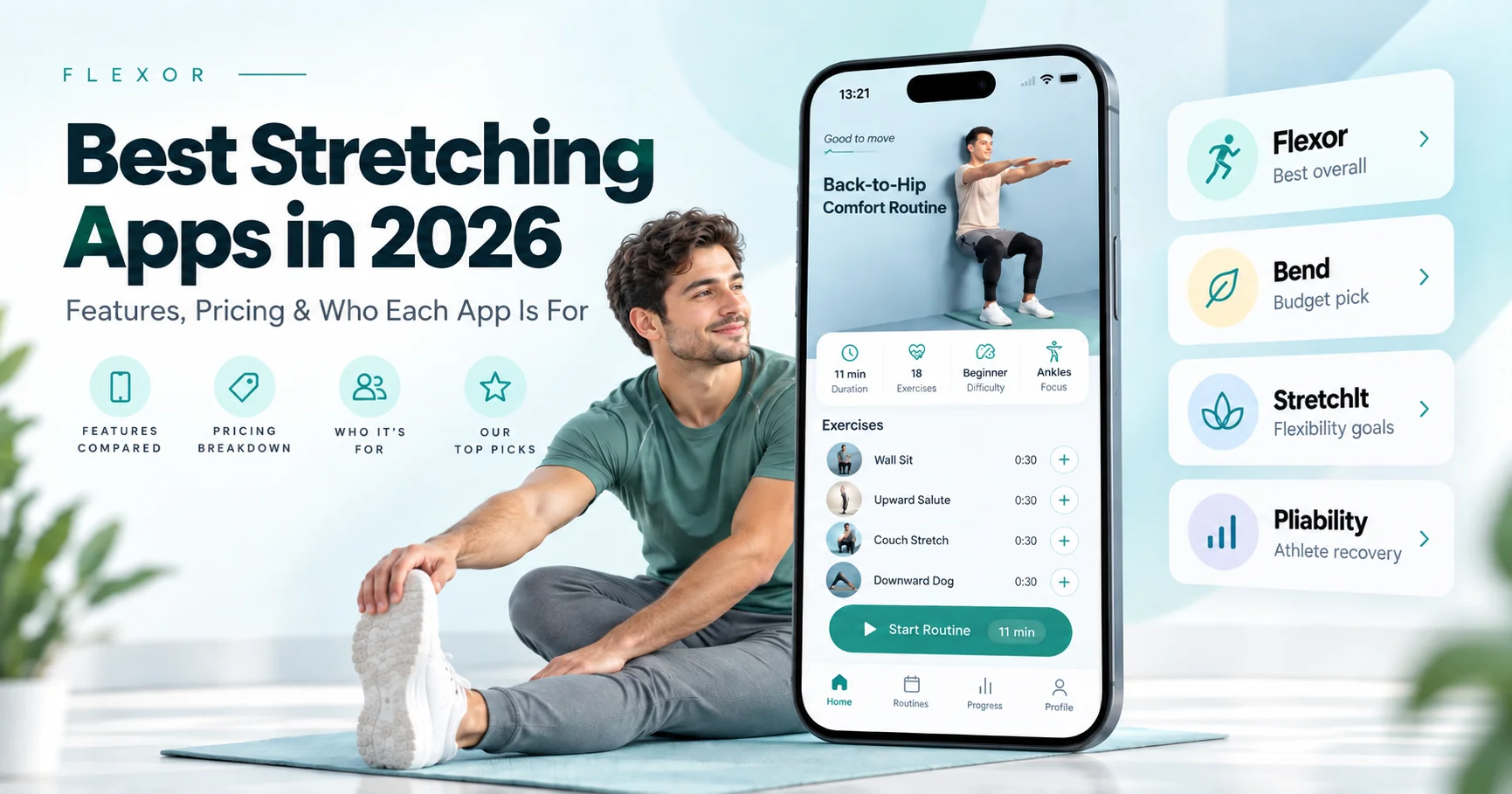
Used this way, an AI routine builder is a helpful starting point rather than an authority. Where one is offered - as it is in some apps, including Flexor - treat it as a convenient way to generate sensible options, then apply your own judgement.
How recommendation actually works, in plain terms
Under the surface, most AI routine builders are matching your stated preferences to a structured library of exercises tagged by body area, difficulty, duration and purpose. The "intelligence" is largely in interpreting a loose request - "my hips feel tight and I have ten minutes" - and returning a sensible, ordered selection: gentler options for beginners, dynamic movements for a warm-up, calmer holds for the evening. It is a fast, convenient filter, not a mind-reader.
Getting better results by giving better inputs
Because the output depends on what you provide, a few habits improve the suggestion: be specific about your goal and the time you have, name the areas that actually feel relevant, mention anything you want to avoid, and set an honest difficulty level. If a routine misses the mark, adjusting these inputs is usually more effective than discarding the tool.
Keeping a human in the loop
The most sensible way to use these tools is as a starting point that you review with your own judgement. You are the one who feels the movement, notices what is comfortable, and decides what to skip. For anything involving injury, a diagnosed condition or persistent pain, that human loop should include a qualified professional - an AI routine is general wellness content, not clinical care, and it cannot examine you or diagnose a problem.
Related routines
If you would rather start from a ready-made sequence, Mobility and Control and Rise and Shine are dependable, general options.
Sources
Put the guide into practice
Related Flexor routines
These guided routines are linked to the article topic. Review the difficulty and exercise list before starting.