
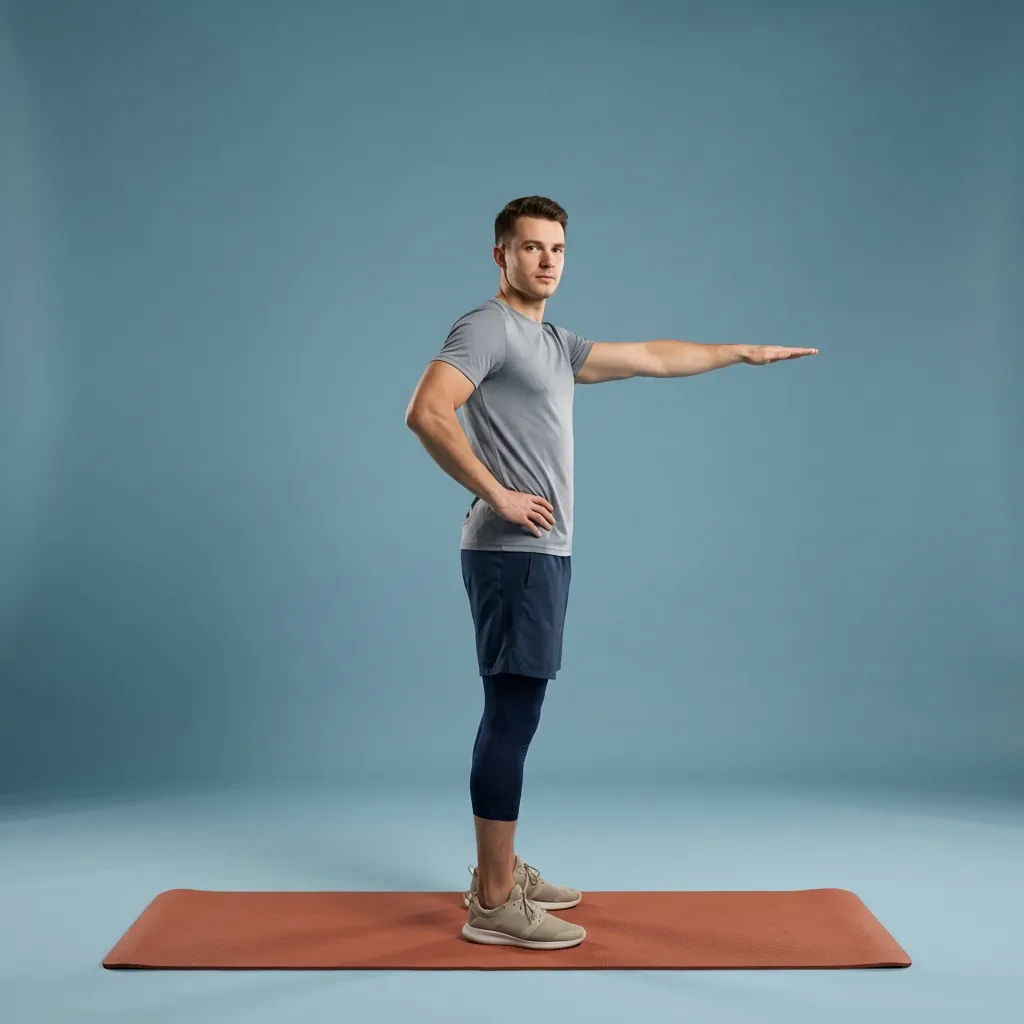
Wall Arms
Rotate your torso against a wall with one palm planted behind you to stretch the chest and front shoulder.
Overview
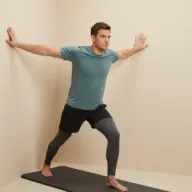
Wall Arms on Flexor is a standing rotation stretch. One palm presses into the wall at shoulder height while you turn the chest away to open the front shoulder and chest.
What Wall Arms targets
You'll feel the stretch through the chest, front shoulder, and biceps on the arm anchored to the wall.
Why add Wall Arms to your routine
It restores comfortable rotation and front-body length after pressing, swimming, or long hours at a desk.
- Single-wall setup — no doorway required.
- Work both sides for even chest opening.
Who it's for
Beginners and anyone with tight pecs or limited shoulder rotation.
When to do it
Post-workout, between desk blocks, or before overhead training. Most people spend around 60 seconds per side.
Wall Arms uses a wall as a fixed hand anchor while you square the hips and chest forward, creating a controlled chest and biceps stretch. Keep the planted hand at shoulder height and rotate from the upper back, not the lower back.
Setup cue
Stand with feet hip-width apart and the side of your shoulder touching a wall. Rotate your torso to reach back and place your palm on the wall at shoulder height—keep it smooth.
Practice notes
In Flexor, Wall Arms is typically prescribed as about 1 min per round, 1 rep, and 1 set. Adjust the dosage to what feels sustainable, breathe steadily, and ease off if anything feels sharp or unsafe.
Guidance
How to perform, tips, mistakes, safety notes, and benefits for Wall Arms.
Follow these cues in order. Move with control and stay in a comfortable range.
- Stand with feet hip-width apart and the side of your shoulder touching a wall.
- Rotate your torso to reach back and place your palm on the wall at shoulder height—keep it smooth.
- Keep your hand planted as you square your pelvis and chest forward, feeling the stretch.
Cues that help the movement stay smoother and more controlled.
- Place the palm at shoulder height with the elbow slightly bent.
- Square the pelvis and sternum forward to deepen the stretch.
- Keep the neck relaxed and gaze forward.
Patterns to watch for so the shape stays clearer.
- Twisting from the lumbar spine instead of the upper back.
- Placing the hand too high or low and losing shoulder alignment.
- Shrugging the working shoulder toward the ear.
Keep things comfortable and stop if something feels wrong.
- Stop if you feel sharp pain, numbness, tingling, dizziness, or symptoms that radiate.
- Stay within a comfortable range—aim for mild tension, not pain.
- Move with control; avoid bouncing or jerking into end range.
Why people include this movement in their practice.
- Opens the chest and front shoulder after pressing or desk work.
- Trains thoracic rotation with a stable lower body.
- Easy wall stretch when a doorway is not available.
Similar movements to explore next
-
Reverse Shoulder
Standing clasped-hand lift behind the back to open the chest and anterior shoulders.
-
Seated Chest
Seated chest opener: hands planted behind you to stretch pecs and front shoulders.
-
Upward Frog
Slide one knee out from prone while pressing up through the arms to combine hip opening with a chest lift.
-
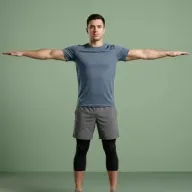
Arm Circles
Shoulder circles at arm's length to warm the rotator cuff and open the chest before upper-body work.
-
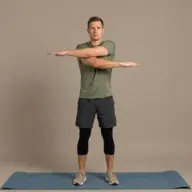
Arm Swings
Rhythmic forward-and-back arm swings to loosen the shoulders and upper back before activity.
-
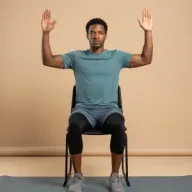
Cactus Arms
Arms at shoulder height with 90° elbows and palms forward to open the chest and retract the shoulder blades.
-
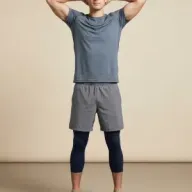
Chest Opener
Clasp your hands behind your back and draw the shoulder blades down to open the chest.
-
Corner Pecs Stretch
Lean into a corner with forearms on the walls to stretch the chest and front shoulders.
Common questions
Which body areas does Wall Arms target?
Wall Arms is a active stretching movement that mainly targets your shoulders, chest, biceps, and spine. Move within a comfortable range and skip it if it does not feel suitable for you.
Which muscles does Wall Arms work?
Primary muscles associated with Wall Arms include pectoralis major, biceps brachii, and external obliques. Flexor presents this as general wellness guidance, not a clinical assessment.
Is Wall Arms suitable for beginners?
Wall Arms is listed as beginner in Flexor. Choose a smaller range of motion, fewer repetitions, or an easier variation whenever you want more control.
How long should you hold Wall Arms?
In Flexor, Wall Arms runs for about 1 min per round. Adjust the time to what feels sustainable, breathe steadily, and ease off sooner if anything feels sharp.
How do you do Wall Arms?
Wall Arms has 3 guided steps. Follow them in order on this page, breathe steadily, and keep the movement smooth and within a comfortable range. Stop if anything feels sharp, unstable, or unsafe for you.
Which Flexor routines include Wall Arms?
Wall Arms appears in guided Flexor sessions such as Desk Posture Reset, Upper Trap Unwind, Neck Mobility Recharge, and Shoulder Space Builder. Open a routine page to follow the full sequence, or practise this movement on its own from this guide.
Is this medical advice?
No. Flexor provides general fitness and wellness guidance. It does not diagnose, treat, or prevent medical conditions. Speak with a qualified professional about injuries, persistent pain, or health concerns.