
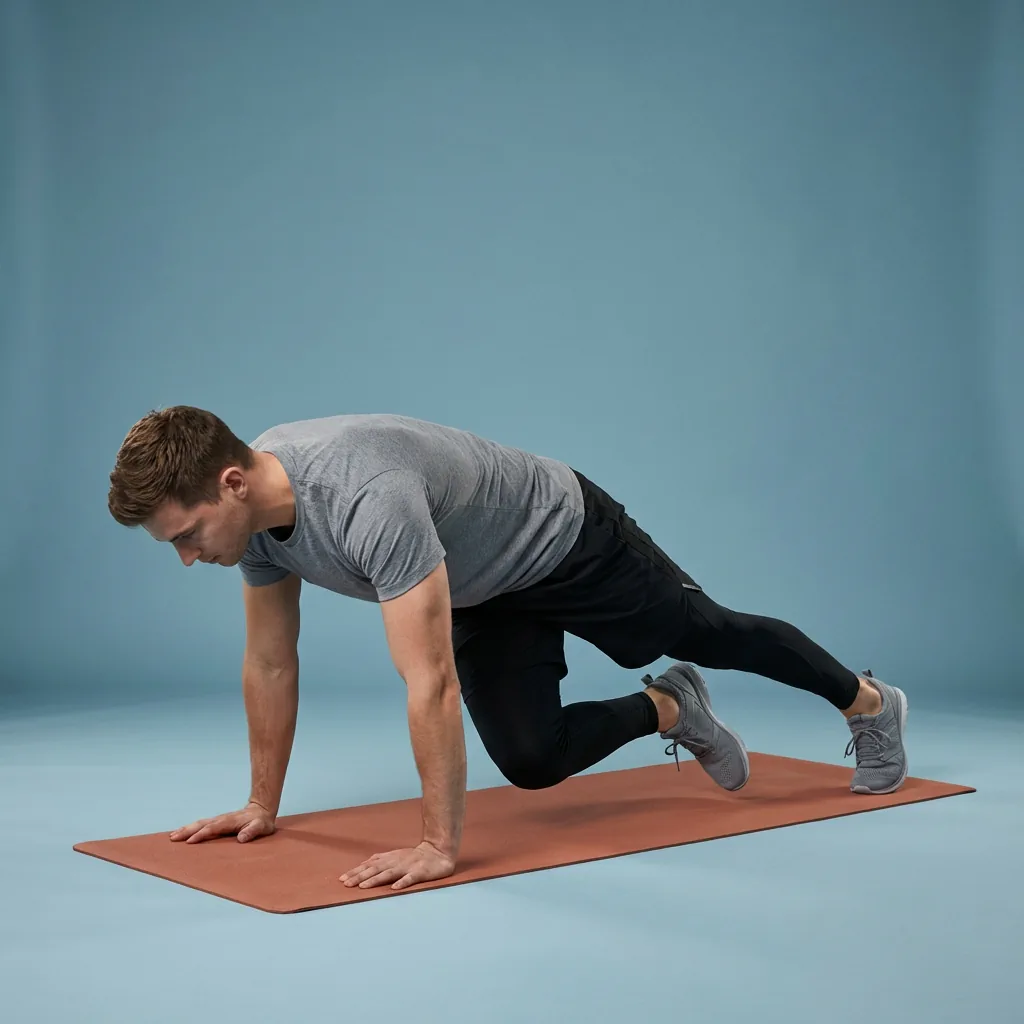
Spiderman Push Up Hold
Hold a half push-up while driving one knee toward the same-side elbow to challenge core anti-rotation and hip flexor control.
Overview
Spiderman Push-Up Hold pauses halfway through a push-up while one knee travels toward the same-side elbow. It is an advanced isometric drill on Flexor for the chest, triceps, shoulders, and obliques.
What Spiderman Push-Up Hold targets
Your arms and chest stay under load while the obliques and hip flexors work to keep the pelvis square. Alternate sides so both obliques share the work.
Why add Spiderman Push-Up Hold to your routine
Use it when you want plank-level core control with more upper-body demand than a standard hold.
- Combines push-up strength with anti-rotation core work.
- No equipment required.
- Clear hold timing for steady breathing under effort.
Who it is for
Experienced movers who can hold a solid half push-up and want extra core challenge.
When to do it
Fit it into a strength-prep block or core session when push-ups already feel controlled.
From a halfway push-up, lift one foot and bring the knee toward the elbow on the same side, then hold. The position trains chest and triceps endurance while your obliques fight pelvis rotation.
Setup cue
Set yourself up in a push-up with hands slightly wider than shoulders. Lower halfway toward the floor and engage your core—keep it smooth.
Practice notes
In Flexor, Spiderman Push Up Hold is typically prescribed as about 1 min per round, 1 rep, and 1 set. Adjust the dosage to what feels sustainable, breathe steadily, and ease off if anything feels sharp or unsafe.
Guidance
How to perform, tips, mistakes, safety notes, and benefits for Spiderman Push Up Hold.
Follow these cues in order. Move with control and stay in a comfortable range.
- Set yourself up in a push-up with hands slightly wider than shoulders.
- Lower halfway toward the floor and engage your core—keep it smooth.
- Lift one foot, bringing the knee toward the same-side elbow, and hold.
- Switch sides after your hold—keep it smooth.
Cues that help the movement stay smoother and more controlled.
- Keep the pelvis level so the hips do not swing side to side.
- Set elbows at roughly forty-five degrees and press the floor away.
Patterns to watch for so the shape stays clearer.
- Letting the hips sag or rotate as the knee lifts.
- Shrugging the shoulders toward the ears instead of staying broad through the chest.
Keep things comfortable and stop if something feels wrong.
- If a joint feels unstable or painful, reduce range, slow down, or choose an easier variation.
- Stop if you feel sharp pain, numbness, tingling, dizziness, or symptoms that radiate.
- Stay within a comfortable range—aim for mild tension, not pain.
- Move with control; avoid bouncing or jerking into end range.
Why people include this movement in their practice.
- Builds anti-rotation strength through the obliques and deep core while the arms stay loaded.
- Trains hip flexor control in a plank-like position without equipment.
- Rehearses stable push-up mechanics with an added coordination demand.
Similar movements to explore next
-
Single Arm Plank
High plank with one arm lifted to train anti-rotation core strength and shoulder stability.
-
Bow Pose
Prone backbend holding the ankles to open the hip flexors, chest, and front of the thighs.
-
Camel Pose
Kneeling backbend reaching toward the heels to open the hip flexors, chest, and front body.
-
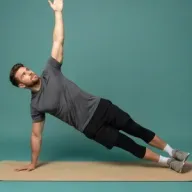
Hand Side Plank
Hold a side plank on a straight bottom arm with hips lifted in a line from head to heels.
-
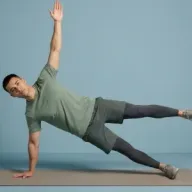
Hand Side Plank Leg Lift
Hold a straight-arm side plank and lift the top leg while keeping the hips stacked and lifted.
-
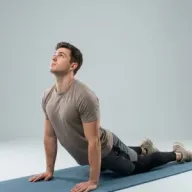
Upward Frog
Slide one knee out from prone while pressing up through the arms to combine hip opening with a chest lift.
-
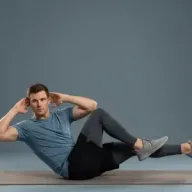
Bicycle Crunch Hold
Isometric bicycle crunch hold that braces the obliques while one leg extends and the opposite elbow meets the knee.
-
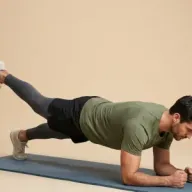
Elbow Plank Leg Lift
Hold an elbow plank and lift one leg to hip height without letting the pelvis twist.
Common questions
Which body areas does Spiderman Push Up Hold target?
Spiderman Push Up Hold is a movement that mainly targets your chest, obliques, shoulders, core, and hip flexors. Move within a comfortable range and skip it if it does not feel suitable for you.
Which muscles does Spiderman Push Up Hold work?
Primary muscles associated with Spiderman Push Up Hold include rectus abdominis, external obliques, and iliopsoas. Flexor presents this as general wellness guidance, not a clinical assessment.
Is Spiderman Push Up Hold suitable for beginners?
Spiderman Push Up Hold is listed as advanced in Flexor. Choose a smaller range of motion, fewer repetitions, or an easier variation whenever you want more control.
How long should you hold Spiderman Push Up Hold?
In Flexor, Spiderman Push Up Hold runs for about 1 min per round. Adjust the time to what feels sustainable, breathe steadily, and ease off sooner if anything feels sharp.
How do you do Spiderman Push Up Hold?
Spiderman Push Up Hold has 4 guided steps. Follow them in order on this page, breathe steadily, and keep the movement smooth and within a comfortable range. Stop if anything feels sharp, unstable, or unsafe for you.
Do you need any equipment for Spiderman Push Up Hold?
No. Spiderman Push Up Hold is a no-equipment movement you can do at home with just enough space to move comfortably.
Which Flexor routines include Spiderman Push Up Hold?
Spiderman Push Up Hold appears in guided Flexor sessions such as Pre-Workout Mobility: Core. Open a routine page to follow the full sequence, or practise this movement on its own from this guide.
Is this medical advice?
No. Flexor provides general fitness and wellness guidance. It does not diagnose, treat, or prevent medical conditions. Speak with a qualified professional about injuries, persistent pain, or health concerns.