
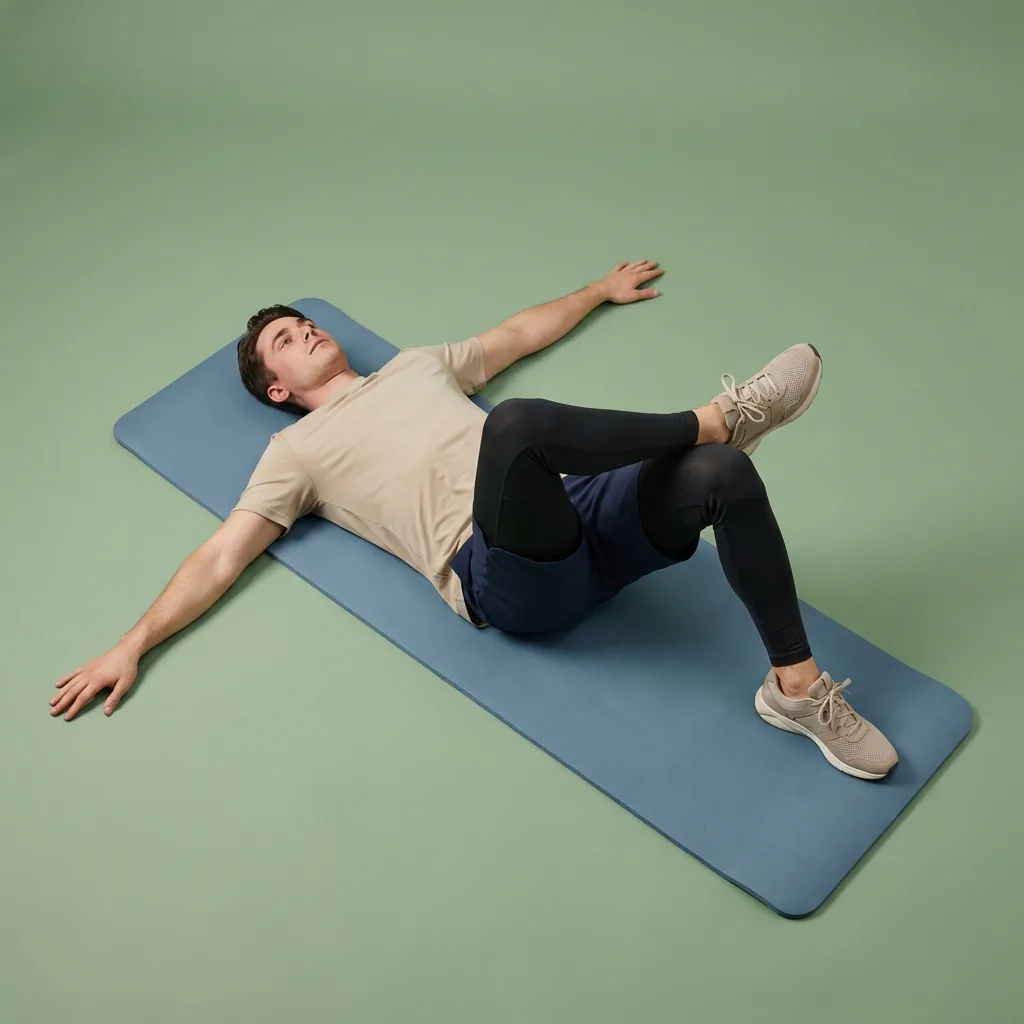
Figure Four Twist
Lie on your back in a figure-four shape and let both legs fall to one side for a gentle spinal twist.
Overview
Figure Four Twist is a beginner stretch on Flexor. From a supine figure-four position you let both legs drop to one side while the shoulders stay grounded.
What Figure Four Twist targets
You'll feel rotation through the spine and a stretch in the outer hip of the crossed leg.
Why add Figure Four Twist to your routine
Combines glute opening with a mild spinal rotation.
- Helps ease stiffness through the spine and hips after sitting.
- Uses gravity so you can relax without forcing depth.
Who it's for
Beginners and anyone who wants a gentle twist without standing balance.
When to do it
Try after desk work, in cool-downs, or before bed — about 60 seconds per side.
Figure Four Twist combines a supine figure-four leg position with a controlled rotation of the lower body. Keep both shoulder blades on the floor and let gravity open the spine and outer hip.
Setup cue
Lie on your back with knees bent and feet on the floor. Keep shoulder blades grounded and breathe into the twist before switching sides.
Practice notes
In Flexor, Figure Four Twist is typically prescribed as about 1 min per round, 1 rep, and 1 set. Adjust the dosage to what feels sustainable, breathe steadily, and ease off if anything feels sharp or unsafe.
Guidance
How to perform, tips, mistakes, safety notes, and benefits for Figure Four Twist.
Follow these cues in order. Move with control and stay in a comfortable range.
- Lie on your back with knees bent and feet on the floor.
- Cross one ankle over the opposite thigh just above the knee—keep it smooth.
- Allow both legs to drop toward one side until your top foot and bottom knee settle toward the floor.
- Keep shoulder blades grounded and breathe into the twist before switching sides—keep it smooth.
Cues that help the movement stay smoother and more controlled.
- Let gravity do the work — no need to force the rotation.
- Keep both shoulders pressing into the mat throughout the twist.
- Breathe into the side body as the legs settle toward the floor.
Patterns to watch for so the shape stays clearer.
- Lifting the shoulders off the mat to get more rotation.
- Forcing the top foot to the floor when the hips are not ready.
- Rushing the switch between sides instead of pausing to breathe.
Keep things comfortable and stop if something feels wrong.
- Stop if you feel sharp pain, numbness, tingling, dizziness, or symptoms that radiate.
- Stay within a comfortable range—aim for mild tension, not pain.
- Move with control; avoid bouncing or jerking into end range.
Why people include this movement in their practice.
- Combines glute opening with a mild thoracic and lumbar rotation.
- Helps ease stiffness through the spine and outer hip after sitting.
- Uses gravity so you can relax into the twist without forcing range.
Similar movements to explore next
-
90/90 Hip Switch Extension
90/90 hip switch with a forward hinge and tall-spine lift to combine hip rotation with thoracic extension.
-
Half Wheel
Lie on your back and press up into a partial wheel or bridge to extend the spine and open the chest.
-
90/90
Seated hip opener with both knees at 90°; hinge forward over the front shin to stretch inner thighs and glutes.
-
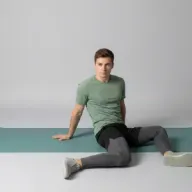
90/90 Hip Switch
Seated drill that sweeps both knees through 90/90 positions to train smooth hip internal and external rotation.
-
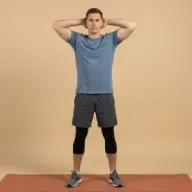
Air Squats
Bodyweight squats to rehearse hip and ankle depth, glute drive, and upright trunk control.
-
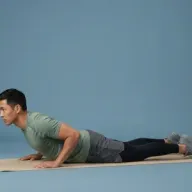
Baby Cobra
Small prone chest lift driven by the upper back to gently extend the thoracic spine.
-
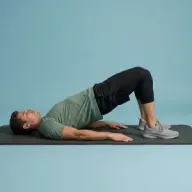
Bridge
Lie on your back, drive through both feet, and lift the pelvis by extending the hips while the ribs and lower back stay controlled.
-
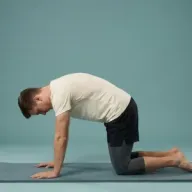
Cat Cow
Hands-and-knees spinal wave that alternates arching and rounding the back with the breath.
Common questions
Which body areas does Figure Four Twist target?
Figure Four Twist is a deep stretch and relaxation movement that mainly targets your spine, hips, and glutes. Move within a comfortable range and skip it if it does not feel suitable for you.
Which muscles does Figure Four Twist work?
Primary muscles associated with Figure Four Twist include gluteus maximus and erector spinae. Flexor presents this as general wellness guidance, not a clinical assessment.
Is Figure Four Twist suitable for beginners?
Figure Four Twist is listed as beginner in Flexor. Choose a smaller range of motion, fewer repetitions, or an easier variation whenever you want more control.
How long should you hold Figure Four Twist?
In Flexor, Figure Four Twist runs for about 1 min per round. Adjust the time to what feels sustainable, breathe steadily, and ease off sooner if anything feels sharp.
How do you do Figure Four Twist?
Figure Four Twist has 4 guided steps. Follow them in order on this page, breathe steadily, and keep the movement smooth and within a comfortable range. Stop if anything feels sharp, unstable, or unsafe for you.
Do you need any equipment for Figure Four Twist?
No. Figure Four Twist is a no-equipment movement you can do at home with just enough space to move comfortably.
Which Flexor routines include Figure Four Twist?
Figure Four Twist appears in guided Flexor sessions such as Lower Back Comfort, Spine and Core Support, and Gentle Nerve-Friendly Mobility. Open a routine page to follow the full sequence, or practise this movement on its own from this guide.
Is this medical advice?
No. Flexor provides general fitness and wellness guidance. It does not diagnose, treat, or prevent medical conditions. Speak with a qualified professional about injuries, persistent pain, or health concerns.