Bird Dog
Quadruped opposite arm-and-leg reach that trains trunk stability and hip extension control.
Overview
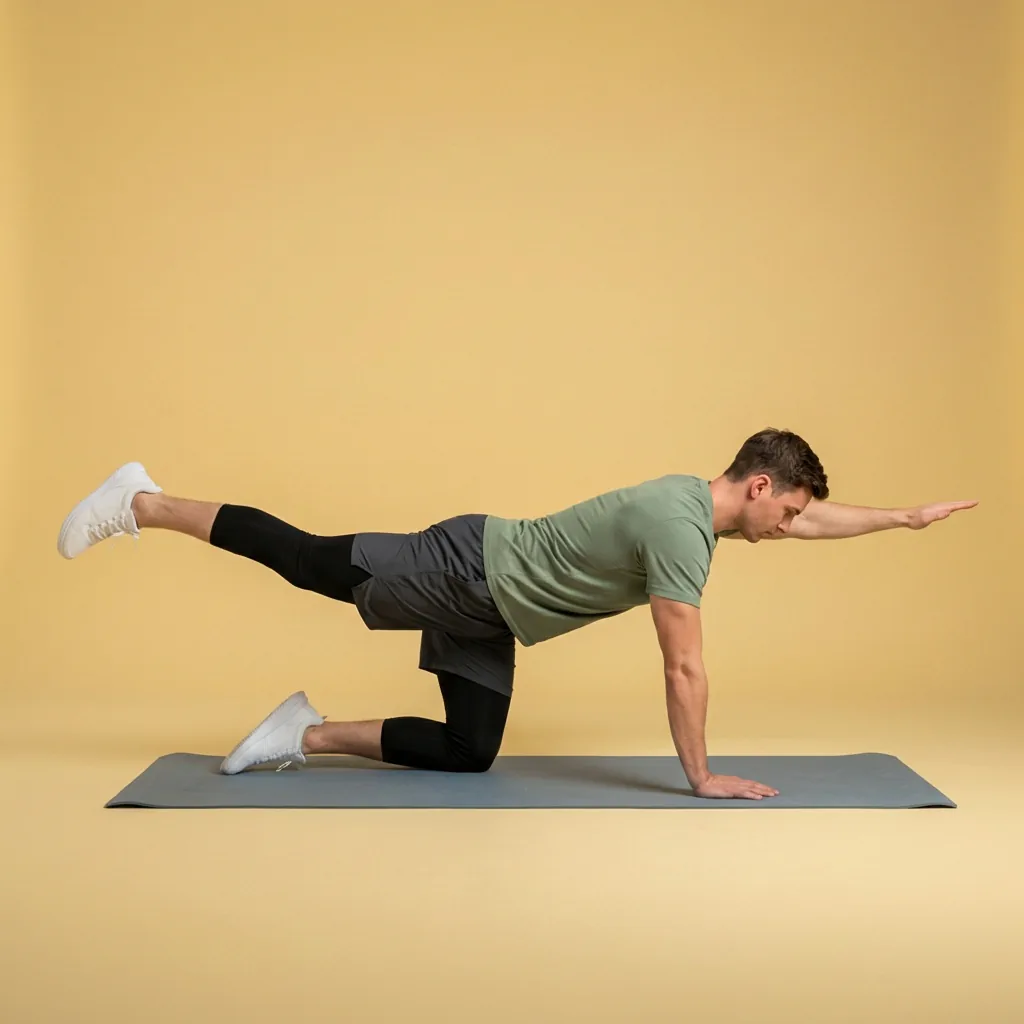
Bird Dog is a quadruped stability drill on Flexor. From all fours, extend one arm forward and the opposite leg back until they form a long line parallel to the floor, then return and alternate sides.
What Bird Dog targets
You'll feel the core, hips, and lower back working to prevent rotation as the limbs reach. The latissimus dorsi assists on the reaching arm side.
Why add Bird Dog to your routine
Bird dog is a foundational anti-rotation exercise that supports safer lifting, running, and daily reaching patterns.
- Low-load stability work suitable for most backs.
- Alternating sides builds balanced control.
- Floor-based with no equipment.
Who it's for
Beginners learning core stability and anyone rebuilding trunk control after time off.
When to do it
Use in warm-ups, rehab-style sessions, or core blocks. Alternate for 30–45 seconds.
From all fours, brace the midsection and extend one arm forward while the opposite leg reaches straight back. Hold the long line parallel to the floor, breathe steadily, and alternate sides.
Setup cue
Start on all fours with shoulders stacked over wrists and hips over knees. Gently brace your midsection, then extend one arm forward while the opposite leg reaches straight back.
Practice notes
In Flexor, Bird Dog is typically prescribed as about 1 min per round, 1 rep, and 1 set. Adjust the dosage to what feels sustainable, breathe steadily, and ease off if anything feels sharp or unsafe.
Guidance
How to perform, tips, mistakes, safety notes, and benefits for Bird Dog.
Follow these cues in order. Move with control and stay in a comfortable range.
- Start on all fours with shoulders stacked over wrists and hips over knees.
- Gently brace your midsection, then extend one arm forward while the opposite leg reaches straight back—keep it smooth.
- Hold the long line parallel to the floor and breathe steadily before returning to tabletop.
- Alternate sides with the same calm control—keep it smooth.
Cues that help the movement stay smoother and more controlled.
- Move with control and keep breathing steadily.
- Maintain stable posture; avoid compensating with other joints.
- Maintain your hips level by pressing the supporting hand and knee firmly into the floor.
Patterns to watch for so the shape stays clearer.
- Rotating the hips open as the leg extends instead of keeping them level.
- Arching the lower back to lift the leg higher.
- Rushing reps without holding the long line briefly.
Keep things comfortable and stop if something feels wrong.
- If you have a history of spinal/neck injury, disc issues, or recent surgery, consult a clinician before progressing range or intensity.
- Stop if you feel sharp pain, numbness, tingling, dizziness, or symptoms that radiate.
- Stay within a comfortable, controlled range; muscular effort or mild stretch tension should not become pain.
- Move smoothly without bouncing, jerking, or forcing the range.
Why people include this movement in their practice.
- Trains anti-rotation trunk stability in a quadruped position.
- Builds hip extension and shoulder reach control for walking and lifting.
Similar movements to explore next
-
Baby Cobra
Small prone chest lift driven by the upper back to gently extend the thoracic spine.
-
Cat Cow
Hands-and-knees spinal wave that alternates arching and rounding the back with the breath.
-
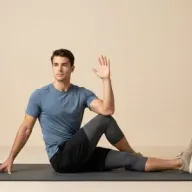
Seated Twist
Seated spinal twist with one foot crossed over the thigh to rotate the thoracic spine.
-
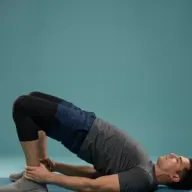
Half Wheel
Lie on your back and press up into a partial wheel or bridge to extend the spine and open the chest.
-
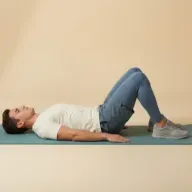
Pelvic Tilt Press
Supine posterior pelvic tilt that presses the lower back into the mat to train core and pelvic control.
-
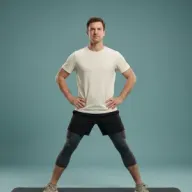
Wide Leg Torso Circles
Circle the torso from a wide stance with hands on the hips to loosen the hips, hamstrings, and lower back.
-
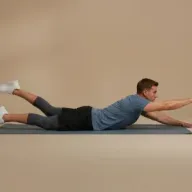
Aquaman
Prone opposite arm-and-leg lifts that train spinal extension and glute engagement one side at a time.
-
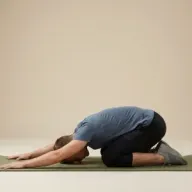
Child’s Pose
Kneel and fold forward with arms extended to rest the back, hips, and shoulders.
Common questions
Which body areas does Bird Dog target?
Bird Dog is a mobility movement that mainly targets your core, hips, and lower back. Move within a comfortable range and skip it if it does not feel suitable for you.
Which muscles does Bird Dog work?
Primary muscles associated with Bird Dog include latissimus dorsi. Flexor presents this as general wellness guidance, not a clinical assessment.
Is Bird Dog suitable for beginners?
Bird Dog is listed as beginner in Flexor. Choose a smaller range of motion, fewer repetitions, or an easier variation whenever you want more control.
How long should you hold Bird Dog?
In Flexor, Bird Dog runs for about 1 min per round. Adjust the time to what feels sustainable, breathe steadily, and ease off sooner if anything feels sharp.
How do you do Bird Dog?
Bird Dog has 4 guided steps. Follow them in order on this page, breathe steadily, and keep the movement smooth and within a comfortable range. Stop if anything feels sharp, unstable, or unsafe for you.
Do you need any equipment for Bird Dog?
No. Bird Dog is a no-equipment movement you can do at home with just enough space to move comfortably.
Which Flexor routines include Bird Dog?
Bird Dog appears in guided Flexor sessions such as Desk Posture Reset, Hip Comfort, Hip Opener Flow, and Glute & Hip Reset. Open a routine page to follow the full sequence, or practise this movement on its own from this guide.
Is this medical advice?
No. Flexor provides general fitness and wellness guidance. It does not diagnose, treat, or prevent medical conditions. Speak with a qualified professional about injuries, persistent pain, or health concerns.